


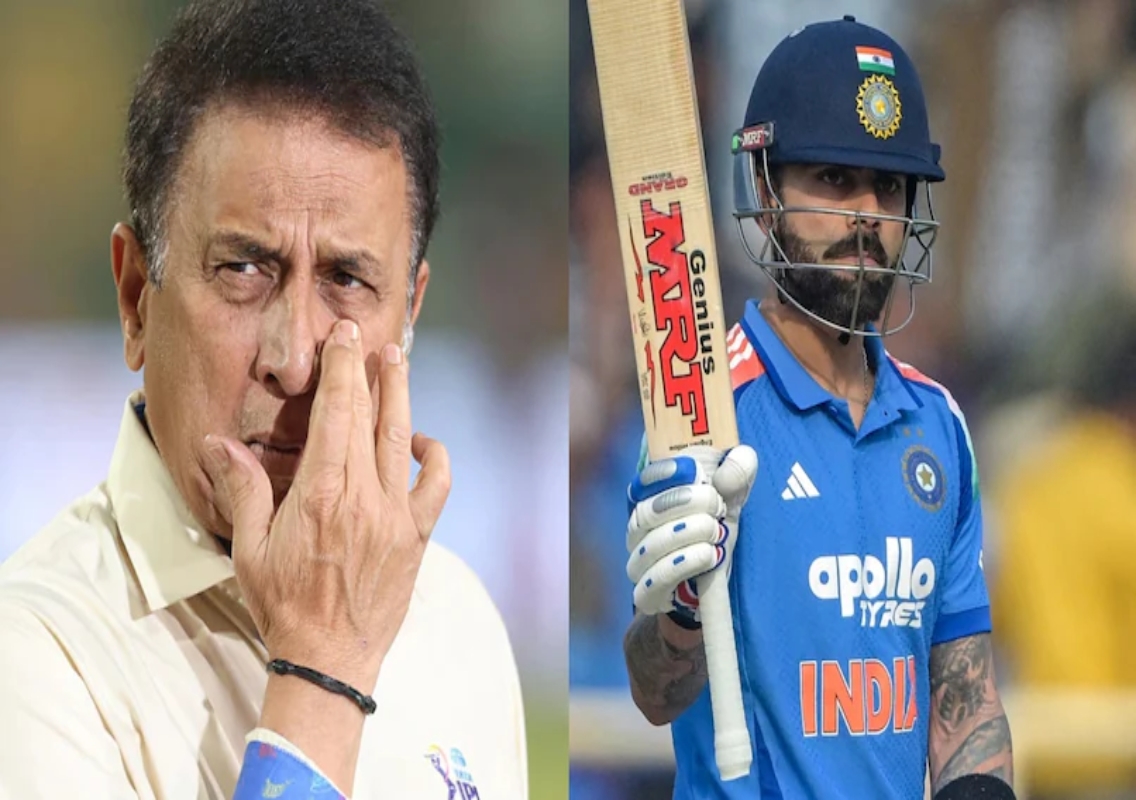


Auckland: Legendary India batter Sunil Gavaskar has offered an interesting perspective on Virat Kohli‘s pursuit of 100 international centuries, highlighting the delicate balance between individual milestones and team success. Reflecting on India’s first ODI against New Zealand, Gavaskar explained how Shubman Gill and Shreyas Iyer could have faced an uncomfortable situation had Kohli remained unbeaten in the 90s during the run chase.
Kohli scored an impressive 74 off just 51 deliveries in India’s five-wicket victory over New Zealand in the opening ODI at Eden Park on November 4, 2026. His dismissal prevented a potentially difficult situation for Gill and Iyer, who followed him at the crease.
According to Gavaskar, the two batters could have faced criticism if India had completed the chase while Kohli was close to another century but had not reached the landmark.
The former India captain believes that while winning matches remains the primary responsibility of every cricketer, teammates should also recognise the importance of significant individual achievements, particularly when they involve a player of Kohli’s stature.
His comments have once again brought attention to Kohli’s ambition of reaching 100 international centuries, a milestone previously achieved only by Sachin Tendulkar.
Gavaskar explains the dilemma faced by Gill and Iyer
Writing in his newspaper column, Gavaskar discussed the situation that developed during India’s chase against New Zealand in the opening ODI.
India were chasing a revised target of 143 runs in 32 overs under the Duckworth-Lewis-Stern (DLS) method after rain interrupted the match.
The chase became more complicated when Rohit Sharma was dismissed for a six-ball duck by Kyle Jamieson in the opening over.
Kohli joined Gill at the crease and immediately took control of the innings. The pair added 113 runs for the second wicket, putting India in a commanding position.
Kohli reached his half-century in just 35 deliveries and appeared comfortable against the New Zealand bowling attack.
However, the revised target meant India needed fewer runs than originally expected. As the chase progressed, the possibility of Kohli reaching another century became increasingly difficult.
Gavaskar explained that Gill and Iyer would have faced a challenging decision about how quickly they should score if Kohli had continued batting in the 90s.
If India had completed the chase with Kohli stranded just short of a century, the two batters could potentially have faced criticism from supporters.
Gavaskar observed that Kohli’s dismissal in the 70s spared Gill and Iyer from that possible situation.
He also emphasised that the ideal outcome would be for a star batter to achieve a personal milestone without compromising the team’s chances of winning.
Why Gavaskar wants Kohli to reach 100 international centuries
Gavaskar made it clear that he wants Kohli to reach the historic 100-century milestone.
Sachin Tendulkar remains the only cricketer to have scored 100 international centuries across Tests and One-Day Internationals.
Kohli has already established himself among the greatest batters in international cricket and continues to add to his remarkable record.
With 86 international centuries, he needs another 14 hundreds to reach the landmark.
However, the challenge is considerable because Kohli has retired from Test cricket and T20 internationals. He is currently active in the ODI format, which limits the number of international opportunities available to him.
Gavaskar believes that Indian cricket supporters would welcome any opportunity that helps Kohli move closer to Tendulkar’s record.
He suggested that if a teammate occasionally sacrifices some personal scoring opportunities to help Kohli reach a major milestone, the achievement would be celebrated by the entire Indian cricket community.
For Gavaskar, such a moment would represent more than an individual record. It would also reflect the support and understanding within the team.
Gavaskar recalls the famous 1984 Lord’s Test
To explain his point, Gavaskar recalled an incident from the 1984 Test match between England and the West Indies at Lord’s.
The match provided an interesting example of how individual milestones can become secondary when a team is close to victory.
West Indies were chasing a target of 341 runs in the fourth innings. Gordon Greenidge produced a remarkable innings, scoring an unbeaten double century to guide his team towards victory.
Larry Gomes was batting alongside Greenidge and was approaching his own personal milestone of a century.
Gomes was unbeaten on 92 when West Indies needed only a handful of runs to win. With sufficient time remaining, there was an opportunity for him to reach three figures.
However, Greenidge continued attacking and struck three consecutive boundaries to complete the victory.
Gomes remained unbeaten on 92, missing his century by eight runs.
Gavaskar recalled being present in the West Indies dressing room during that match. There had been discussions about whether Gomes should be given an opportunity to complete his century or whether the team should simply finish the contest.
The incident illustrated the difficult choices that players sometimes face when individual achievements and team objectives overlap.
Although West Indies secured a comfortable victory, the situation demonstrated that personal milestones can carry emotional importance even when the final result is never in doubt.
Gavaskar used this historical example to explain the situation involving Kohli, Gill and Iyer in the New Zealand ODI.
Kohli’s innings puts the spotlight on team priorities
Kohli’s 74-run innings against New Zealand was another demonstration of his ability to dominate ODI bowling.
Coming in early after Rohit’s dismissal, the former India captain took responsibility for stabilising the innings while maintaining an attacking scoring rate.
His partnership with Gill was particularly important because it removed the pressure created by the early wicket.
The 113-run stand also brought India close to victory, although Kohli could not convert his half-century into a hundred.
For Gill, who was leading the Indian side, the situation involved balancing the team’s requirements with the possibility of allowing one of India’s biggest batting stars to reach another milestone.
Iyer, who followed Gill, could potentially have faced a similar situation if Kohli had continued batting.
Gavaskar’s comments underline that such decisions are not always straightforward. A captain must consider the match situation, the remaining target and the importance of securing victory.
At the same time, there is an emotional aspect to cricket that cannot always be measured through statistics.
A century can be a significant achievement for an individual player, particularly when that player is pursuing a historic record.
However, the team’s success must remain the primary consideration.
Shubman Gill and Shreyas Iyer’s role in India’s batting plans
The discussion also highlights the responsibilities of India’s younger batting leaders.
Gill has increasingly become an important figure in India’s ODI setup, combining his batting responsibilities with captaincy.
His role requires him to make decisions that benefit the team, particularly during pressure situations.
Iyer, meanwhile, has established himself as a dependable middle-order batter who can accelerate the scoring rate and provide stability.
Both players are expected to contribute significantly to India’s ODI ambitions.
Gavaskar’s observations do not suggest that Gill or Iyer should have deliberately slowed down the chase. Rather, they highlight the difficult position that can arise when a teammate is approaching a major personal achievement.
The broader message is that experienced players and emerging leaders must understand the importance of communication and mutual support within the dressing room.
India’s New Zealand series adds to Kohli’s record chase
The ongoing India-New Zealand ODI series has provided another opportunity for Kohli to add to his international record.
His 74 in the opening match demonstrated his continued ability to influence a run chase, even though he missed out on a century.
In the second ODI, played in Wellington on November 8, Kohli was dismissed for seven runs as New Zealand defeated India under the DLS method. The contrasting performances underline the unpredictable nature of international cricket.
Kohli’s pursuit of 100 international centuries will depend on his consistency, fitness and the opportunities he receives in the remaining years of his international career.
With Test and T20 international cricket behind him, the ODI format is now his only route towards the milestone.
That makes every international hundred particularly important.
Tendulkar’s record remains one of the most remarkable achievements in cricket history. Reaching the same landmark would place Kohli alongside an exclusive chapter of the sport’s history.
Conclusion: A personal milestone and the larger team achievement
Sunil Gavaskar’s comments offer an interesting perspective on the relationship between individual records and team success.
His comparison with the 1984 Lord’s Test shows that cricket has witnessed similar situations in the past, where a player has missed a personal milestone because the team prioritised victory.
Gavaskar’s wish to see Kohli reach 100 international centuries reflects the admiration he has for the former India captain’s achievements.
For Gill and Iyer, the first ODI against New Zealand ended without the added pressure of deciding whether to prioritise Kohli’s potential century or complete the chase.
Ultimately, Kohli’s pursuit of the historic milestone remains an important talking point for Indian cricket fans. Whether he reaches 100 international centuries or not, his contribution to Indian cricket has already secured him a special place in the game’s history.