







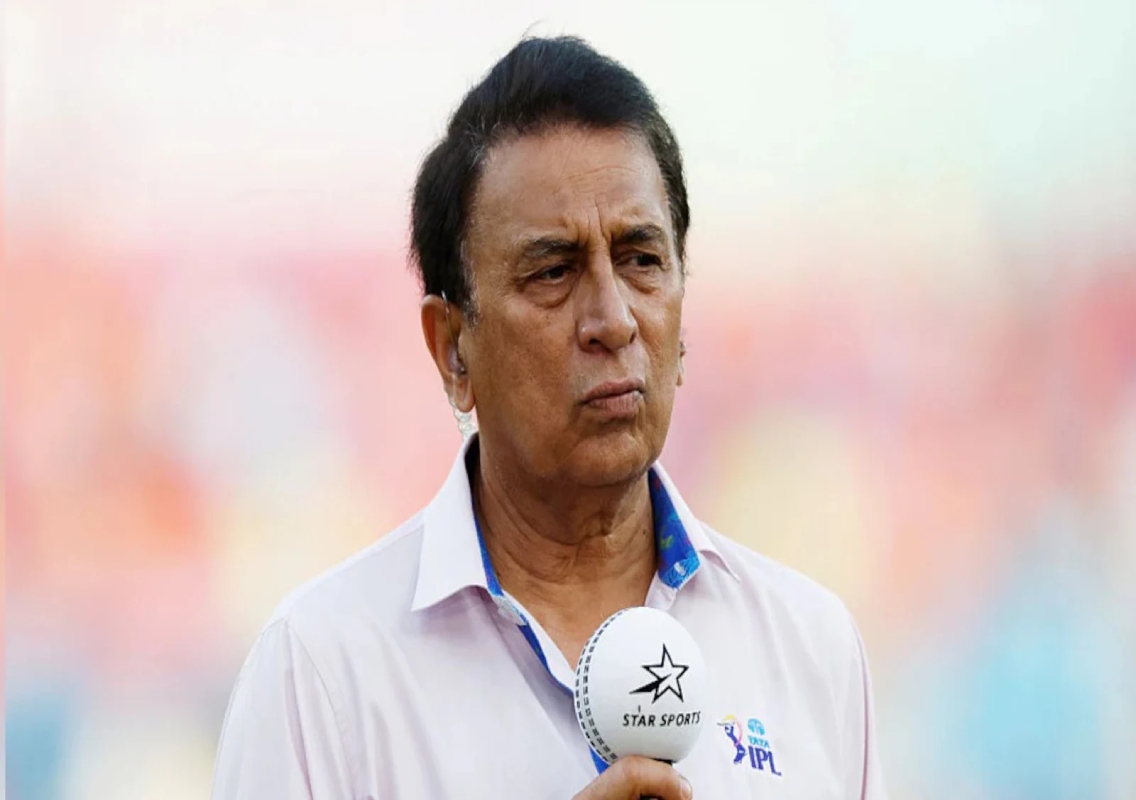


Ranchi: Legendary India batter Sunil Gavaskar has questioned the effectiveness of India’s bowling after the team failed to defend a massive total of 249 for five against West Indies in the second T20 International at the JSCA International Stadium Complex on Friday, October 9.
West Indies chased down the target of 250, reaching 252 for four in 18.3 overs to register a six-wicket victory and level the five-match series at 1-1. Captain Shai Hope scored an unbeaten 102 off 45 balls, while Sherfane Rutherford smashed 84 off 37 deliveries to power the visitors to a memorable win.
The match produced a combined total of 501 runs, making it one of the highest-scoring contests in men’s T20I cricket. Despite India’s formidable batting effort, Gavaskar believed the bowlers needed to take greater responsibility rather than allowing the conditions to dominate the discussion.
Gavaskar questions India’s bowling performance
Speaking on Star Sports after the match, Gavaskar said India’s batters had done enough to provide the team with a competitive total. He argued that the bowling performance, rather than the batting effort, deserved closer scrutiny.
Gavaskar said he had expected India to score around 235 to 240 runs after a couple of quieter overs. The team eventually reached 249 for five, exceeding that anticipated total.
He questioned whether the bowlers had executed the plans expected of them and suggested that the bowling coach should be asked about the team’s approach.
His remarks placed the spotlight on India’s inability to defend a total that would ordinarily give a side a strong chance of winning a T20I. While dew made the ball difficult to grip and affected the bowlers’ control, Gavaskar felt the Indian attack could still have performed better.
The former India captain’s criticism also raised a wider question about how teams should respond when batting-friendly conditions make even substantial totals vulnerable.
Shai Hope and Sherfane Rutherford dismantle India’s attack
West Indies’ successful chase was built around the outstanding partnership between Hope and Rutherford. Their aggressive batting transformed a difficult target into a chase completed with nine balls remaining.
Hope remained unbeaten on 102 off 45 balls, striking six fours and nine sixes. The century was among the fastest by a West Indies batter in T20I cricket and continued his impressive run against India.
Rutherford provided equally destructive support, scoring 84 from 37 deliveries with seven fours and seven sixes. The pair added 120 runs for the fourth wicket in just 54 balls, turning the match decisively in West Indies’ favour.
India had made early inroads, reducing West Indies to two wickets in the opening over. However, Hope and Rutherford rebuilt the innings through calculated aggression, targeting the Indian bowlers and maintaining a high scoring rate.
India also missed an important opportunity when Rutherford was dropped on 38 off Kuldeep Yadav’s bowling. The batter went on to make the hosts pay for the missed chance.
Romario Shepherd then contributed 34 off 13 balls, helping West Indies accelerate towards the finish. Hope sealed the victory with a six off Axar Patel in the 19th over.
Varun Aaron questions India’s bowling strategy
Former India fast bowler Varun Aaron, who was part of the same television discussion as Gavaskar, also questioned the team’s tactical decisions.
Aaron felt India should have continued using pace after West Indies lost two wickets in the opening over. He specifically criticised the decision to introduce Axar Patel in the fourth over of the innings.
Axar conceded 16 runs in that over, allowing Hope and Rovman Powell to settle into their innings. Aaron argued that India could have continued with pace against the two batters, whom he believed were vulnerable against the new ball.
The criticism highlighted the importance of bowling match-ups in T20 cricket, where a single expensive over can shift momentum rapidly. With Hope and Rutherford finding the boundaries regularly, India struggled to regain control once the partnership gathered pace.
The decision to use spin early also became a talking point because of the conditions at Ranchi, where dew complicated the task of controlling the ball.
Dew factor complicates India’s defence
India captain Shreyas Iyer acknowledged that the conditions made it difficult to determine what constituted a par score.
Speaking after the match, Iyer said the dew factor had played a significant role and made it challenging to estimate how many runs would be enough to defend.
The wet ball can reduce a bowler’s grip, making it harder to execute slower deliveries, variations and accurate lines. It can also help batters play through the line and attack with greater confidence.
However, the conditions did not affect both teams equally. India had to defend their total after batting first, while West Indies benefited from the conditions during the chase.
Although dew was an important factor, the scale and speed of the West Indies chase left India with tactical questions to address. The team will need to assess its bowling combinations, field placements and execution under pressure before the next match.
India must respond before the third T20I
The defeat leaves the five-match series level at 1-1. India won the opening T20I in Lucknow by eight wickets, but West Indies responded emphatically in Ranchi.
India’s batting offered several positives. Sanju Samson scored 82, while Iyer made 40 and Tilak Varma remained unbeaten on 44. Their contributions helped India post 249 for five, a total that appeared imposing before Hope and Rutherford produced their match-winning partnership.
The challenge now is to translate strong batting performances into complete team efforts. India’s bowlers will need to adapt to the conditions, execute their plans more consistently and find ways to break partnerships before opposition batters take control.
The third T20I is scheduled to take place in Indore on Sunday, October 11. With the series tied, India will look to address the concerns raised after the Ranchi defeat, while West Indies will aim to carry their momentum into the next contest.
Gavaskar’s criticism has put the spotlight firmly on India’s bowling unit. The response in Indore will show whether the team can learn from the defeat and improve its ability to defend big totals in challenging conditions.