







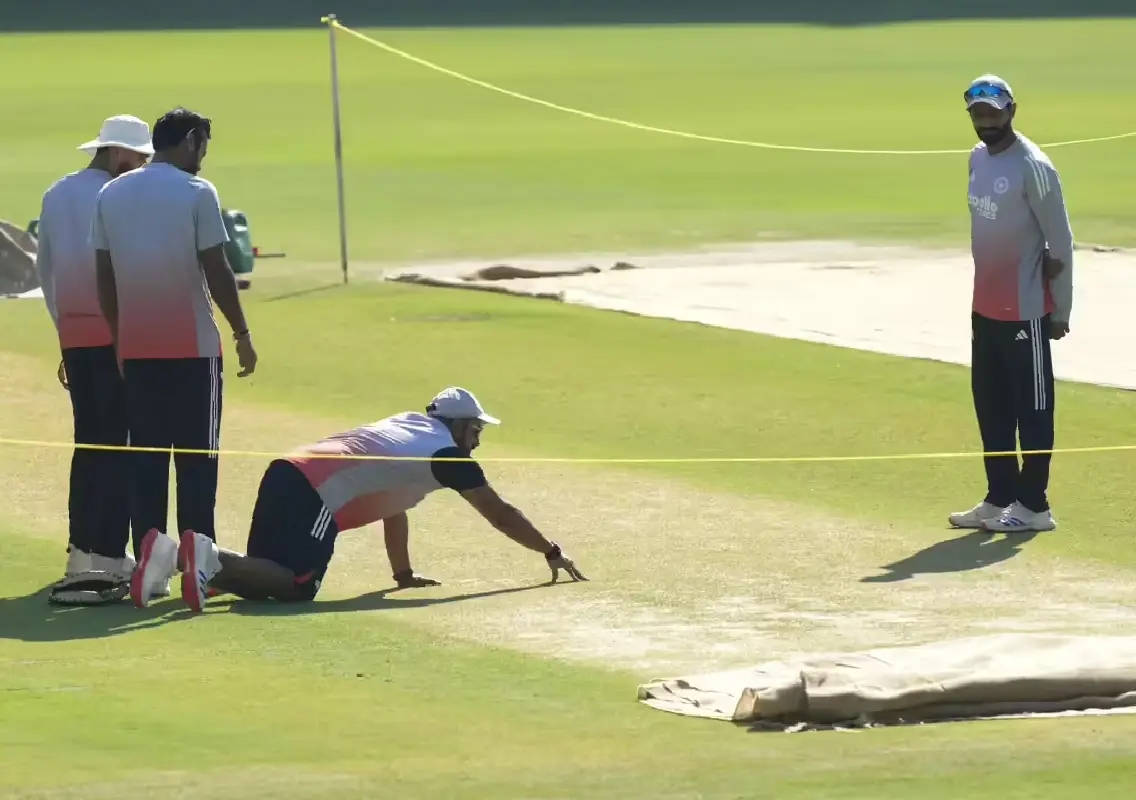


South Africa bowling coach Piet Botha believes the pitch for the second Test at the Barsapara Cricket Stadium could present significantly better batting conditions than the challenging surface encountered in Kolkata, though he remains cautious about predicting how much grass will remain on the wicket by Saturday morning. India trail 0–1 in the two-Test series after a 30-run defeat on an unpredictable Eden Gardens pitch—one that has drawn sustained scrutiny from former players, curators and the ICC.
Botha, who inspected the Guwahati wicket on Thursday, said the pitch was still evolving and that meaningful conclusions could only be drawn closer to match day. “As far as the pitch is concerned, obviously I had a look at it this morning, it’s still two days to go. So it’s difficult to predict if they will actually shave off more grass or not. That will obviously make a difference,” he told reporters.
Early signs hint at a better surface
While the Eden Gardens track behaved unevenly and produced excessive assistance for both seamers and spinners, initial feedback from the Barsapara ground staff indicates a truer wicket conducive to batting. However, Botha stressed that assumptions would be premature.
“What we have heard is that it seems to be a good batting track up front, and spin comes into picture late. But we’ll have to wait and see… maybe it starts earlier, and what the previous Test turned out to be,” he said, noting that curators may still alter the nature of the pitch.
The match will start half an hour earlier than usual, at 9 am, a factor that could influence early play. “There will be a bit more moisture, so I think in terms of the first hour, the new ball should play a role. For how long, we are not sure, we’ll have to see,” he added.
Toss strategy to depend on final pitch call
Botha said that decisions at the toss would be based entirely on the match-morning assessment of the pitch. “If the wicket is good to bat on, then batting first is a good option, but if the track is like the one in Kolkata, then it hardly matters,” he said, pointing out that both teams had struggled in Kolkata regardless of the toss.
With South Africa holding a valuable lead, the visitors will be eager to seize early advantage if conditions favour their pace attack.
Injury cloud over Rabada as Harmer set to return
The Proteas camp is closely monitoring the fitness of premier pacer Kagiso Rabada, who missed the first Test with a rib injury. His availability could play a decisive role in South Africa’s bowling plans. “Rabada has been under medical observation… we will take a call in the next 24 hours,” Botha confirmed.
Off-spinner Simon Harmer, who experienced a minor niggle during the Kolkata Test, is expected to be fit for selection in Guwahati.
South Africa’s bowling combination could vary significantly depending on the grass retention on the wicket. If the green tinge remains, the visitors might opt for an additional seamer; if trimmed, they could revert to a more balanced attack featuring two spinners.
India grapple with pitch criticism after Kolkata loss
Meanwhile, India’s support staff has been responding to widespread criticism that followed the shock defeat at Eden Gardens. The pitch, which deteriorated rapidly and produced inconsistent bounce from Day 1, raised questions regarding preparation and clarity of communication between curators and team management.
Batting coach Sitanshu Kotak, addressing the concerns, said, “No one wanted it (pitch) to be like this,” as he defended head coach Gautam Gambhir, who faced scrutiny for the nature of the surface. Kotak emphasised that Gambhir’s involvement had been overstated and that the pitch did not reflect the team’s preferences.
India, having lost only one home Test series since 2012, now face the prospect of a rare home defeat unless they produce a strong performance in Guwahati. Their batting unit, which failed to adapt in Kolkata, will need to respond with maturity—especially if the Barsapara surface holds true early on.
Crucial contest for both teams
The second Test carries high stakes for both sides. For South Africa, a victory or draw seals a rare series win on Indian soil, strengthening their position in the World Test Championship standings. For India, a win is non-negotiable to avoid a home series defeat and to regain confidence mid-season.
As teams await a clearer picture on grass trimming and moisture retention, all eyes now shift to the decisions of the curators—and the judgement calls awaiting captains at the toss.