


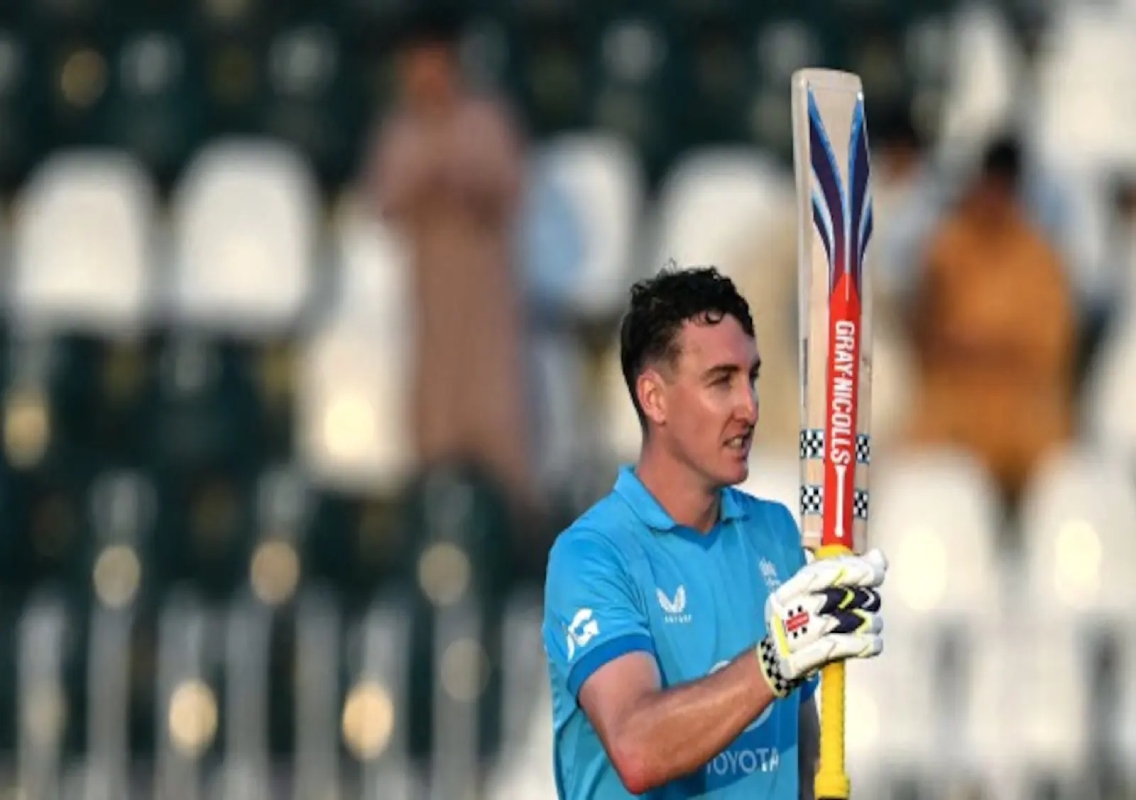


Rawalpindi: England captain Harry Brook said his record-breaking double century had “no value whatsoever” after Sri Lanka pulled off a stunning chase of 430 runs to beat England by two wickets in the ODI tri-series in Rawalpindi on Thursday, October 22.
Brook smashed 202 runs off 116 balls, becoming the first English batter to score a double century in men’s One Day Internationals (ODIs). His innings also made him the fastest player to reach an ODI double hundred. However, the landmark performance could not prevent England from suffering a dramatic defeat after Sri Lanka reached 430 for eight with one ball remaining.
‘No value whatsoever in my eyes’
Speaking after the match, Brook acknowledged the quality of the contest but admitted that the defeat overshadowed his personal achievement.
“Incredible game of cricket, both teams were exceptional. Sri Lanka just outplayed us,” he said, praising the opposition for successfully chasing a target exceeding 400 runs.
Reflecting on his double century, the England skipper added that it was a nice innings, but “being on the losing side it has no value whatsoever in my eyes”.
Brook also said England needed to return to the drawing board and improve their performance. Despite the setback, he pointed out that the team still had opportunities in the remaining matches to secure a place in the tournament final.
Brook creates history with a blistering double century
Brook’s innings was one of the defining performances of the match. He struck 21 fours and 10 sixes, combining controlled batting with an aggressive finish to help England post 429 for four in 50 overs.
He became the first Englishman to reach 200 in an ODI innings, surpassing the previous national benchmark of 182 set by Ben Stokes. Brook also bettered the previous fastest ODI double-century mark, which had been held by India’s Shubman Gill, who reached the milestone in 117 balls against the West Indies.
Brook’s innings came in a high-scoring contest in which England’s top and middle order contributed to a formidable total. Tom Banton scored 50, Joe Root made 69 and Will Jacks remained unbeaten on 66. Root also reached the significant milestone of 8,000 ODI runs, becoming the first English batter to achieve the feat.
Sri Lanka respond with an extraordinary chase
Despite England’s imposing total, Sri Lanka refused to surrender. The visitors lost two early wickets and were reduced to 24 for two, giving England an opportunity to take control of the match.
Pavan Rathnayake and Avishka Fernando then rebuilt the innings with a 166-run partnership for the third wicket. Fernando narrowly missed a century, scoring 97 off 83 balls, while Rathnayake made 130 off 106 deliveries.
Rathnayake continued to keep Sri Lanka in contention with his aggressive stroke play. He later joined Dasun Shanaka in another crucial partnership, with Shanaka scoring 97 off just 50 balls. Their 133-run stand put Sri Lanka within reach of an extraordinary victory.
The visitors still needed a strong finish after Shanaka’s dismissal, but Janith Liyanage delivered under pressure. He scored an unbeaten 61 off 27 balls, providing the late acceleration Sri Lanka required to complete the chase.
Final-over drama seals Sri Lanka’s win
The closing over produced another twist. Sri Lanka needed eight runs to win when England’s Josh Tongue struck twice in quick succession, dismissing two batters and briefly raising hopes of a dramatic turnaround.
Liyanage, however, held his nerve. He struck a six off the penultimate delivery to take Sri Lanka to 430 for eight and seal a two-wicket victory with one ball remaining.
The result marked the second-highest successful run chase in men’s ODI history. South Africa’s pursuit of 435 against Australia in Johannesburg in 2006 remains the record.
For England, the defeat was particularly painful because Brook’s innings had placed the team in a commanding position. The bowling attack was unable to contain Sri Lanka’s sustained counterattack, with Sam Curran conceding 103 runs in nine overs. England face a fight to recover
Brook’s comments reflected the disappointment of losing despite producing an innings of historic significance. His double century will remain a major personal milestone, but the match also exposed England’s inability to defend a total of nearly 430.
Sri Lanka, meanwhile, earned a memorable victory through contributions from several batters rather than relying on one individual performance. Rathnayake’s century, the aggressive partnership with Shanaka and Liyanage’s late assault combined to overturn England’s advantage.
With more matches remaining in the tri-series, England will need to address their bowling execution and improve their response under pressure. Brook’s challenge now is to turn the lessons from the defeat into better team performances, as England continue their pursuit of a place in the final.