







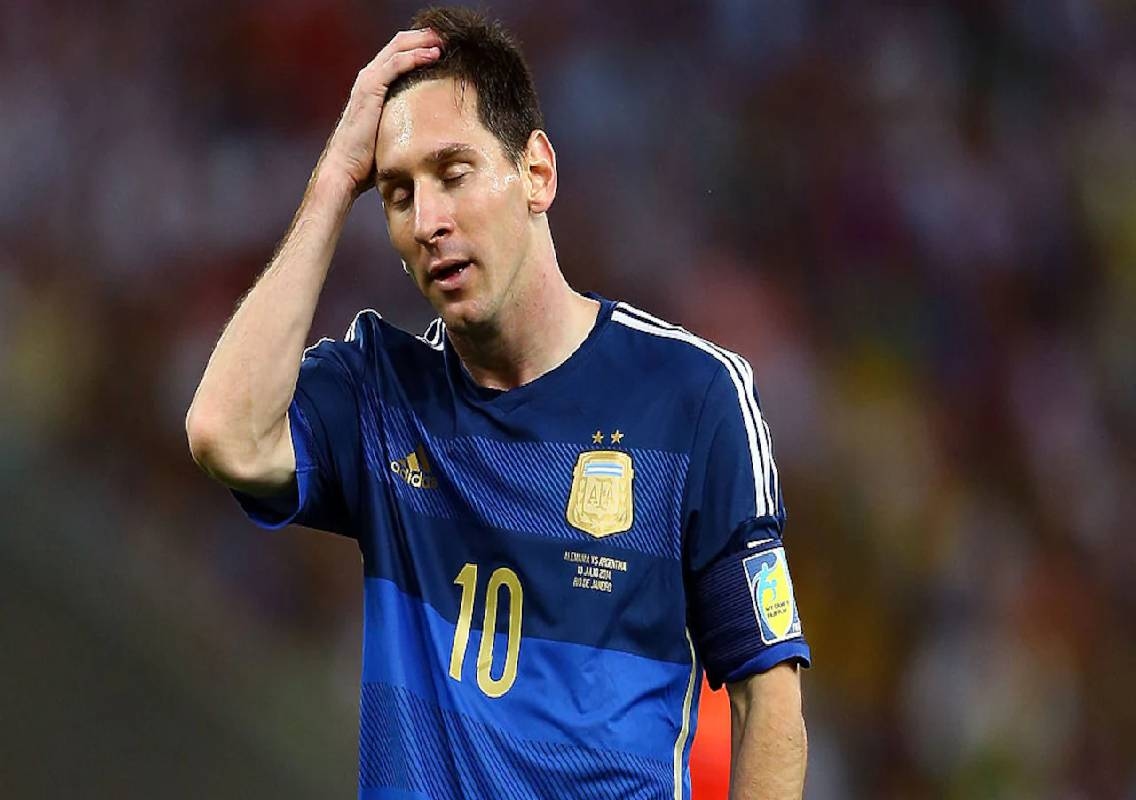


New Jersey: As Spain prepare to face Argentina in the FIFA World Cup 2026 final, one question dominates the tactical discussion: how do you stop Lionel Messi? The answer may lie in a blueprint that proved successful more than a decade ago Germany’s disciplined defensive approach in the 2014 FIFA World Cup final.
Messi remains the heartbeat of Argentina despite being in the latter stages of his illustrious career. The 39-year-old captain has once again guided his country to the World Cup final, and containing him will be central to Spain’s hopes of lifting a second world title.
Football analysts believe Spain can draw valuable lessons from Germany’s 1-0 victory over Argentina in the 2014 final, where Messi was restricted for long periods despite producing moments of brilliance.
Germany’s 2014 blueprint
Germany did not attempt to man-mark Messi throughout the match. Instead, Joachim Löw’s side focused on denying him space between the midfield and defensive lines.
Whenever Messi received possession, German players immediately closed passing lanes while maintaining their defensive shape rather than committing too many players to a direct challenge.
This collective approach forced Argentina’s captain to receive the ball deeper and farther away from dangerous attacking areas.
Germany also ensured Messi was rarely allowed to turn and run directly at defenders, significantly reducing his influence near the penalty area.
The strategy eventually helped Germany secure a 1-0 victory after Mario Götze’s extra-time winner.
Spain possess similar strengths
Spain arrive at the 2026 World Cup final with many of the qualities required to replicate Germany’s tactical success.
Luis de la Fuente’s side have remained unbeaten throughout the tournament and have conceded just one goal in seven matches, making them the strongest defensive team at the competition.
Their possession-based football naturally limits opponents’ opportunities by reducing the amount of time they spend on the ball.
With Rodri anchoring midfield, Spain are well-equipped to control possession and dictate the tempo, potentially limiting the number of times Messi can influence the game.
Limiting service to Messi
Stopping Messi is not simply about marking the Argentine captain.
Spain will also need to disrupt the supply lines from midfield, preventing players such as Enzo Fernández, Alexis Mac Allister and Leandro Paredes from finding Messi in dangerous positions.
By pressing Argentina’s midfield and forcing quicker decisions, Spain can reduce the quality of passes reaching their captain.
Equally important will be preventing Messi from drifting into pockets of space between the opposition midfield and defence, areas where he has punished opponents throughout his career.
Defensive discipline remains key
One of Germany’s greatest strengths in 2014 was patience.
Rather than chasing Messi aggressively across the pitch, the Germans trusted their defensive structure and waited for opportunities to win possession collectively.
Spain are expected to adopt a similar approach, relying on organisation rather than individual battles.
The European champions have consistently demonstrated tactical discipline under Luis de la Fuente, allowing very few clear scoring opportunities during the tournament.
Maintaining compact defensive lines while avoiding unnecessary fouls around the penalty area will be crucial against one of football’s greatest playmakers.
Argentina have more than Messi
While much of the attention naturally centres on Messi, Spain cannot afford to overlook Argentina’s supporting cast.
Julián Álvarez has provided energy and goals throughout the tournament, while the midfield trio has consistently controlled games and supplied attacking opportunities.
Argentina’s ability to spread attacks across multiple players means Spain must remain alert even if they successfully limit Messi’s involvement.
The defending champions have repeatedly shown they possess the resilience and quality to find different ways to win matches.
A battle of contrasting philosophies
The final promises to showcase two contrasting footballing identities.
Spain are expected to dominate possession through intricate passing, patient build-up play and positional discipline.
Argentina, meanwhile, combine technical quality with attacking flexibility, often relying on Messi’s creativity to unlock stubborn defences.
If Spain successfully implement a Germany-style defensive blueprint while maintaining control of possession, they could significantly reduce Messi’s influence on the contest.
However, history has repeatedly shown that even the most carefully designed tactical plans can be undone by moments of brilliance from the Argentine captain.
As the football world awaits the FIFA World Cup 2026 final, Spain’s ability to execute their tactical strategy against one of the greatest players in history could ultimately determine who lifts the trophy.