







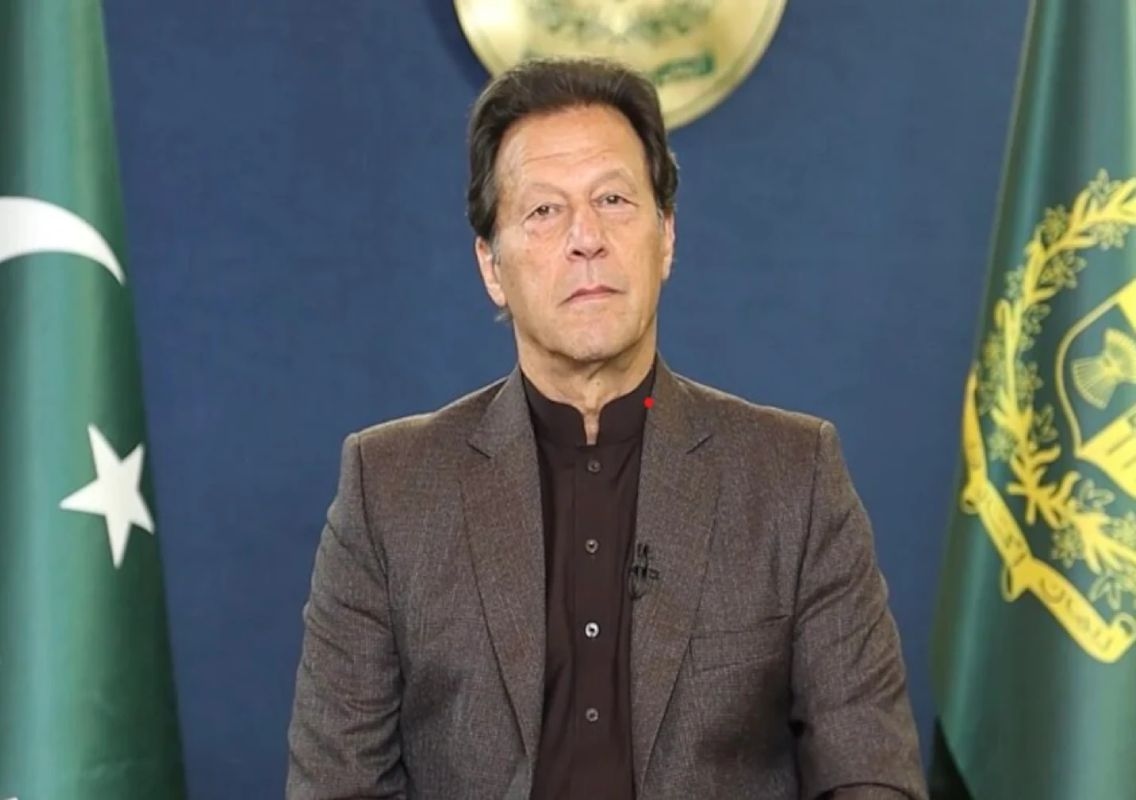


Rawalpindi: The son of jailed former Pakistan Prime Minister Imran Khan has raised serious concerns about his father’s health, claiming that he is being denied proper medical care and family access while in custody. Kasim Khan, speaking publicly, said that the family has not been able to communicate with the former leader for several months, intensifying fears about his well-being.
According to Kasim, neither he nor his brother has had any form of contact with their father since March this year. He added that the absence of communication has left the family deeply distressed, especially amid reports that Imran Khan’s health may be deteriorating. Among the key concerns highlighted is a reported decline in his eyesight, which the family believes may have worsened due to delays in receiving timely medical attention.
Detention conditions under scrutiny
Imran Khan has been lodged in Adiala Jail since August 2023 after being convicted in the Toshakhana case. Since then, multiple legal cases have kept him behind bars, making his incarceration one of the most closely watched political developments in Pakistan.
Recent developments indicate that authorities imposed a ban on meetings with the former Prime Minister in December 2025. This restriction reportedly followed remarks attributed to him concerning Pakistan Army chief Asim Munir. Since the ban, Khan is believed to be in solitary confinement, a factor that has further fuelled concerns about both his mental and physical health.
Kasim Khan has described the situation as alarming, stating that the lack of transparency regarding his father’s condition raises serious humanitarian questions. He also pointed out that access to legal counsel and family interaction is essential for any detainee, particularly one facing multiple ongoing cases.
Legal and institutional response
The issue has also reached Pakistan’s top judicial forum. The Supreme Court of Pakistan had earlier taken note of concerns related to Khan’s health and directed that a medical board be constituted to assess his condition. While this intervention provided some reassurance, Khan’s family and party maintain that the measures have not gone far enough.
The political party led by Khan, Pakistan Tehreek-e-Insaf (PTI), has consistently alleged that he is not receiving adequate healthcare in prison. Party representatives have also claimed that restrictions placed on meetings are excessive and politically motivated.
On the other hand, government officials have denied these allegations, asserting that all necessary medical facilities are being provided to the former Prime Minister in accordance with prison regulations. Authorities insist that his treatment meets required standards and that his rights are not being violated.
International attention and political implications
Kasim Khan has appealed to the international community to take note of the situation, suggesting that it reflects broader issues concerning democracy and political freedoms in Pakistan. He stated that the case is not just about his father’s health but also about ensuring fair treatment for political figures.
The matter has already drawn attention from various quarters. Earlier, a group of former international cricket captains had urged Pakistani authorities to ensure that Imran Khan receives fair treatment, highlighting his global stature as a former sports icon and political leader.
The ongoing situation has added to political tensions within Pakistan, where supporters of Khan view his detention as politically driven, while the government maintains that it is purely a legal matter based on established charges.
Conclusion: A developing issue with wider ramifications
The concerns raised by Kasim Khan underscore the growing debate around the treatment of Imran Khan during his incarceration. While authorities continue to defend their actions, the lack of direct communication and conflicting claims about his health have kept the issue in the spotlight.
As legal proceedings continue and political tensions persist, the situation is likely to remain a significant point of discussion both within Pakistan and internationally. Ensuring transparency, due process, and humane treatment will be critical in addressing the concerns raised by his family and supporters.