







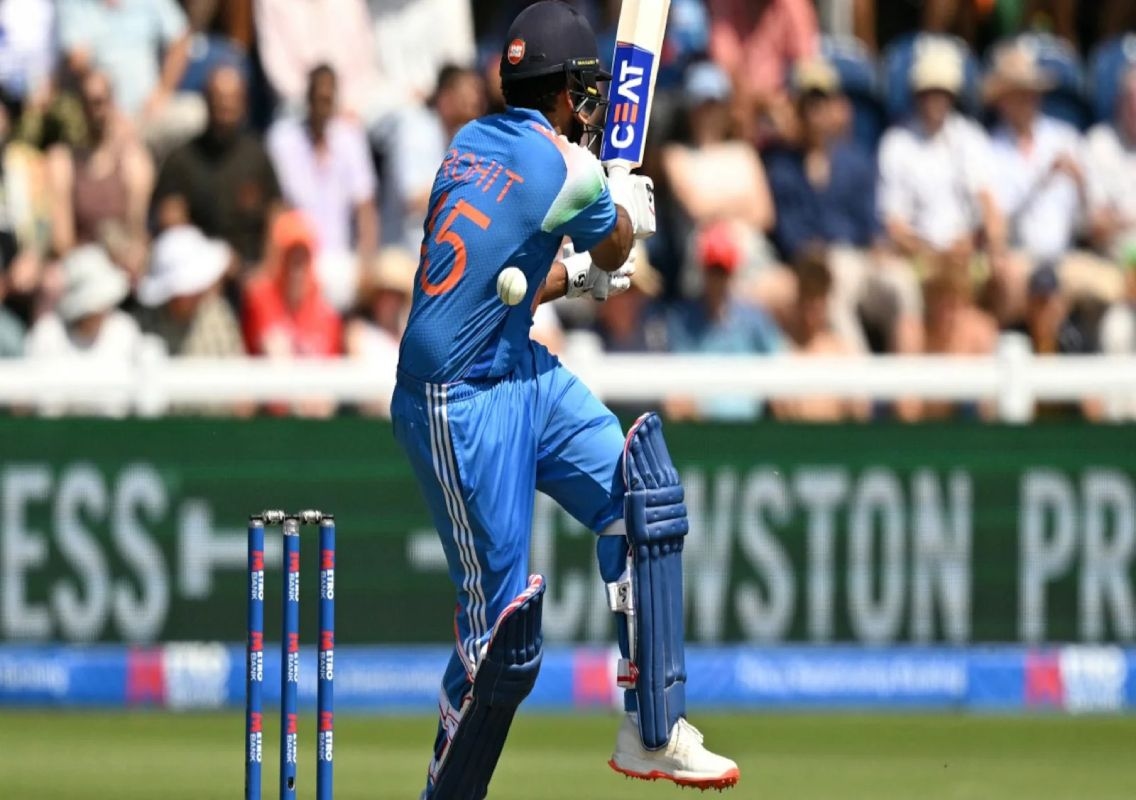


Cardiff: Former England all-rounder Ravi Bopara has raised concerns over India’s ability to handle short-pitched bowling after their batting unit faltered in the second ODI against England at Sophia Gardens. India were bowled out for 233, with England’s fast bowlers exploiting bounce and pace to trigger a collapse.
Bopara observed that repeated dismissals to the short ball may have created a psychological impact on Indian batters, leading to visible discomfort at the crease. Speaking during the mid-innings broadcast on Sky Sports, he said the pattern of wickets falling to bouncers seemed to transmit pressure back into the dressing room.
According to him, English conditions—with their natural variation in bounce and seam movement—make short-pitched bowling a potent weapon, especially when batters are unsure whether to attack or defend.
England’s disciplined bowling turns the game
England’s bowlers executed a clear strategy, targeting the upper body and forcing Indian batters into uncomfortable positions. The approach paid rich dividends, with the pace unit claiming nine wickets collectively.
Former England captain Eoin Morgan praised the hosts for maintaining discipline, particularly during the middle overs. He noted that England tightened their lines and lengths in the second powerplay, restricting India’s scoring opportunities.
Morgan explained that the bowlers lured Indian batters into playing cross-batted shots—pulls and hooks that often resulted in mistimed strokes. This not only slowed the scoring rate but also created wicket-taking chances at regular intervals.
He emphasised that such tactical awareness, combined with consistent execution, allowed England to control the game despite India showing early promise.
Kohli’s dismissal raises eyebrows
A key moment in India’s innings was the dismissal of Virat Kohli, who looked set for a big score before being dismissed for 65. Morgan described this as an unusual occurrence, given Kohli’s reputation for converting starts into match-winning centuries.
He pointed out that Kohli appeared in excellent touch, displaying crisp footwork and controlled stroke play. His ability to rotate strike and maintain a steady scoring rate had anchored India’s innings, making his eventual dismissal a turning point.
Morgan remarked that such lapses are rare in Kohli’s career, where he has consistently punished opposition attacks after getting set.
Atkinson strengthens England’s attack
Former England skipper Michael Atherton highlighted the importance of Gus Atkinson in England’s bowling combination. His inclusion provided balance and allowed captain Harry Brook to rotate his bowlers more effectively.
Atherton noted that with an additional seam option available, Brook could manage the workload of premier pacer Jofra Archer more efficiently. Atkinson’s spell proved decisive as he dismissed key batters including Shubman Gill and Shreyas Iyer.
This depth in England’s pace attack ensured sustained pressure on India throughout the innings, preventing any meaningful recovery.
Middle-order collapse costs India crucial runs
Former India wicketkeeper-batter Deep Dasgupta expressed disappointment over India’s middle-order performance, stating that the team fell short by approximately 30–40 runs.
Speaking on BBC Radio 5 Sports Extra, Dasgupta pointed out that India had six overs remaining when they were bowled out, indicating poor utilisation of available resources.
He added that at one stage, India appeared on course for a total close to 300, but the loss of wickets in clusters derailed their progress. Despite the modest score, Dasgupta believed the pitch still offered enough assistance for bowlers to make a contest out of the game.
Conclusion
India’s performance in Cardiff has once again highlighted challenges against short-pitched bowling in overseas conditions. While England’s execution deserves credit, the visible discomfort among Indian batters against the bouncer raises questions about technique and temperament.
Going forward, addressing this issue will be crucial for India, especially with major international tournaments on the horizon. Adapting to conditions, improving shot selection, and building confidence against pace could determine their success in similar environments.