







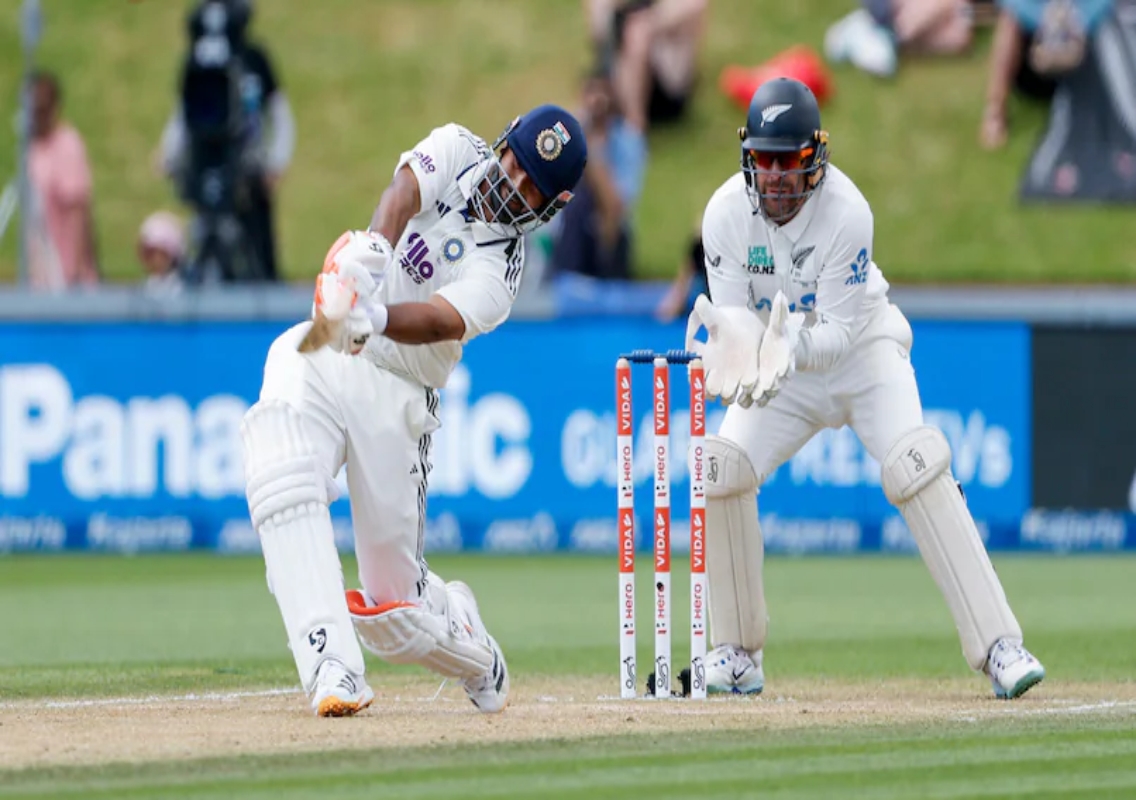


Wellington: India produced a remarkable batting performance against New Zealand in the first Test at the Basin Reserve, ending a 93-year wait for a rare achievement in overseas Test cricket. All five of India’s top-order batters scored at least 50 runs in the same innings, the first time the country had accomplished the feat in an away Test.
The landmark came during India’s first innings on Day 3 and continued into Sunday, November 22, when the visitors extended their advantage with a dominant display. Yashasvi Jaiswal, KL Rahul, Devdutt Padikkal, Shubman Gill and Rishabh Pant all crossed the half-century mark, giving India an unusually strong contribution from the top five.
India had begun their reply after New Zealand were dismissed for 368. The visitors eventually declared at 720 for nine, taking a massive first-innings lead of 352 runs.
The performance was significant not only because of the individual scores but also because it represented a first in India’s overseas Test history. The team had previously recorded five instances of its top five scoring half-centuries in the same innings, but all four earlier occasions before Wellington had come at home.
Five Indian batters cross the 50-run mark
The historic innings was built around contributions from every member of India’s top five.
Yashasvi Jaiswal set the tone with an aggressive 85 off 89 deliveries. His innings included 16 fours and helped India recover from New Zealand’s first-innings total with a positive start.
KL Rahul followed with a composed 136 off 290 balls. The opener combined patience with calculated strokeplay and anchored the innings through the middle sessions. His century was his 13th in Test cricket and his maiden hundred in New Zealand.
Devdutt Padikkal contributed 80 off 175 deliveries, continuing the momentum after the opening partnership. His innings included 10 boundaries and helped India build a substantial platform.
Captain Shubman Gill came close to another Test century but fell for 98 off 146 balls. He was dismissed by Jacob Duffy in the final over of Day 3, narrowly missing the three-figure mark.
Rishabh Pant completed the five half-centuries with an unbeaten 55 at stumps on Saturday. He returned on Sunday and went on to score 128 off 153 deliveries, adding a century to an already historic team performance.
The five scores meant that every batter in India’s top order had made a substantial contribution before the middle and lower order continued the scoring.
A first for India in overseas Test cricket
The achievement at Wellington was particularly notable because India’s top five had never all scored at least 50 in the same away Test innings before.
The team had previously accomplished the feat four times, with all those instances occurring in India. The earlier occasions were:
- Against Australia in Kolkata in 1998.
- Against New Zealand in Mohali in 1999.
- Against Sri Lanka at Brabourne in 2009.
- Against England in Dharamsala in 2024.
The Wellington Test became the fifth instance overall and the first outside India.
The International Cricket Council also highlighted the achievement, noting that it was the first time India’s top five had all scored half-centuries in an away Test. It underlined the depth of India’s batting performance in conditions where visiting teams traditionally face challenges from New Zealand’s seam attack and changing weather conditions.
The 93-year reference reflects the length of India’s Test history, which began in 1932. The Wellington performance represented a milestone that had eluded the team throughout its overseas Test journey.
India also create a rare partnership record
India’s batting display produced another statistical landmark. During the innings, the team recorded five partnerships of at least 50 runs for each of the first five wickets.
Pant and nightwatchman Anshul Kamboj added 68 runs for the fifth wicket, completing the sequence after the earlier partnerships had already crossed the half-century mark.
This was only the second instance of a team recording five partnerships of 50 or more runs for each of the first five wickets in a Test innings. It was also the first such occurrence against New Zealand in a home Test.
The partnership record showed how consistently India rebuilt after each dismissal. Instead of allowing New Zealand to take a series of quick wickets, the visitors repeatedly put together substantial stands and prevented the hosts from regaining control.
Kamboj also made a useful contribution with 38 off 42 balls, helping Pant extend India’s advantage before the wicketkeeper-batter accelerated towards his century.
Rahul’s century and Gill’s near miss strengthen India’s position
Rahul’s 136 was the highest individual score among India’s top five and provided the foundation for the innings. His ability to bat for a long period allowed the other batters to play around him and take advantage of the conditions.
The century also completed a rare personal milestone. Rahul became the first Indian opener to score Test centuries in all four SENA countries — South Africa, England, New Zealand and Australia.
Gill’s 98 was another major contribution. The captain had looked set for a hundred before Duffy dismissed him in the final over of the third day. Although he missed the milestone, his innings ensured India maintained their momentum after Rahul’s departure.
Jaiswal and Padikkal also played important roles by turning their starts into substantial scores. Their contributions meant New Zealand could not focus its bowling attack on one batter or one end for an extended period.
The collective performance was the defining feature of India’s innings, with the top five producing runs at different stages rather than relying on one or two individual efforts.
India take a 352-run first-innings lead
New Zealand had earlier posted 368 in their first innings after recovering from a difficult position. The hosts had been reduced to 70 for five before Henry Nicholls and Glenn Phillips changed the course of the innings with a 216-run sixth-wicket partnership.
Nicholls scored 175, while Phillips made 118. Their contributions helped New Zealand reach a competitive total despite losing half their side early.
India’s reply, however, proved far more substantial. Rahul’s century, the half-centuries from the other top-order batters and Pant’s aggressive hundred took the visitors to 720 for nine before the declaration.
The resulting 352-run first-innings lead put India in a commanding position. The hosts faced the challenge of batting again against an Indian attack that had already dismissed them for 368.
The Wellington innings will be remembered for more than its large total. India’s top five delivered a collective performance that had not been seen in an overseas Test innings for the team in its 93-year history. The rare partnership sequence added another layer to the achievement, making the first Test a landmark occasion for Indian batting in New Zealand.