


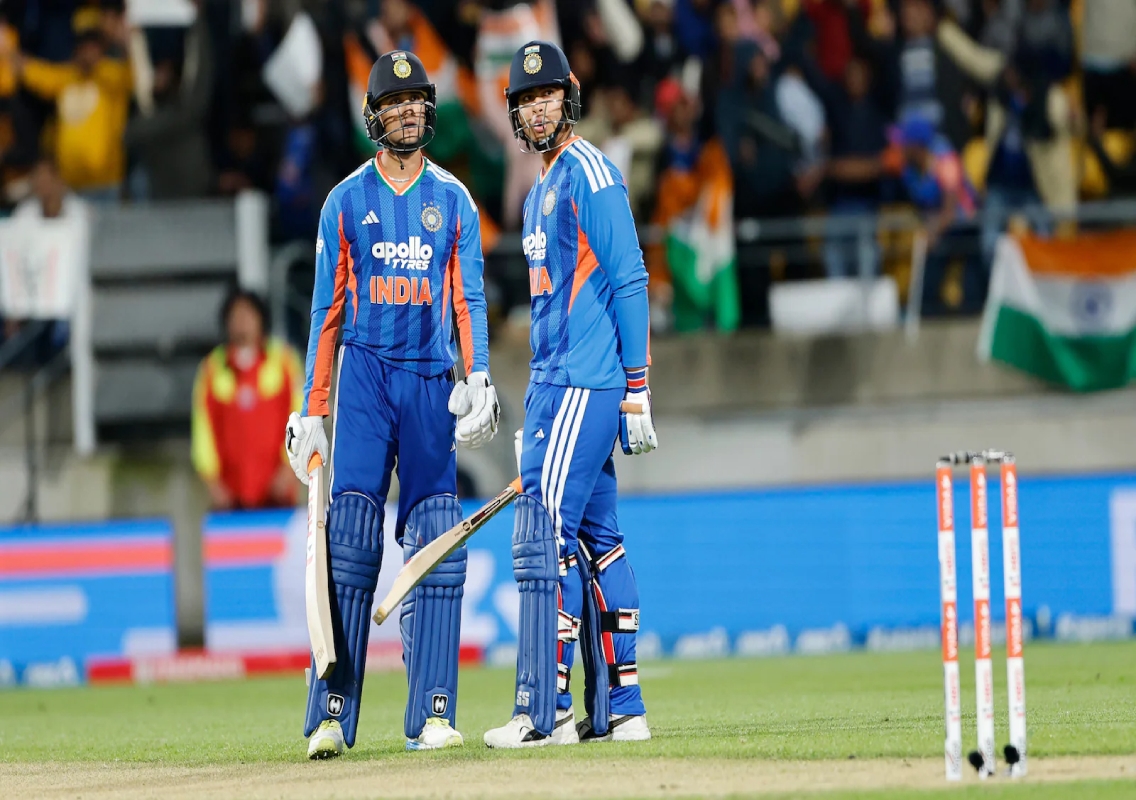


Christchurch: India rewrote the record books in T20 International cricket on Tuesday, October 27, by reaching 100 runs in just five overs during the third T20I against New Zealand. Openers Abhishek Sharma and Vaibhav Sooryavanshi launched a spectacular assault while chasing a target of 199, setting a new world record for the fastest team century in the format.
The Indian opening pair attacked from the outset, putting the New Zealand bowlers under immediate pressure. Abhishek produced a blistering 15-ball half-century, while Sooryavanshi provided aggressive support at the other end. Their explosive start helped India surpass the previous benchmark for the quickest team hundred in T20I cricket.
India set new benchmark with 100 in five overs
India reached the 100-run mark in just 30 balls, eclipsing Romania’s previous world record of 100 runs in 32 balls, or 5.2 overs, against Serbia in 2021.
The achievement also surpassed the record among Test-playing nations. South Africa had previously held that distinction after reaching 100 in 5.3 overs against the West Indies.
India’s remarkable scoring rate demonstrated the impact of an aggressive approach in the shortest format, where a handful of overs can dramatically change the course of a chase. By reaching three figures within five overs, the visitors established a new standard for power-hitting at the international level.
Abhishek Sharma races to a 15-ball fifty
Abhishek was at the heart of India’s explosive beginning. His half-century in just 15 balls helped India reach 50 in 2.2 overs, equalling the world record for the fastest team fifty in T20I cricket.
The milestone also set a new benchmark among Test-playing countries. Before this match, New Zealand and South Africa shared the fastest team fifty record among Test-playing nations, having reached the mark in 2.4 overs.
Across all T20I-playing teams, Papua New Guinea had reached 50 in 2.2 overs against Vanuatu in 2019, while Romania had achieved the same feat against Serbia in 2021. India’s effort against New Zealand matched that record.
The rapid start underlined Abhishek’s ability to put pressure on the opposition early in an innings. His 15-ball fifty, combined with Sooryavanshi’s attacking contribution, gave India a remarkable platform in their pursuit of the target.
Romania and South Africa’s records surpassed
Before India’s innings, Romania held the overall record for the fastest team hundred in T20Is, having reached 100 in 5.2 overs against Serbia in 2021. South Africa’s 5.3-over century against the West Indies had been the previous best among Test-playing nations.
India’s five-over effort moved ahead of both records. The achievement was particularly significant because it came during an international match against New Zealand, one of the established sides in the format.
The record also highlighted how quickly teams can build momentum in modern T20 cricket. An opening partnership that combines calculated aggression with sustained boundary-scoring can put a bowling attack on the defensive before it has time to settle into a rhythm.
India chase 199 in the third T20I
The record-breaking start came as India pursued New Zealand’s target of 199 in the third match of the five-game T20I series. The match was being played in Wellington on Tuesday, with the Indian openers taking the attack to the hosts from the opening overs.
The third T20I followed two successful run chases by India earlier in the series. India had won the opening match in Christchurch after chasing 226, and then defeated New Zealand in the second T20I after reaching a target of 181.
The five-match series forms part of India’s tour of New Zealand, with further T20Is scheduled before the teams move on to the ODI leg of the tour.
India’s record-breaking start in the third match added another landmark to the team’s growing list of achievements in the shortest format. The five-over century and the rapid team fifty showcased the scale of the opening assault, while the chase itself remained the key task as India sought to convert the extraordinary beginning into another victory.