







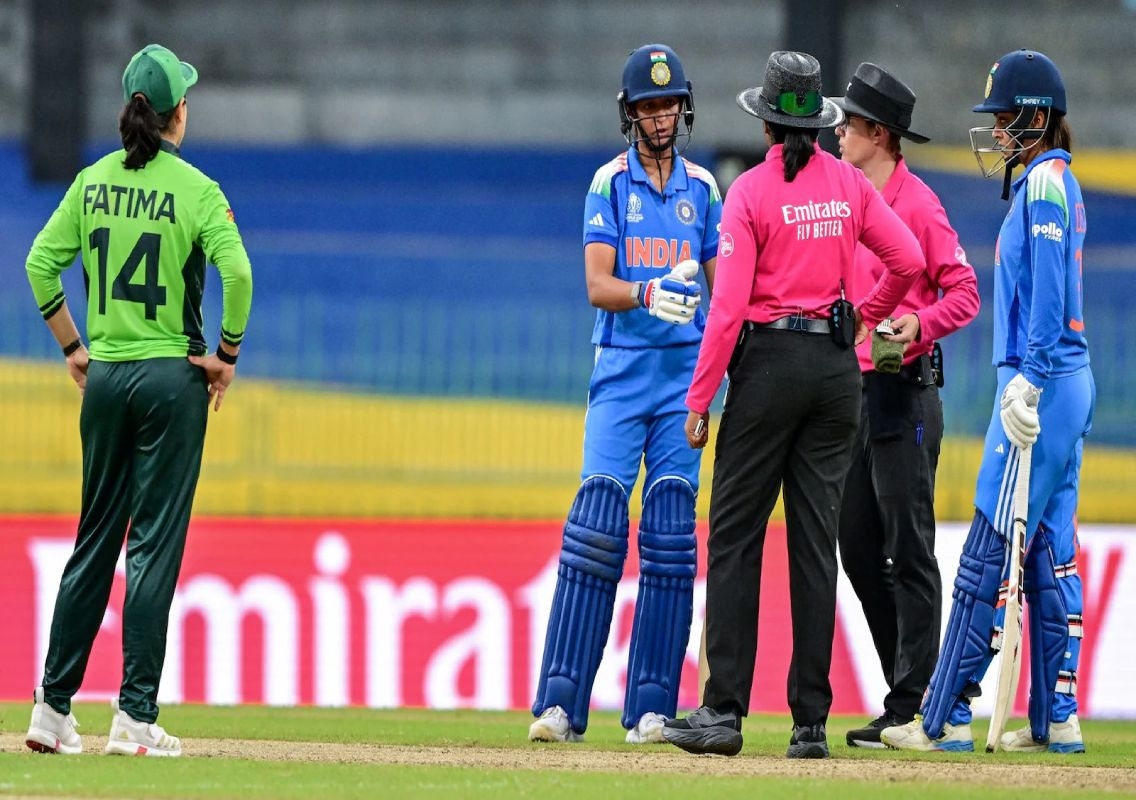


Edgbaston: The much-anticipated India-Pakistan clash in the ICC Women’s T20 World Cup returns on Sunday, bringing with it not just the intensity of cricket but also an off-field subplot surrounding post-match handshakes.
Rivalry renewed on global stage
Matches between India women’s national cricket team and Pakistan women’s national cricket team rarely need added context. The rivalry carries its own weight, shaped by history, emotion and high expectations. For India, the fixture marks the beginning of their campaign, while Pakistan will look to make an early impact in the tournament.
Veteran skipper Harmanpreet Kaur, set to feature in her 10th World Cup, acknowledged the inevitable pressure that comes with such high-profile encounters. She emphasised that the team’s focus remains on embracing the occasion rather than being overwhelmed by it.
“Whenever we play against Pakistan, pressure is going to be there,” she said, adding that enjoying the challenge is key to performing well on such stages.
Handshake debate adds off-field intrigue
Beyond the cricketing contest, recent India-Pakistan matches have drawn attention for what happens after the game — specifically, whether players exchange handshakes.
When asked about the issue, Harmanpreet maintained a clear stance, reiterating that the team is solely focused on cricket. According to her, discussions within the squad revolve only around the game and not external narratives.
Her remarks reflect India’s attempt to block out distractions and maintain clarity of purpose ahead of a crucial opener. While the handshake debate continues to attract attention, the players appear determined not to let it overshadow the sport itself.
Familiar conditions but need for flexibility
Edgbaston holds positive memories for India, having hosted their silver medal campaign at the 2022 Commonwealth Games. Harmanpreet described returning to the venue as a familiar and comforting experience, likening it to coming back home.
However, she also cautioned against relying too heavily on past success. English conditions can be unpredictable, requiring teams to adapt quickly. She stressed the importance of flexibility in both strategy and execution.
India’s batting unit, particularly the top order, will be under scrutiny to provide a solid start. Much will also depend on Richa Ghosh, who often plays the finisher’s role under challenging circumstances.
Her recent performance in a practice match against the England women’s cricket team has boosted confidence within the squad. Harmanpreet underlined that the team has always backed her abilities.
Pakistan aim to capitalise on bowling strength
Pakistan, meanwhile, are expected to rely on their disciplined bowling attack. Their strategy typically involves controlling the run flow and taking the game deep, forcing opponents into errors under pressure.
Such an approach could test India’s adaptability, especially in the middle overs. A tightly contested match could hinge on key moments and individual brilliance.
For Harmanpreet, this match is another chapter in a long career defined by high-stakes encounters against Pakistan. Her passion for the game remains undiminished, as she expressed her desire to continue playing for as long as possible.
Conclusion
As India and Pakistan prepare to face off once again, the spotlight will be firmly on both the cricket and the surrounding narratives. While the handshake debate adds an extra layer of intrigue, both teams appear committed to letting their performances on the field take centre stage. In a tournament where momentum is crucial, a win in this marquee clash could shape the trajectory of their campaigns.