







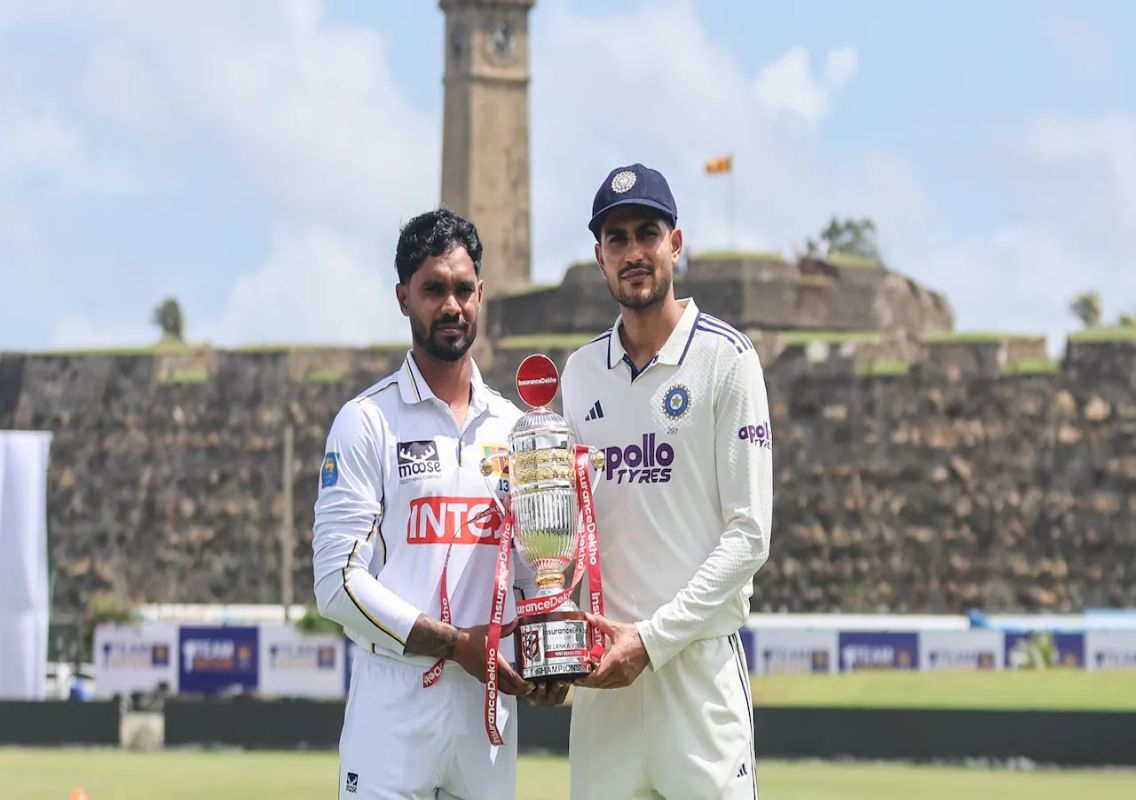


Galle: India will begin their two-Test series against Sri Lanka on Saturday at the Galle International Cricket Stadium, with the opening match carrying significance far beyond the immediate contest. The visitors are set to play their 600th Test, becoming only the third team after England and Australia to reach the landmark. Galle, meanwhile, will become the first venue in Asia to host 50 Test matches.
The first Test also marks an important stage in India’s campaign for the 2027 World Test Championship final. India currently sit fifth in the WTC standings after nine matches, with four wins, four defeats and one draw. A 2-0 series victory over Sri Lanka would be important if India are to keep their qualification hopes alive.
India face a demanding spin challenge
The Galle surface is expected to provide a major examination for India’s batting unit as the Test progresses. The conditions can become increasingly favourable to spin, making shot selection, patience and the ability to counter-turning deliveries crucial.
India’s squad includes several players capable of handling such conditions, including captain Shubman Gill, Yashasvi Jaiswal, KL Rahul and Ravindra Jadeja. Kuldeep Yadav and Manav Suthar also give the visitors specialist spin options.
The match is particularly important for head coach Gautam Gambhir’s Test set-up. India have enjoyed considerable success in white-ball cricket under Gambhir, but their Test record has been far less convincing. Previous home defeats against New Zealand and South Africa have increased the pressure on the red-ball side.
Gill’s WTC mission adds pressure
Captain Shubman Gill has already outlined the larger objective facing the team. India have nine Tests remaining in their current WTC campaign, making every match increasingly important.
The Sri Lanka series therefore provides India with an opportunity to collect valuable points while also addressing some of the concerns that have affected their Test performances.
Gill’s individual form will also be closely watched. He is currently ranked among the leading Test batters and has taken on greater responsibility since becoming India’s Test captain. His role at No. 4 will be central to India’s plans, particularly if the openers face difficulties against Sri Lanka’s bowlers.
Predicted India XI includes Jurel, Sarfaraz misses out
According to the predicted XI published ahead of the match, India are expected to field Yashasvi Jaiswal and KL Rahul as the opening pair, followed by Devdutt Padikkal, Shubman Gill, Rishabh Pant, Dhruv Jurel and Ravindra Jadeja. Manav Suthar, Prasidh Krishna, Kuldeep Yadav and Mohammed Siraj complete the projected line-up.
That combination means Sarfaraz Khan could miss out despite being part of the squad.
Sarfaraz’s selection has been a talking point because he offers an aggressive option against spin and has previously impressed in domestic first-class cricket. Former India players, including Mohammad Kaif and R Ashwin, have also discussed his suitability for the Sri Lankan conditions.
However, the team management appears to be leaning towards continuity, with Dhruv Jurel retaining his place in the predicted XI. The wicketkeeper-batter has remained part of India’s Test plans, although his recent returns have not always been consistent.
The final XI will ultimately be confirmed at the toss.
India have three specialist spin options
The selection of Ravindra Jadeja, Kuldeep Yadav and Manav Suthar would give India three different spin options.
Jadeja brings the experience of a senior all-rounder and remains one of India’s most important players in Asian conditions. His ability to contribute with both bat and ball gives the team additional balance.
Kuldeep offers a different challenge as a wrist-spinner, while Suthar could provide a left-arm orthodox option if the team opts for three specialist spinners.
The bowling attack also includes Mohammed Siraj and Prasidh Krishna. Their role could be particularly important with the new ball, when conditions may offer more assistance to seamers before the pitch becomes increasingly spin-friendly.
Sri Lanka have their own spin weapons
Sri Lanka enter the match with a squad containing experienced players and several familiar threats for India.
Dhananjaya de Silva leads the hosts, while Kamindu Mendis, Dinesh Chandimal and Ramesh Mendis add experience to the batting and all-round options.
Prabath Jayasuriya is likely to be one of the biggest threats to India’s right- and left-handed batters. The hosts also have pace options in Asitha Fernando, Dilshan Madushanka and Vishwa Fernando.
The Sri Lankan side will be aware that India’s batting depth is substantial, but conditions at Galle can make even established batters vulnerable once the ball starts turning sharply.
Rain could disrupt the opening day
Weather is another factor surrounding the first Test. Forecast information cited by NDTV suggested cloudy and breezy conditions in Galle, with a high possibility of rain. The forecast indicated temperatures around 30-31 degrees Celsius and a significant chance of precipitation.
Any loss of playing time would add another layer of complexity to a match in which both teams are seeking a strong start to the series.
For India, a shortened first day could make the toss and the decision to bat or bowl even more important.
A landmark Test for Indian cricket
India’s 600th Test is a major milestone in the country’s cricket history. England remain comfortably ahead with more than 1,000 Tests, while Australia are the other nation to have already crossed the 600-mark. India will now join that exclusive group.
The occasion, however, cannot distract the team from the immediate objective. India need results in Sri Lanka if they are to strengthen their WTC campaign.
The two-Test series is therefore a test of both India’s current squad and Gambhir’s red-ball strategy. With spin expected to dominate as the matches progress, the visitors will need their batters to combine aggression with patience and their bowlers to make the most of changing conditions.
For Gill, the challenge is even greater. As captain, he must manage a team balancing experience with emerging players while keeping India’s WTC hopes alive. The first Test at Galle offers the first opportunity to demonstrate whether India can turn their strong white-ball momentum into consistent success in the longest format.