







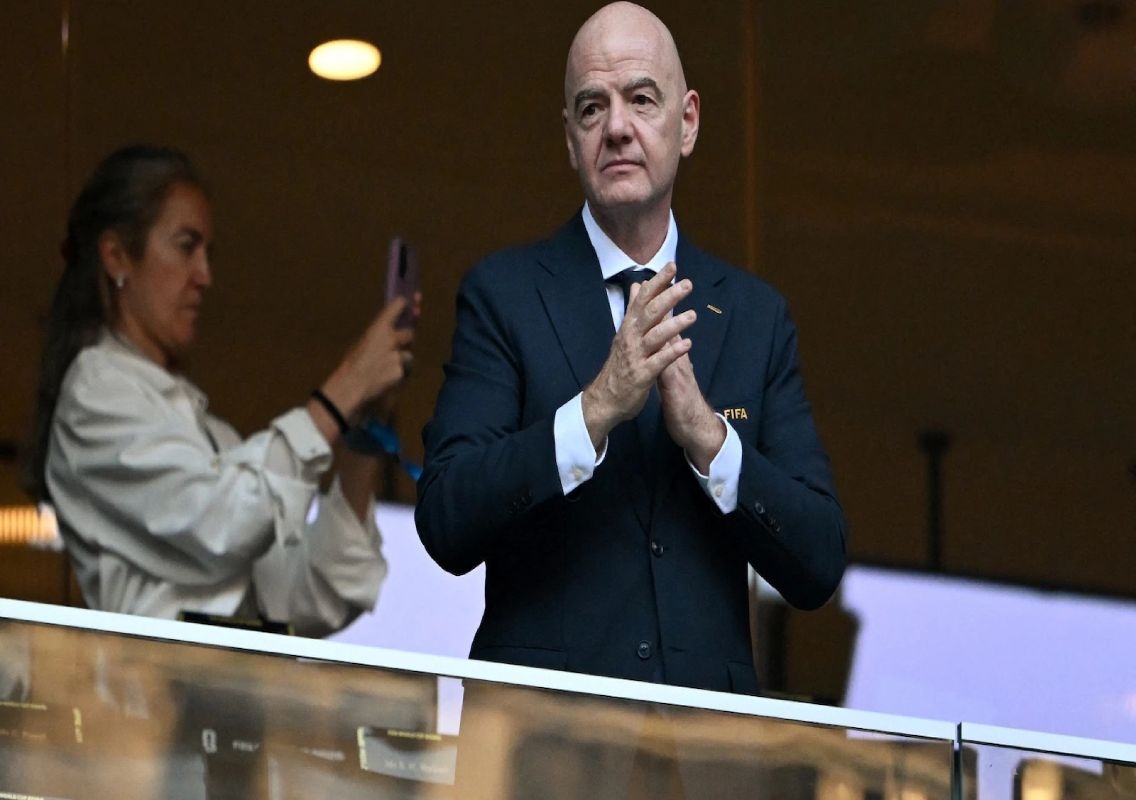


Zurich: International Olympic Committee has been asked to investigate Gianni Infantino over alleged breaches of political neutrality, following a controversial decision involving United States striker Folarin Balogun during the FIFA World Cup 2026.
The complaint, filed by advocacy group FairSquare and reported by Reuters, raises serious questions about the independence of football’s governing bodies and potential external influence in disciplinary decisions.
Controversy over Balogun red card decision
The issue centres on Balogun’s red card during the United States’ Round of 32 win over Bosnia and Herzegovina national football team. The striker was sent off in the 64th minute for a challenge on Tarik Muharemovic, which, under FIFA regulations, carries an automatic one-match suspension.
However, in a surprising development, FIFA announced on July 5 that the suspension would be “suspended for a probationary period of one year” under Article 27 of its disciplinary code. The decision meant Balogun was eligible to play in the Round of 16 clash against Belgium national football team on July 6.
No detailed explanation accompanied the decision, sparking widespread debate and criticism across football circles.
Allegations of political interference
FairSquare’s complaint alleges that Infantino violated the IOC’s rules on political neutrality through multiple actions linked to Donald Trump. The report highlights that Trump publicly called for a review of the red card decision and later confirmed he had spoken directly with Infantino.
Trump defended his intervention, stating he believed the incident did not warrant a foul and described it as a collision between “two great athletes”. He also praised FIFA’s eventual decision to allow Balogun to play, calling it “brilliant”.
Infantino acknowledged receiving the call but denied influencing the outcome, maintaining that FIFA’s judicial bodies operate independently.
IOC rules and ethical concerns
As an IOC member since 2020, Infantino is bound by the Olympic Charter and the IOC Code of Ethics, which require strict political neutrality. FairSquare claims there is “compelling evidence” of multiple breaches, including public support for Trump and involvement in politically linked initiatives.
The complaint also references Infantino’s endorsement of Trump for the Nobel Peace Prize, appearances tied to political events, and FIFA’s alleged association with a fan engagement platform linked to data collection efforts.
These allegations, if substantiated, could have significant implications for governance standards in global sport.
Wider support and previous complaints
The issue is not isolated. FairSquare had earlier filed a complaint with FIFA’s Ethics Committee in December, which was supported by the Norwegian Football Federation. Additionally, around 50 members of the European Parliament reportedly backed a separate submission in June.
Despite mounting scrutiny, neither FIFA nor the IOC has issued an official response to the latest complaint.
Match outcome and ongoing debate
Balogun went on to feature in the Round of 16 match against Belgium, where the United States suffered a heavy 4-1 defeat, ending their World Cup campaign.
While the result itself closed the chapter on the team’s tournament run, the controversy surrounding the decision continues to generate debate over fairness, transparency, and the role of external influence in sport.
Conclusion
The complaint against Gianni Infantino places global football governance under the spotlight, raising fundamental questions about independence and accountability. As calls for an investigation grow louder, the response from the IOC could prove crucial in shaping future standards for political neutrality in international sport.