







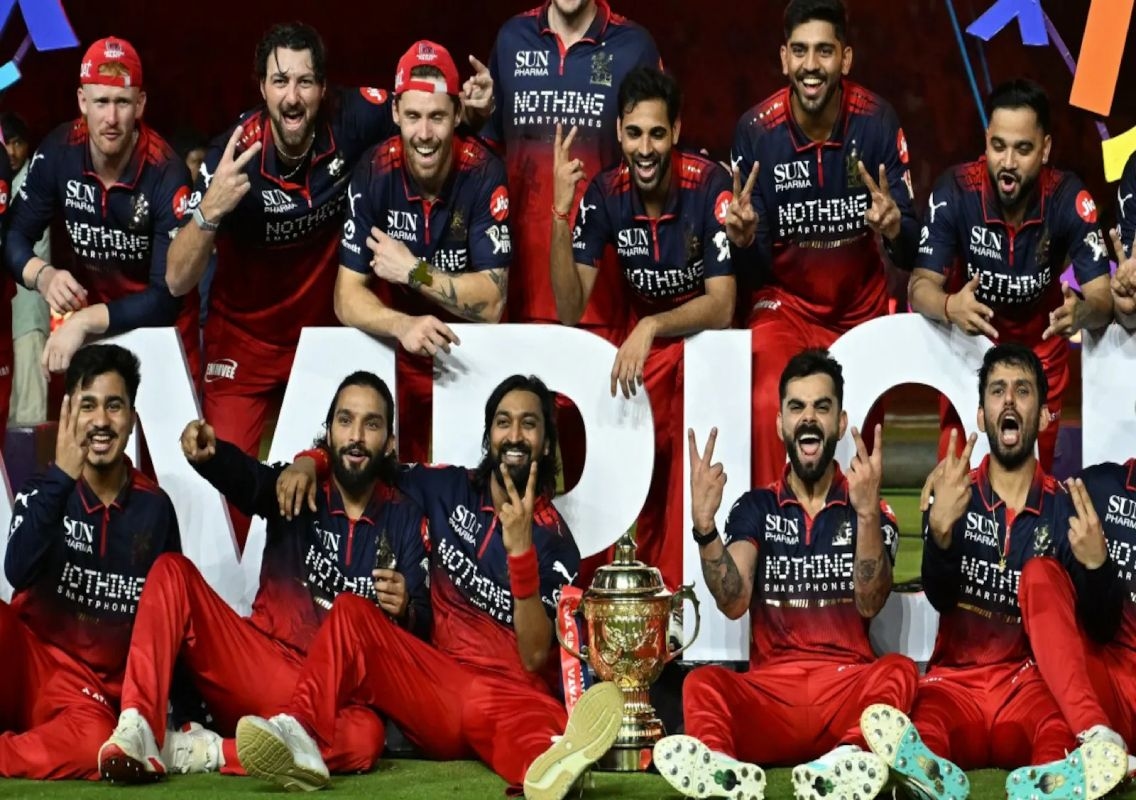


Ahmedabad: Royal Challengers Bengaluru capped off a dominant season by clinching the Indian Premier League 2026 title, walking away with a massive prize purse of ₹20 crore after defeating Gujarat Titans in the final.
The runners-up, Gujarat Titans, were awarded ₹12.5 crore following their five-wicket defeat at the Narendra Modi Stadium. The prize distribution reflects the league’s continued financial growth and global stature as one of the richest T20 tournaments in the world.
Complete prize money distribution
The IPL 2026 prize pool rewarded not just the finalists but also the top-performing teams in the playoffs.
- Champions – Royal Challengers Bengaluru: ₹20 crore
- Runners-up – Gujarat Titans: ₹12.5 crore
- Third place – Rajasthan Royals: ₹7 crore
- Fourth place – Sunrisers Hyderabad: ₹6.5 crore
RCB’s victory makes them only the third franchise in IPL history to defend their title successfully, joining elite company alongside Mumbai Indians and Chennai Super Kings.
Kohli leads RCB to glory again
The final saw Virat Kohli once again rise to the occasion, scoring an unbeaten 75 off 42 balls to anchor the chase of 156. His innings ensured RCB crossed the finish line with two overs to spare.
Kohli’s performance not only secured the trophy but also continued a remarkable trend—RCB have remained unbeaten since 2025 in matches where he scores a half-century.
His knock, laced with nine fours and three sixes, was instrumental in guiding the team through a brief middle-order wobble, reaffirming his status as one of the greatest match-winners in T20 cricket.
Bowlers set the foundation for RCB
Before the chase, RCB’s disciplined bowling unit played a crucial role in restricting Gujarat Titans to 155/8.
Rasikh Salam Dar was the standout performer with figures of 3/27, while Bhuvneshwar Kumar and Josh Hazlewood chipped in with two wickets each.
Their ability to strike early and maintain pressure in the death overs ensured that GT never gained full momentum despite a fighting effort.
Gujarat Titans fall short despite resilience
Gujarat Titans, led by Shubman Gill, struggled to build partnerships on a mixed-surface pitch.
Washington Sundar top-scored with a resilient half-century, but the lack of support from the rest of the batting lineup proved costly.
The Titans also faced logistical challenges leading up to the final, including travel delays and a tight match schedule, which may have contributed to their underwhelming total.
Individual milestones add to IPL riches
Apart from team prize money, IPL 2026 also saw players earning significant bonuses through individual awards and match fees.
RCB’s win further highlighted the depth of their squad, while several players across teams, including emerging stars and seasoned performers, benefitted financially from consistent performances throughout the tournament.
The league continues to provide a lucrative platform not just for international stars but also for young Indian talents to earn and establish themselves on the global stage.
IPL’s financial muscle continues to grow
The substantial prize money reflects the IPL’s ever-expanding commercial success. With massive broadcast deals, sponsorships, and global viewership, the tournament remains the most financially rewarding cricket league in the world.
For franchises like RCB, the ₹20 crore prize is only part of the overall financial gains, which also include sponsorship revenues, brand value growth, and increased fan engagement.
Conclusion
Royal Challengers Bengaluru’s ₹20 crore payday is a fitting reward for a season defined by consistency, teamwork, and match-winning performances. Gujarat Titans, despite finishing second, also walk away with a significant ₹12.5 crore, underlining the high stakes and rewards of IPL cricket.
As the league continues to grow in scale and influence, both financially and competitively, IPL 2026 once again proved why it remains the crown jewel of T20 cricket.