







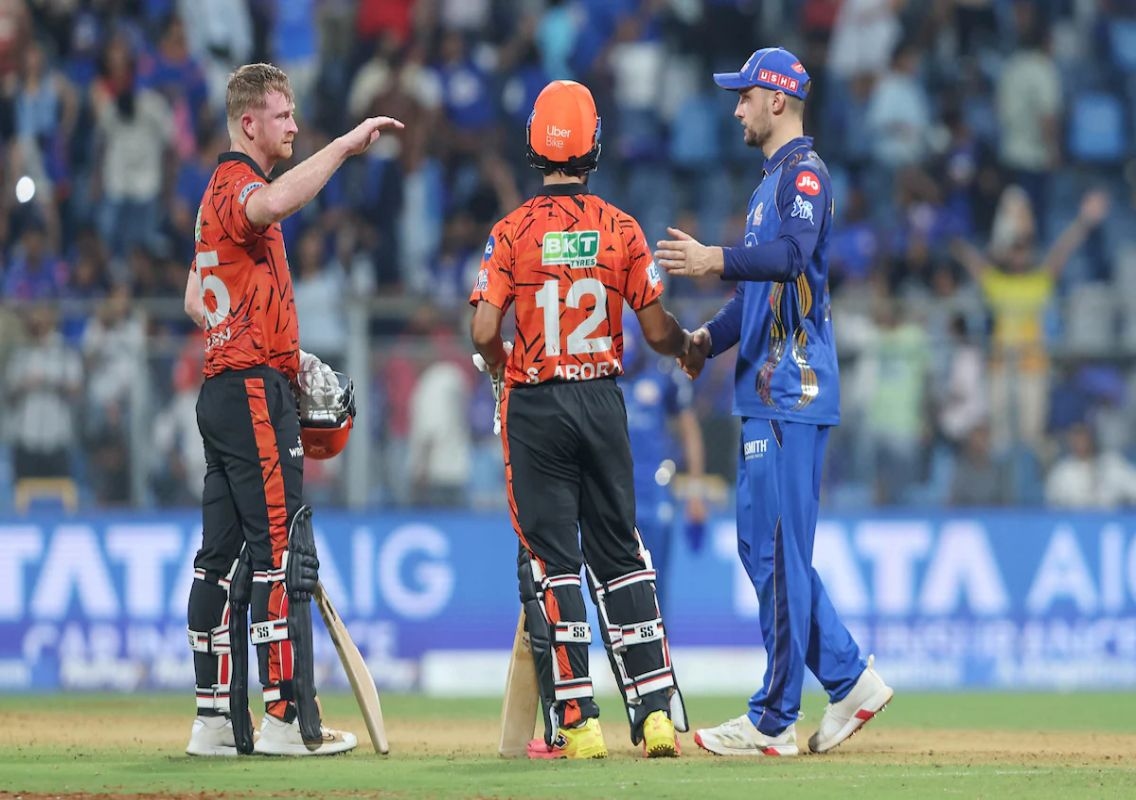


Mumbai: IPL 2026 is redefining T20 cricket with an unprecedented surge in high-scoring matches, as totals exceeding 200 have become a regular feature rather than an exception. With 40 matches completed in the league stage, a staggering 31 innings have crossed the 200-run mark, signalling a dramatic shift in the balance between bat and ball.
The ongoing season has also witnessed nine successful chases of 200-plus targets, underlining how even daunting totals are no longer safe. The recent clash between Mumbai Indians (MI) and Sunrisers Hyderabad (SRH), which produced a combined 492 runs, perfectly encapsulates this batting-dominated trend.
Powerplay aggression setting the tone
One of the primary reasons behind the surge in big totals is the fearless approach adopted by teams during the powerplay overs. Instead of cautiously building innings, top-order batters are attacking from the outset, maximising fielding restrictions.
Players such as Abhishek Sharma have thrived in this approach, scoring 425 runs at an astonishing strike rate of over 209. Notably, seven of the top 10 batters in the Orange Cap race this season are openers, including Vaibhav Suryavanshi and Virat Kohli.
This aggressive intent at the top has significantly raised team totals, often providing a platform for even bigger finishes later in the innings.
Impact Player rule reshaping strategies
The introduction of the Impact Player rule has further tilted the game in favour of batters. Teams now enjoy deeper batting line-ups, reducing the risk associated with early wickets.
Even after losing quick wickets, sides can continue attacking, knowing that an additional specialist batter can be introduced later. According to official broadcast data, the overall run rate in the IPL has jumped from 8.46 in 2023 to around 9.3 in the 2026 season.
This tactical flexibility has emboldened teams to maintain a high scoring rate throughout the innings.
Decline of spin influence
Another noticeable trend this season is the reduced role of spin bowling. Spinners have accounted for a smaller share of deliveries compared to previous editions, limiting their traditional role of controlling the middle overs.
Reports indicate that spinners have bowled just over 32 per cent of deliveries after the initial phase of the tournament, a sharp drop from more than 41 per cent during the same period in 2025.
With teams opting for more pace options, batters are receiving deliveries that come onto the bat more easily, resulting in increased boundary-scoring opportunities.
Flat pitches fuelling run-scoring
Pitch conditions across venues have also played a crucial role in the run glut. Surfaces have largely favoured batting, offering consistent bounce and minimal assistance to bowlers.
A notable example came when Delhi Capitals posted 264/2, the highest total of the season so far, only for Punjab Kings to chase it down with 265/4. Such matches highlight how flat tracks have reduced the margin for error for bowlers.
At venues like the Wankhede Stadium, the ball has come nicely onto the bat, enabling players to execute strokes with precision and confidence.
Smaller boundaries and tactical compromises
Shorter boundary dimensions at several venues have further contributed to the surge in six-hitting. Combined with team strategies that prioritise batting depth over bowling variety, this has made it increasingly difficult for bowlers to contain runs.
Interestingly, Indian batters have dominated the scoring charts this season, with only Heinrich Klaasen from SRH featuring among the top 10 run-scorers.
The six-hitting rate in IPL 2026 has reached record levels, reflecting the growing emphasis on power-hitting and aggressive intent.
Bowlers under pressure to adapt
The current trend has sparked debates about the evolving role of bowlers in T20 cricket. Former New Zealand pacer and Rajasthan Royals bowling coach Shane Bond believes bowlers need to innovate and adapt quickly.
He emphasised the need for varying angles, experimenting with run-ups, and improving tactical planning to counter the batting onslaught. Bond also pointed out that while elite bowlers like Jasprit Bumrah, Jofra Archer and Josh Hazlewood continue to perform, the overall standard of bowling needs to rise to match the evolution in batting.
Conclusion
IPL 2026 is shaping up to be a landmark season that could redefine T20 cricket’s future. With 200-plus scores becoming routine and chases of such totals increasingly common, the balance has clearly shifted towards batters.
While fans are enjoying the high-scoring thrillers, the onus is now on bowlers and coaching staff to innovate and restore some equilibrium to the game. Until then, the run-fest era of IPL 2026 shows no signs of slowing down.