







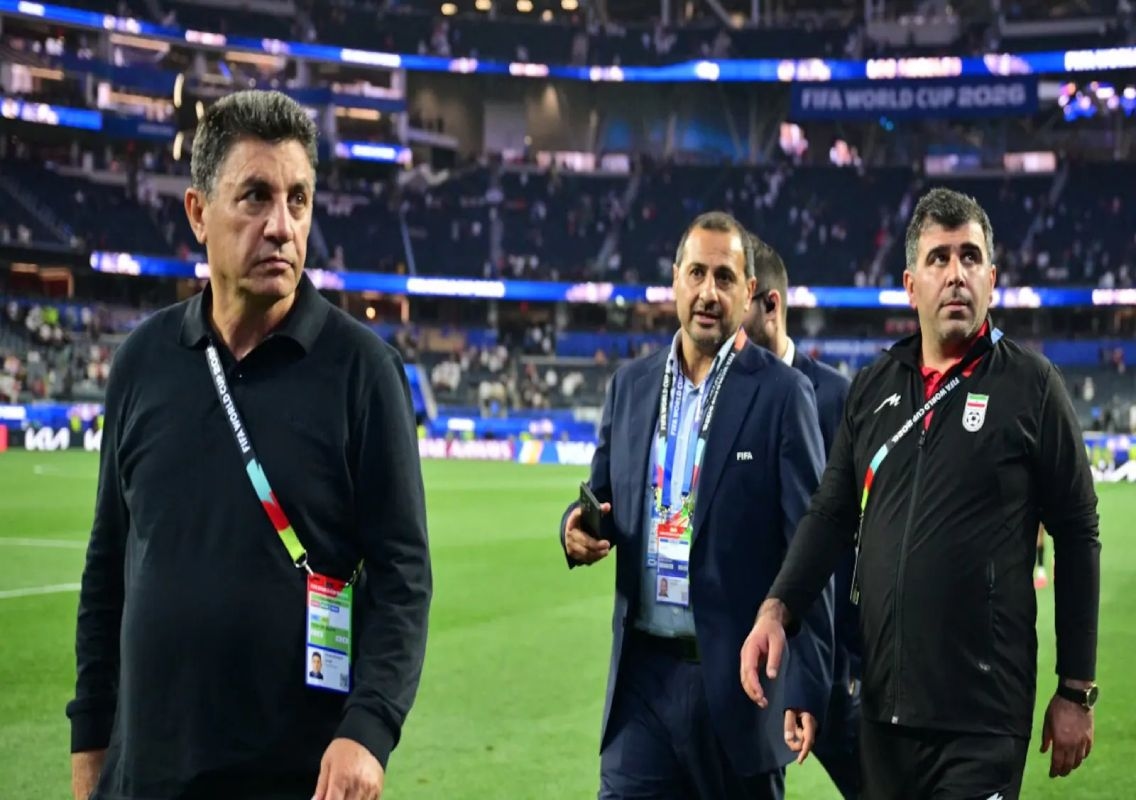


Los Angeles: Iran head coach Amir Ghalenoei has strongly criticised the decision to force his team to leave the United States immediately after their FIFA World Cup 2026 match, describing his side as the “most oppressed” team in the tournament.
The controversy erupted following Iran’s 2-2 draw against New Zealand at the SoFi Stadium, a match already charged with political undertones and external pressures.
Sudden travel order sparks outrage
According to Ghalenoei, the team had initially planned to stay overnight in California to allow players adequate recovery time after the physically demanding match. However, shortly after the final whistle, the squad was instructed to board a flight back to their training base in Tijuana, Mexico—approximately 140 miles away.
“They didn’t even give us time to recover,” Ghalenoei said through an interpreter. “After the game, they told us we had to leave immediately. Recovery time is very important, but we were asked to get on a plane right away. We are really troubled by that.”
The coach also expressed confusion over who issued the directive, stating that the team was left in the dark regarding the decision-making process.
Logistical challenges amid political tensions
Iran’s World Cup preparations have been anything but smooth. The team has faced significant logistical and administrative hurdles, compounded by ongoing geopolitical tensions.
Ghalenoei pointed out that several key members of the team’s support staff—including officials from the Iranian football federation and media personnel—were denied visas to enter the United States. This, he said, has severely impacted the team’s ability to function effectively during the tournament.
“It seems like others are making decisions for us,” he added. “We don’t know why this is happening. Everything has become very difficult.”
Captain Taremi echoes concerns
Iran captain Mehdi Taremi also voiced his frustration, describing the situation as deeply unfair and disruptive.
“We have to leave Los Angeles immediately, and it’s not good for us,” Taremi said. “I think FIFA should support us more. Everything is like a disaster for us.”
The lack of recovery time, combined with travel fatigue, could affect the players’ performance in the coming matches, raising concerns about competitive fairness.
Strong performance despite adversity
Despite the off-field challenges, Iran displayed resilience on the pitch. They fought back twice against New Zealand to secure a 2-2 draw, with Mohammad Mohebbi scoring the equaliser in the 64th minute.
The match itself was played in a tense atmosphere, with protests taking place outside the stadium. Inside, however, the Iranian team received strong support from fans.
Quick turnaround before next match
Adding to the team’s frustration is the fact that Iran’s next fixture is also scheduled to take place at the same venue—the SoFi Stadium—on Sunday, where they are set to face Belgium.
The decision to relocate the team back to Mexico immediately after the match, only to return again within days, has raised further questions about the planning and coordination surrounding their schedule.
Calls for intervention
Ghalenoei’s remarks have put the spotlight on FIFA and tournament organisers, with calls for greater clarity and fairness in handling team logistics.
The Iranian camp believes that such disruptions not only affect player recovery but also undermine the integrity of the competition.
Conclusion
As the FIFA World Cup 2026 progresses, Iran’s situation highlights the challenges that can arise when sport intersects with geopolitics.
While the team has shown determination on the field, their off-field struggles continue to dominate headlines, leaving organisers under pressure to address the concerns raised.