







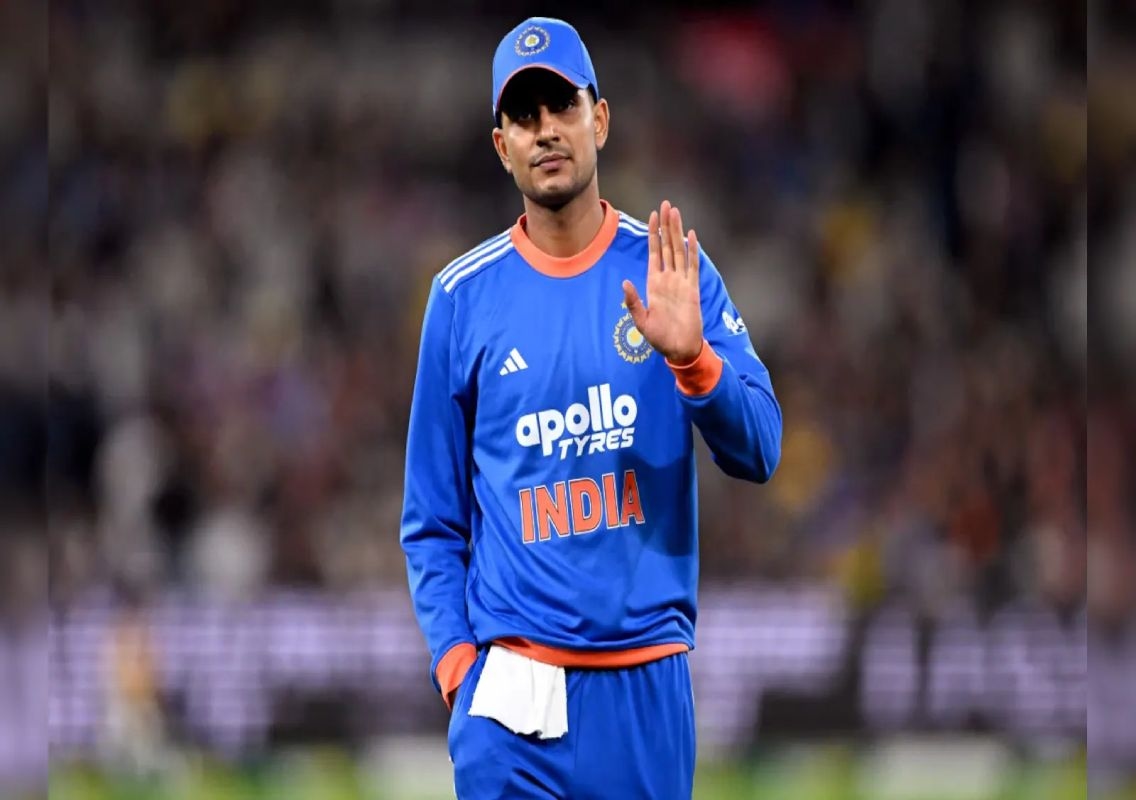


New Delhi: Despite a prolific Indian Premier League (IPL) season, India’s ODI and Test captain Shubman Gill remains out of favour in the shortest format, raising questions about his role in the national team’s long-term T20 plans. Recent squad announcements by the Board of Control for Cricket in India (BCCI) for the Ireland and England series, along with the Asian Games 2026, once again excluded Gill, signalling a clear shift in team strategy.
Strong IPL showing fails to secure T20I return
Gill enjoyed a stellar IPL campaign, scoring 732 runs at an average of 45.75. Addressing earlier criticism around his strike rate, the right-handed batter significantly improved his scoring pace, registering a strike rate of over 163 this season—well above his overall IPL strike rate of 142.09.
However, his individual brilliance was not enough to reclaim a spot in India’s T20I setup. The selectors appear to be prioritising players who bring greater explosiveness and adaptability to the format. With the emergence and consistency of top-order players such as Sanju Samson, Abhishek Sharma, Ishan Kishan and Vaibhav Sooryavanshi, competition for batting slots has intensified.
Selection dynamics and team balance
India’s T20 approach has evolved in recent years, with a clear emphasis on aggressive intent from the outset. This shift has made it challenging for players like Gill, who are traditionally known for building innings, to fit into the current template unless they consistently demonstrate high-impact performances.
Gill’s previous return to the T20I side during the Asia Cup did not yield the desired results. Opening the batting, he struggled to convert starts into significant contributions, which ultimately led to his exclusion once again. Since then, he has not been able to break back into the T20I squad despite strong performances in other formats.
Focus shifts to Tests and ODIs
According to reports, the team management and selectors have advised Gill to focus on Test and ODI cricket for the next eighteen months. This decision is largely driven by workload management and the need to keep him fresh for crucial ICC events, including the 2027 ODI World Cup.
With a packed international calendar, there are concerns about potential burnout, especially considering Gill’s leadership responsibilities and his role as a key batter across formats. The BCCI is keen to ensure that he remains physically and mentally fit for longer formats, where he is seen as a central figure in India’s plans.
In addition to international duties, Gill continues to lead Gujarat Titans in the IPL, further adding to his workload. Managing his commitments effectively has become a priority for both the player and the board.
2028 T20 World Cup still a distant possibility
While Gill is currently not part of India’s T20I scheme, his chances of making a comeback ahead of the 2028 T20 World Cup or the Los Angeles Olympics have not been completely ruled out. A report suggests that selectors are keeping their options open, acknowledging that form, fitness and team requirements can change significantly over time.
“There is still a lot of time left for the two marquee T20 events in 2028. For Gill, the focus is on the immediate future. Two years from now, no one knows which player will be in what kind of form and fitness,” a source close to developments stated.
This indicates that while Gill is not an immediate choice, he remains in the broader pool of players who could return to contention if circumstances align in his favour.
Road ahead for Gill
For now, Gill’s immediate focus will be on cementing his role as a leader and top-order batter in Tests and ODIs. His performances in these formats will be crucial not only for India’s success but also for his own career trajectory.
A return to T20Is would likely depend on his ability to consistently deliver high-impact innings at a rapid pace, aligning with the team’s evolving philosophy. Additionally, shifts in team composition, injuries, or dips in form among current players could reopen opportunities.
Conclusion
Shubman Gill’s exclusion from India’s T20I squads, despite a remarkable IPL season, highlights the intense competition and evolving dynamics of modern T20 cricket. While he is not currently part of India’s plans for the format, the door remains open for a future comeback. For now, the focus is firmly on preserving his form and fitness for Tests and ODIs, with an eye on major ICC tournaments. As the 2028 T20 World Cup approaches, much will depend on how Gill adapts his game and responds to the team’s requirements.