







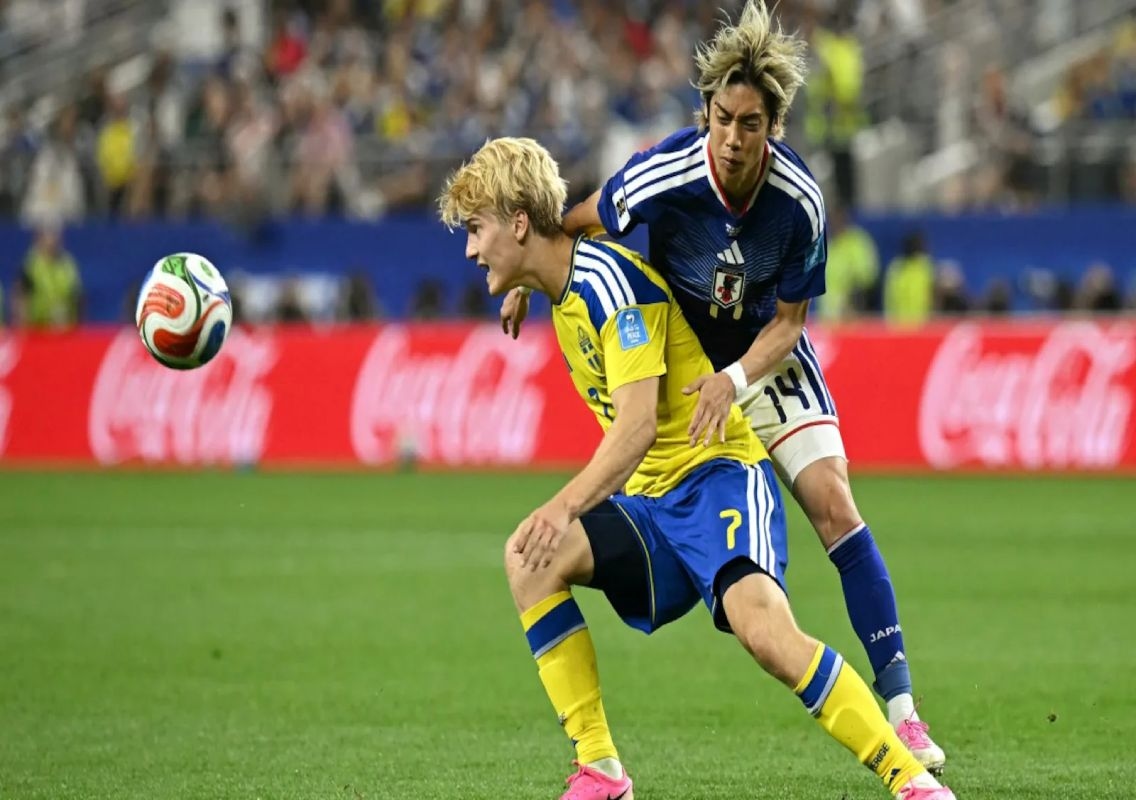


Houston: Japan and Sweden played out an intense 1-1 draw in their final group-stage clash of the FIFA World Cup, a result that saw both teams advance to the knockout stage. The evenly contested match highlighted attacking quality and defensive resilience, ensuring qualification for both sides from Group F.
Japan continued their impressive World Cup run by advancing beyond the group stage for the third consecutive tournament, underlining their growing consistency on football’s biggest stage. Sweden, meanwhile, maintained their strong record in global competitions, reaching the knockouts for the fourth successive time they have qualified.
Goals from Maeda and Elanga seal qualification
The breakthrough came in the 56th minute when Daizen Maeda put Japan ahead with a composed finish inside the penalty area. The forward controlled a well-weighted pass from Ritsu Doan before slotting the ball past Swedish goalkeeper Jacob Widell Zetterström with his right foot.
Sweden responded swiftly, restoring parity just six minutes later through Anthony Elanga. The winger struck a powerful left-footed effort from the edge of the box in the 62nd minute, marking his second goal of the tournament. Despite limited scoring form at club level, Elanga stepped up on the international stage with a crucial contribution.
Japan’s historic attacking performance
Japan’s goal took their tally to seven in the ongoing tournament — their highest-ever goal count in a single World Cup campaign. This surpasses their previous record of six goals, achieved during their Round of 16 run in Russia in 2018.
The Asian side finished second in Group F behind the Netherlands and will now face Brazil in the Round of 16 clash scheduled in Houston. Their consistent performances reflect a well-balanced squad capable of competing with top-tier footballing nations.
Sweden maintain strong World Cup pedigree
Sweden also demonstrated their experience and composure in high-pressure situations. Their qualification extends a remarkable streak, having progressed to the knockout stages in each of their last four World Cup appearances since 1994.
Late in the match, Sweden nearly snatched a winner when Elanga tested goalkeeper Zion Suzuki with a powerful shot in stoppage time. Suzuki responded with a diving save to keep the scores level.
Moments later, Sweden earned a corner where Alexander Isak rose highest to meet the ball with a header. Once again, Suzuki was alert, punching the ball away before collecting it amid a crowded penalty area to deny Sweden a dramatic late winner.
Knockout stage beckons
Both teams now shift focus to the knockout rounds, where the stakes will be significantly higher. Japan’s clash against Brazil promises to be a stern test, while Sweden will be looking to build on their solid group-stage performances.
With momentum on their side, both nations have shown they possess the tactical discipline and attacking threat required to challenge stronger opponents in the next phase of the tournament.
Conclusion
The 1-1 draw between Japan and Sweden was a fair reflection of a closely fought contest, with both teams displaying moments of brilliance. As they move into the knockout stage, their performances in the group phase suggest they could emerge as dark horses in the tournament.