







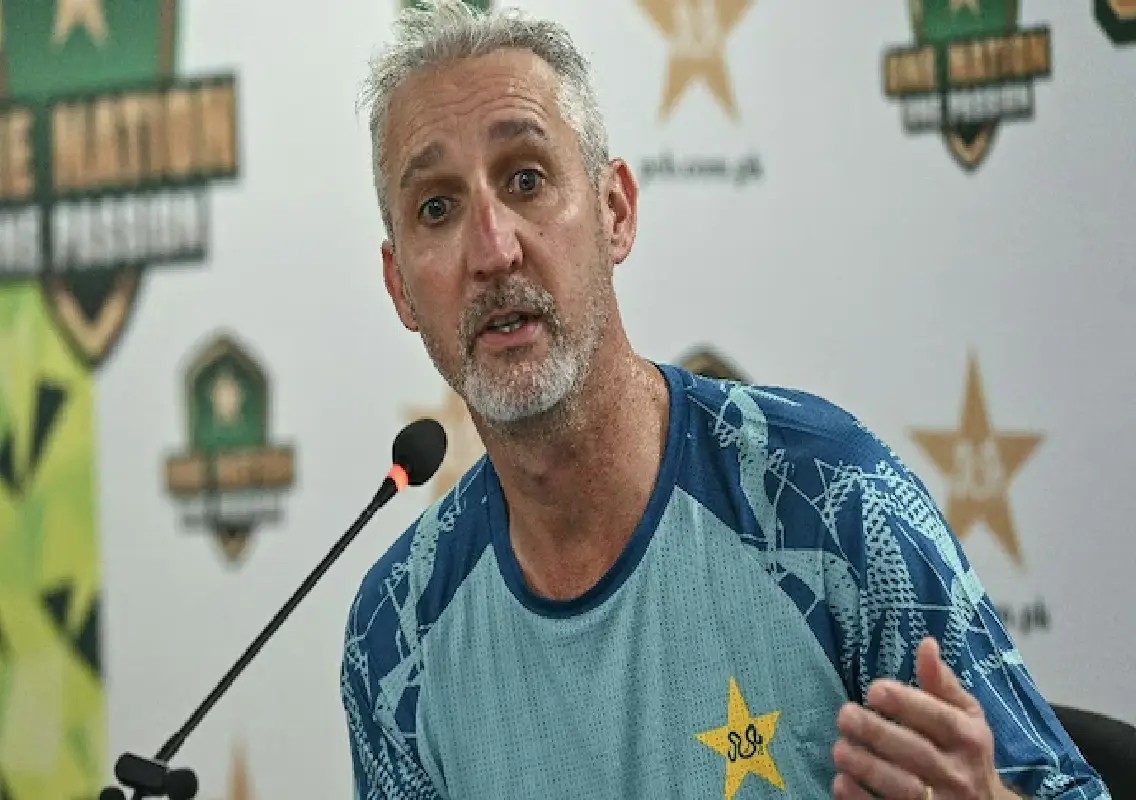


Pakistan : Former Pakistan Test head coach Jason Gillespie has renewed his criticism of the Pakistan Cricket Board (PCB), claiming he was undermined during his brief tenure and that his experience with the board left him deeply disillusioned with coaching.
Speaking to The Telegraph, Gillespie said it was painful to watch the current state of Pakistan cricket. He also revealed that the PCB still owes him thousands of dollars in unpaid remuneration, but insisted that the financial dispute would not stop him from speaking openly about his experience.
Gillespie says PCB still owes him money
Gillespie took charge of Pakistan’s Test side in 2024 but left the position before completing a year. He has now claimed that despite his departure, the PCB has yet to settle thousands of dollars that he says remain owed to him.
The former Australian cricketer said he was unwilling to compromise his principles simply to remain in the board’s good books.
Gillespie maintained that staying silent and accepting his salary would have gone against the values he had built throughout his cricket career. He said he had never been a “yes man” and was not prepared to change that approach during his time with Pakistan.
According to Gillespie, his willingness to express his views ultimately contributed to his departure from the Pakistan setup.
‘I was totally disrespected and undermined’
Gillespie was particularly critical of former Pakistan fast bowler Aaqib Javed, who became increasingly influential in the team’s management and selection structure during his tenure.
The Australian coach claimed that he was “totally disrespected and undermined” and directly attributed this to Javed.
Gillespie said the experience affected him personally and professionally, leaving him questioning whether he wanted to continue coaching.
He described the situation as deeply frustrating and said the experience had even caused him to doubt himself.
The former coach suggested that the manner in which his responsibilities were reduced contributed significantly to his decision to leave Pakistan cricket.
Fast-bowling revival was initial plan
Gillespie said he joined the Pakistan setup after being presented with a plan to revive the country’s fast-bowling tradition.
According to him, the proposed strategy involved preparing pitches that provided greater bounce and carry, thereby creating favourable conditions for Pakistan’s fast bowlers.
The former Australia fast bowler said he was enthusiastic about the project when he initially accepted the role.
He believed the approach could help Pakistan develop its pace attack and create a stronger identity around fast bowling.
However, Gillespie said the situation changed substantially after Aaqib Javed was appointed as a selector.
Aaqib Javed’s appointment changed dynamics
According to Gillespie, Javed’s appointment fundamentally altered the internal structure of the Pakistan cricket setup.
He claimed that Javed gradually became the dominant figure in decision-making and that his own role was progressively reduced.
Gillespie said he had initially been responsible for managing the Test side, players and support staff and had also been involved in selection discussions.
However, he claimed that he eventually found himself with virtually no role in key decisions.
The former coach described the change as a major turning point in his relationship with Pakistan cricket.
Gillespie questions Javed’s continued role
Gillespie has also questioned why Javed has continued to hold an influential position while Pakistan cricket has struggled in international competition.
In comments made on a separate podcast, Gillespie criticised Javed for remaining chairman of selectors and argued that he should also face scrutiny for the team’s performances during his period in charge.
Gillespie pointed out that Javed had previously criticised both himself and former Pakistan white-ball coach Gary Kirsten for the team’s struggles.
The Australian argued that he and Kirsten had been away from the Pakistan setup for a considerable period and should not continue to be held responsible for performances after their departures.
He also disputed claims that Pakistan’s performances had improved under Javed’s influence, arguing that the team had instead fallen in the international rankings across all three formats.
Pakistan cricket facing fresh scrutiny
Gillespie’s latest comments come at a difficult time for Pakistan cricket. The PCB has launched an internal inquiry following a disappointing three-Test series against England, in which Pakistan suffered consecutive defeats.
The results have led to scrutiny of the team’s squad and management, with the board considering significant changes to its cricketing structure.
The former coach believes the problems extend beyond results on the field. In his view, issues within the administration and decision-making structure have also played a role in Pakistan’s struggles.
His own experience, he suggested, highlighted the difficulties that can arise when coaching responsibilities and selection powers are not clearly defined.
A prolonged fallout
Gillespie’s relationship with Pakistan cricket deteriorated considerably during his short stint as Test coach. What began as an opportunity to help rebuild the team’s fast-bowling culture eventually became a source of considerable frustration for the Australian.
His latest remarks indicate that the disagreements that contributed to his departure have not been resolved.
The former coach continues to criticise the PCB and Javed while also claiming that outstanding payments remain unsettled.
For Pakistan cricket, the comments come as the board faces growing questions over team performance, management decisions and accountability.
Pakistan cricket’s leadership under pressure
The criticism from Gillespie adds to the wider debate surrounding the direction of Pakistan cricket.
With the PCB already reviewing the team’s recent performances, questions are likely to remain over the balance of authority between coaches, selectors and administrators.
Gillespie’s account also highlights the importance of clearly defined roles within an international cricket setup, particularly when major decisions involving player selection and team management are being made.
While the former coach’s claims represent his account of events, the latest controversy puts further focus on the internal functioning of Pakistan cricket and the leadership structures responsible for its international teams.