







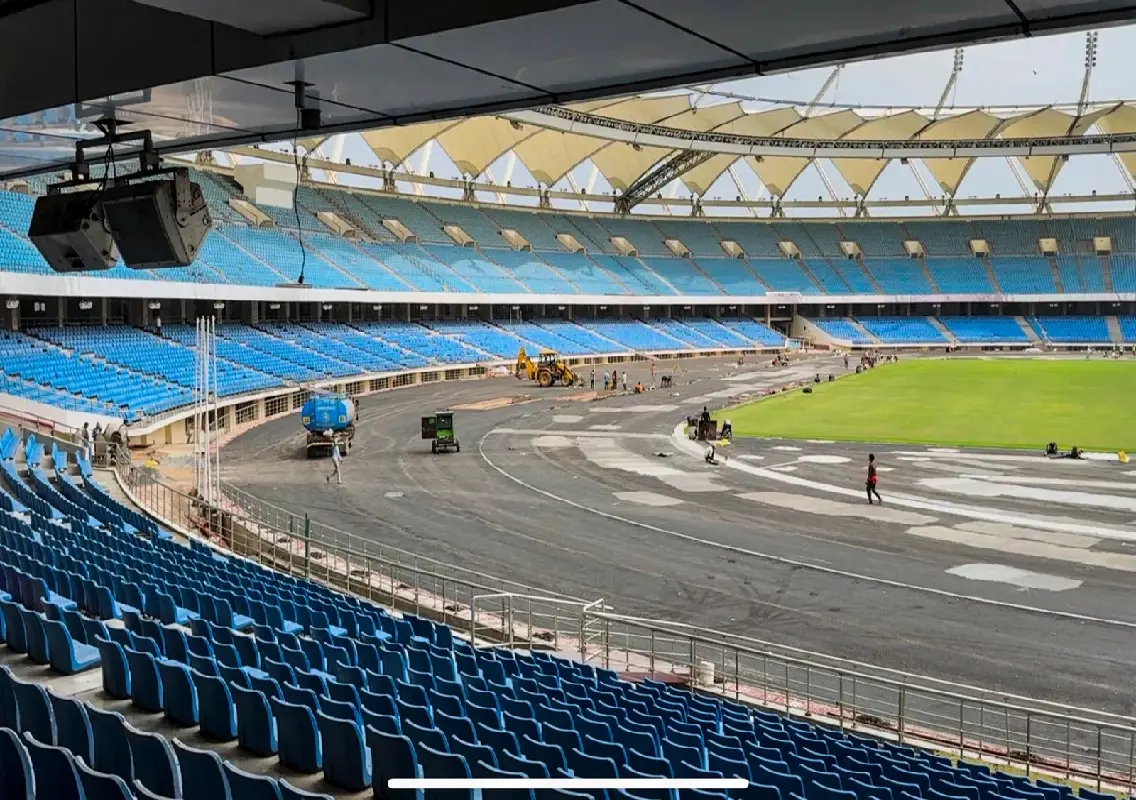


New Delhi:In a landmark decision set to reshape India’s sporting landscape, the Jawaharlal Nehru Stadium (JLN) in New Delhi — one of the country’s most iconic sports venues — will be dismantled to make way for a cutting-edge Sports City spread across 102 acres, senior Sports Ministry officials confirmed on Monday, November 10.
The ambitious redevelopment plan aims to create a world-class, multi-sport ecosystem aligned with India’s long-term vision to host the Olympic Games in 2036. Officials described the project as a “transformational step” towards modernising national sports infrastructure and nurturing elite athletic talent.
Sports City to replace iconic Jawaharlal Nehru Stadium
According to ministry sources, the Sports City will incorporate high-performance training centres, athlete accommodation, competition venues, sports medicine facilities, and digital innovation hubs. The new complex is being designed to meet international Olympic standards, ensuring India can host global multi-sport events in the coming decades.
While the project is still in the conceptual phase, officials have started studying infrastructure models from Qatar and Australia, both recognised for their integrated, technologically advanced sporting cities. Qatar’s Doha Sports City, spread across 617 acres, features venues for football, aquatics, and 13 indoor sports, as well as an academy and a sports medicine hospital. Similarly, Australia’s Docklands Stadium in Melbourne showcases the multi-purpose potential the Indian model aims to emulate.
No fixed construction timeline yet
The Sports Ministry has clarified that no construction timeline has been finalised. The dismantling and redevelopment process will begin only after detailed feasibility studies and approval of the final master plan. The ministry is currently conducting cost, environmental, and logistical assessments before issuing tenders.
A senior official said, “This is not merely about building stadiums — it’s about creating a sustainable sporting ecosystem that can serve athletes for the next 50 years. We are studying how to make the Sports City both athlete-centric and economically viable.”
End of an era for the Jawaharlal Nehru Stadium
Built in 1982 for the Asian Games and renovated in 2010 for the Commonwealth Games, the Jawaharlal Nehru Stadium has been a central landmark in India’s sporting and cultural history. With a seating capacity of nearly 60,000 spectators, it has hosted numerous athletics events, football matches, concerts, and national functions, including the Independence Day celebrations.
The stadium also served as the home venue for India’s national athletics teams and was recently the site of the World Para Athletics Championships, where a new Rs 30 crore Mondo athletics track was installed earlier this year.
Government looks to global and local models
In conceptualising the Delhi Sports City, officials are taking cues from both international and domestic success stories.
- The Doha Sports City model demonstrates how diverse sporting facilities, research centres, and medical institutions can coexist in a single, integrated complex.
- Australia’s Docklands Stadium illustrates the benefits of flexible infrastructure capable of hosting multiple sports.
- Closer to home, Ahmedabad’s Sardar Vallabhbhai Patel Sports Complex, built over 250 acres at a cost of Rs 4,600 crore, showcases India’s growing ability to execute world-class sports infrastructure projects.
Vision for India’s Olympic ambitions
The proposed Sports City is expected to be the centrepiece of India’s Olympic bid, should the country formally announce its intention to host the 2036 Games. Officials say the new complex will not only host future national and international tournaments but will also serve as a high-performance hub for Indian athletes across disciplines.
The city is also expected to include eco-friendly designs, smart utilities, and public access zones, aligning with India’s sustainability goals.
Looking ahead
While the plan marks the beginning of a new chapter in India’s sports infrastructure story, the move also signifies the end of a historic era for the Jawaharlal Nehru Stadium — a venue that has stood as a symbol of Indian athletics for over four decades.
Public consultations and expert reviews are expected to follow before final clearances are issued. If executed as envisioned, the Delhi Sports City could redefine India’s place in the global sports landscape, combining heritage, modernity, and ambition in one integrated project.