







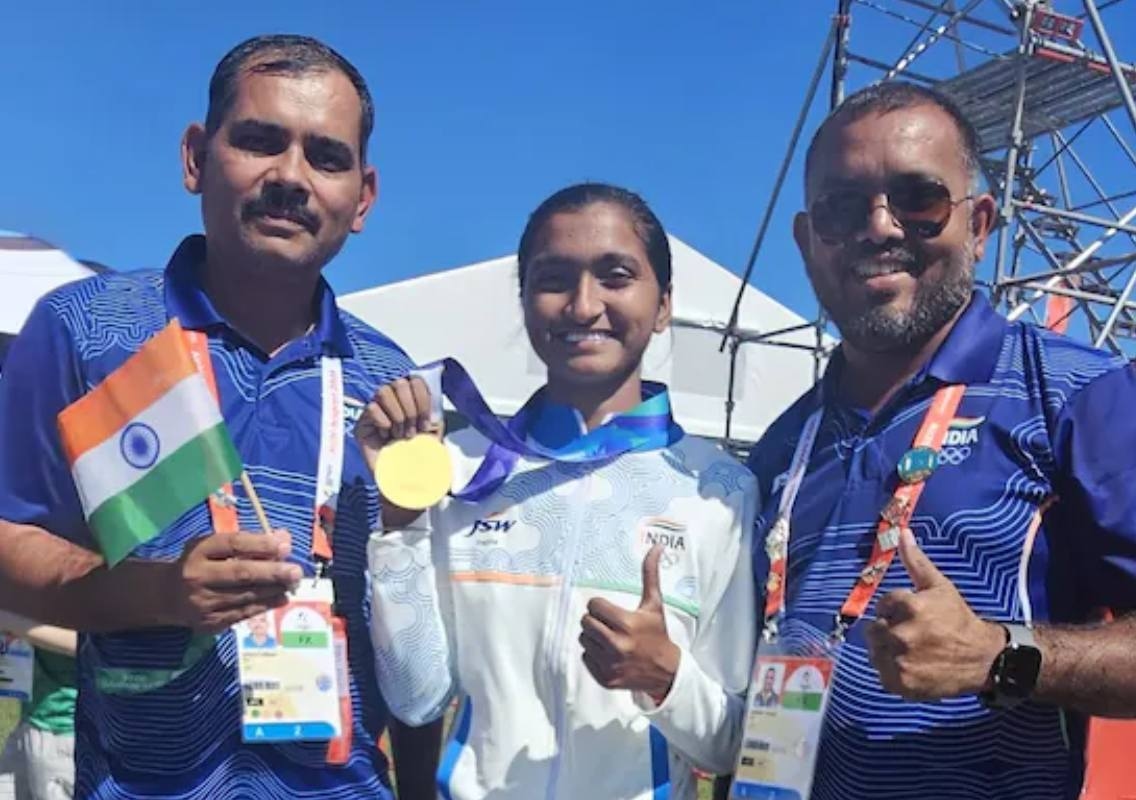


Aichi-Nagoya: For years, Kirti Sharma was told that she was too physically frail to make it in archery. On Friday, the 19-year-old archer from Haryana answered those doubts in the most emphatic way possible — with an Asian Games gold medal.
Kirti joined Ankita Bhakat and Kumkum Mohod to defeat South Korea 5-3 in the women’s recurve team final at Okazaki Chuo Sogo Park, helping India win its first-ever Asian Games gold in the event.
The victory was historic for another reason. South Korea had dominated the women’s recurve team competition for decades, winning every Asian Games title in the event since 1998. India had never previously reached the final.
For Kirti, however, the significance went beyond ending Korea’s long reign. Her gold medal completed a remarkable journey that began with people questioning whether she was physically strong enough to hold a competitive bow.
Told she was too thin for archery
Kirti grew up in Ritauli village in Haryana, where her father Vijay Sharma is a farmer.
Her introduction to archery came when coach Uddham Singh visited the area near Jind while scouting young talent. But Kirti did not immediately appear to be an obvious candidate.
She was thin and lacked the physical strength needed to handle a competitive recurve bow. Her health had also been a concern from childhood.
“I was suffering from poor health since childhood. I had to listen to a lot of negative comments from various quarters doubting my ability to make it big in archery,” Kirti told SAI Media from Aichi-Nagoya.
She recalled that she initially struggled even to lift bows with heavy poundage.
“Since I was not in good shape physically, initially I found it difficult to even lift bows with heavy poundage. But I was determined to do whatever it takes to prove my critics wrong,” she said.
The early doubts could easily have ended her sporting ambitions. Instead, they became an additional motivation.
A second chance changed her life
When Uddham Singh first encountered Kirti, he felt she needed more time before taking on the physical demands of competitive archery.
According to her father, Kirti had a very limited diet as a child and at times survived on little more than a glass of milk for an entire day.
But the opportunity came again in 2019, when coaches returned to the area.
This time, Kirti began training seriously.
Her development required much more than learning how to aim and release a bow. She had to build the strength and stability needed to handle a recurve bow consistently at a high level.
Her diet changed. Her shoulder strength improved. Her physical conditioning became an important part of her training.
The transformation took years, but Kirti remained committed.
Father’s sacrifice helped fund her dream
Kirti’s family also made considerable sacrifices to support her sporting ambitions.
Her father owns around three acres of agricultural land. Despite financial constraints, he continued to back his daughter when others questioned whether she should pursue sport.
Vijay reportedly took a Rs 60,000 loan from a local commission agent in 2022 to buy Kirti a recurve bow.
For a farming family, the purchase represented a significant financial commitment.
Kirti said her father had faced criticism from people who believed he should not allow his daughter to enter sport.
“My father is a farmer. But he has always supported me and has taken care of all expenses related to my sports career despite financial constraints,” she said.
She also recalled that people questioned her father because she was a girl and because of her health.
“But my father has always believed in me,” Kirti said.
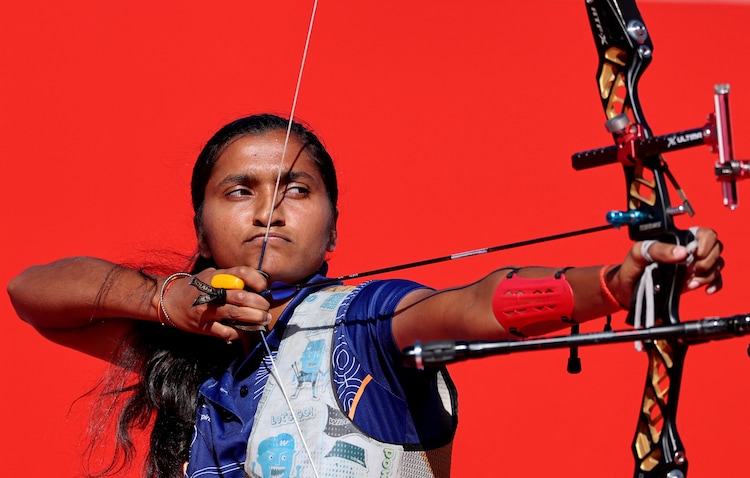
That support became one of the foundations of her eventual rise.
Hazaribagh became a major turning point
Kirti’s career took another important step when she moved to the Sports Authority of India centre in Hazaribagh, Jharkhand.
The move placed her in a more structured training environment and gave her access to coaching and support systems that could help her develop into an elite archer.
Kirti said she reached the SAI centre largely because Uddham Singh, who had coached her earlier, was transferred there.
“I went to SAI, Hazaribagh four years ago. Since then, my career has improved by leaps and bounds,” she said.
She credited both SAI and Singh for helping shape her career.
“SAI and Uddham Singh sir are responsible for whatever I have achieved,” she added.
The development process focused heavily on the areas that had once been considered her weaknesses.
Her bow-arm strength, stability and body alignment needed improvement. Nutrition also became an important part of the programme, with efforts made to help her build the shoulder muscle power required for elite-level recurve archery.
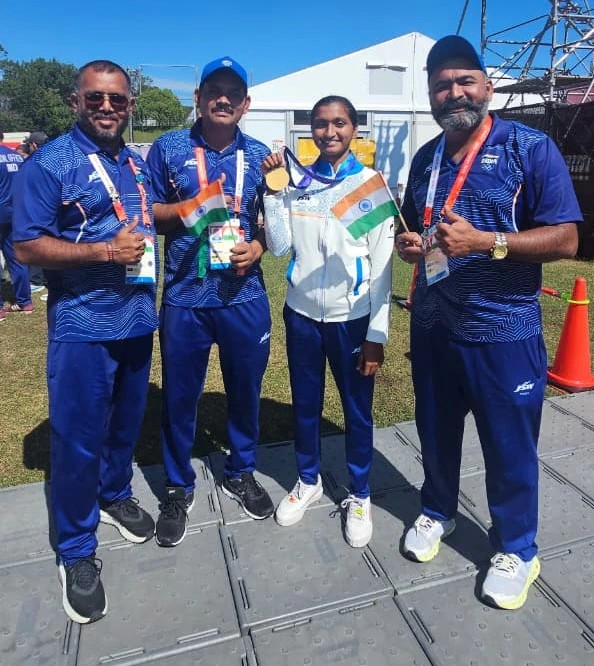
The archer who was once considered too physically fragile had gradually developed into an international competitor.
India face South Korea in historic final
By the time Kirti reached Aichi-Nagoya, the doubts about her physical ability were a distant memory.
She entered the Asian Games final alongside Ankita Bhakat and Kumkum Mohod, facing the strongest team in the history of the event.
South Korea had won every women’s recurve team title at the Asian Games since 1998. India had never reached the final.
The opening stages reflected the closeness expected between the two teams.
South Korea and India shared the first two sets, leaving the match level at 2-2.
India then produced a crucial 55 in the third set, allowing the team to move into a 4-2 lead and put itself within one set of the gold medal.
The Koreans responded with pressure in the final set, but the Indian trio remained composed.
A crucial review seals India’s gold
The final sequence produced another tense moment.
Kirti’s first arrow in the final set was reviewed after the sequence. Officials determined that the arrow had scored a 9 rather than an 8.
That decision proved decisive in the context of the final set.
India held its nerve and secured the set point required for a 5-3 victory.
The result delivered India’s first Asian Games women’s recurve team gold and ended South Korea’s extraordinary run in the event.
For Kirti, it was the culmination of years of work that had begun with doubts about whether she could physically handle the sport.
From Haryana village to Asian Games champion
Kirti’s journey is also a reminder of how elite sporting success can emerge from difficult beginnings.
She started in a Haryana village with limited resources and faced questions about her health, physique and ability to compete.
Her father continued to support her despite financial constraints, while coach Uddham Singh gave her another opportunity after initially deciding that she needed more time.
The move to Hazaribagh provided a structured environment in which she could develop physically and technically.
Years later, those efforts culminated in an Asian Games final against South Korea.
Kirti was no longer being judged by what she lacked. She was competing at the highest level of Asian archery and helping India achieve something it had never done before.
Gold that carries a bigger meaning
The women’s recurve team gold was significant for Indian archery as a whole, but Kirti’s personal journey gave the victory an added dimension.
The medal represented the transformation of an athlete who was once considered too thin to handle a competitive bow into an Asian Games champion.
Her success also highlighted the role played by family support, grassroots scouting, coaching and structured sports training.
From the fields of Ritauli to the international stage in Japan, Kirti’s journey has taken years of physical and technical development.
Her father backed her when others questioned the decision to pursue sport. Her coach gave her another opportunity when she was not initially considered ready. At SAI Hazaribagh, she continued developing the strength and stability needed for elite competition.
On Friday, all of that work came together.
India defeated South Korea 5-3, ended a 28-year Korean reign and won its first women’s recurve team gold at the Asian Games.
For Kirti Sharma, the medal was also a personal response to every doubt she had faced.
The girl once considered too physically fragile to hold a bow now stands as an Asian Games champion.