







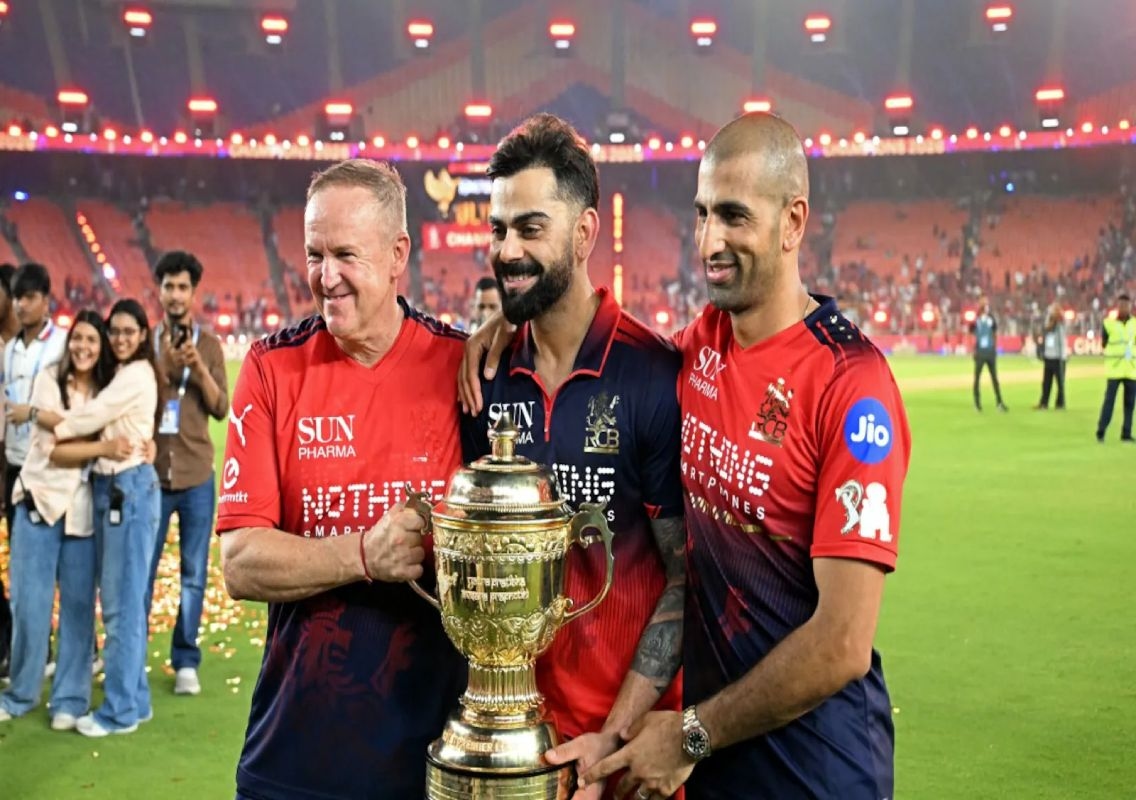


Ahmedabad: Royal Challengers Bengaluru’s triumphant Indian Premier League (IPL) 2026 campaign once again spotlighted Virat Kohli as a defining force in modern T20 cricket, while raising fresh questions around the trajectory of Rohit Sharma in the league.
Kohli’s unbeaten 75 off 42 balls in the final not only secured RCB’s second IPL title but also reinforced his evolution from a record-chasing batter to a self-driven “trophy hunter” focused on team success.
Why Kohli stands apart
Over the years, Virat Kohli has set the benchmark for consistency in T20 cricket. Across 283 IPL matches, he has amassed 9,336 runs, maintaining remarkable longevity in a format known for its unpredictability.
In the 2026 season, Kohli elevated his game further, striking at 165.85 — a figure even higher than his iconic 2016 season. His sustained excellence places him comfortably ahead of contemporaries like Rohit Sharma and MS Dhoni in terms of aggregate runs and consistency.
While many greats experience fluctuating careers, Kohli’s ability to adapt and evolve has kept him relevant across eras, making him one of the most complete T20 batters.
The chasemaster vs the hitman
The comparison between Kohli and Rohit offers a deeper understanding of their contrasting journeys.
Kohli’s consistency is evident in his 68 scores of 50 or more, significantly higher than Rohit’s 49. Additionally, Kohli’s nine IPL centuries underline his appetite for big innings, a trait that has often separated him from his peers.
Rohit, known as the “Hitman”, has had a different role — often balancing aggression with stability for Mumbai Indians. However, his decline in batting returns since around 2017 has been a talking point, particularly against spin bowling in the middle overs.
Despite flashes of brilliance, Rohit’s batting numbers have not matched Kohli’s sustained output over the past decade.
Peak years and lasting impact
Both players reached their peak around the 2016 IPL season. For Kohli, that year remains historic, as he scored a record 973 runs, including four centuries — a benchmark that still defines batting excellence in the tournament.
What stands out even more is Kohli’s longevity. Nearly a decade later, he continues to deliver consistently, maintaining an average above 40 while adapting his strike rate to modern T20 demands.
Rohit Sharma’s best years, in contrast, coincided with his leadership success. His contributions as captain of Mumbai Indians between 2013 and 2020 resulted in five IPL titles, establishing one of the most successful franchises in league history.
The shift to a trophy mindset
A significant transformation in Kohli’s career has been his approach to success. Earlier, his focus revolved around personal milestones and carrying RCB’s batting unit. In recent years, however, the emphasis has shifted towards winning trophies.
This mindset was evident in the 2026 final, where Kohli paced his innings aggressively from the outset, finishing unbeaten and securing the Player of the Match award.
Like Sachin Tendulkar before him, Kohli commands a nationwide following that transcends venues, making him one of the most influential figures in Indian cricket.
Rohit’s changing narrative
For Rohit Sharma, the narrative has evolved significantly. While his legacy as a captain remains unquestioned — including five IPL titles and India’s T20 World Cup triumph in 2024 — his role as a batter is now under sharper scrutiny.
Since stepping down from captaincy, Rohit’s performances have been judged primarily on his batting output. In IPL 2026, he featured in only nine matches, scoring 283 runs, with fitness concerns limiting his availability.
Former cricketer Sanjay Manjrekar had earlier pointed out that Rohit’s challenge lies in maintaining motivation and intensity at this stage of his career.
Without the cushion of leadership responsibilities, every innings now carries greater weight for Rohit.
Fitness as the differentiator
One of the clearest distinctions between the two players lies in fitness levels.
Kohli continues to set high standards, remaining among the fittest athletes in the league even after nearly two decades of professional cricket. His running between the wickets and ability to sustain high strike rates underline his physical preparedness.
Rohit, on the other hand, has faced recurring fitness challenges, impacting both his availability and consistency. While his intent with the bat remains aggressive, interruptions due to injuries have hindered his rhythm.
The road ahead
The contrast between Kohli and Rohit has rarely been more pronounced. Kohli is coming off another title-winning season, continuing to redefine longevity and excellence in the IPL.
Rohit Sharma, meanwhile, stands at a crossroads. With little left to prove as a leader, the focus now shifts to whether he can rediscover consistency with the bat and make another significant contribution in the league.
Conclusion
As IPL 2026 concludes, Virat Kohli’s transformation into a “trophy hunter” highlights his enduring hunger for success and adaptability. His performances continue to shape RCB’s fortunes and inspire a new generation.
For Rohit Sharma, the journey is more introspective. While his legacy remains secure, the coming seasons will determine how he adds to it — either through a resurgence or by redefining his role in the evolving landscape of the IPL.