







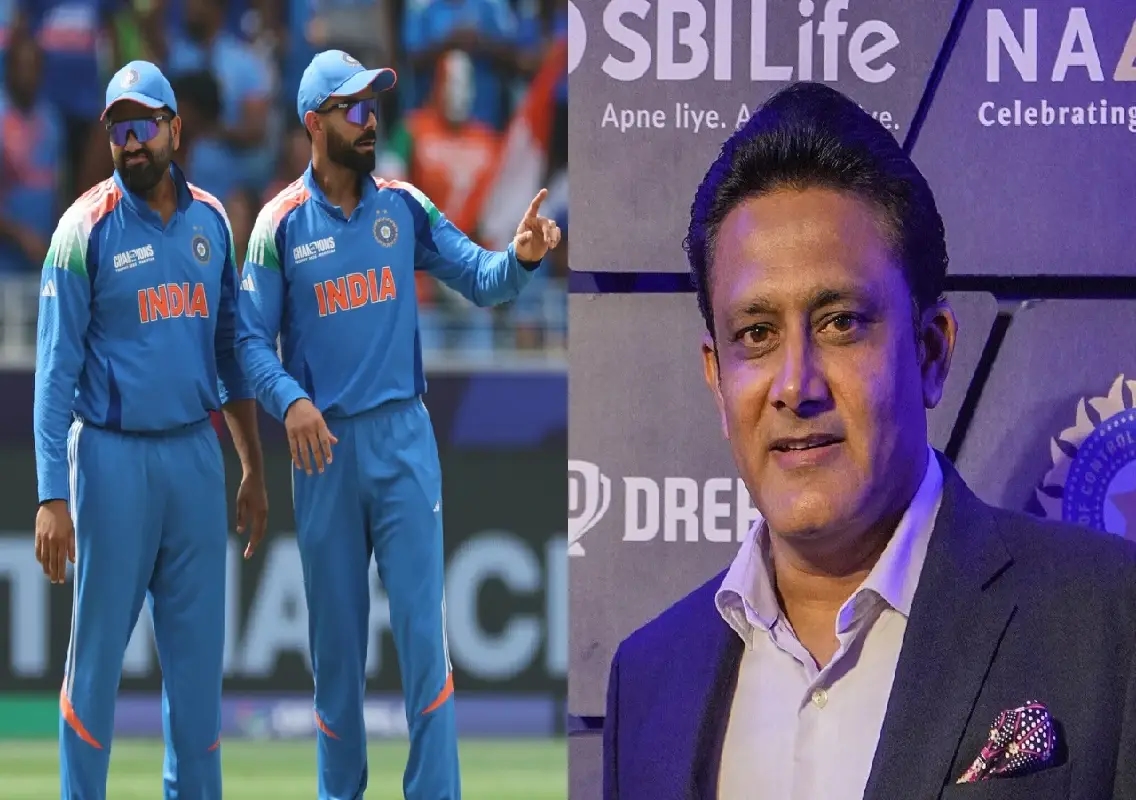


New Delhi: Former India captain and head coach Anil Kumble has said that India’s 2024 T20 World Cup-winning squad was slightly stronger than the current group being shaped for the 2026 edition, mainly due to the presence of experienced match-winners like Rohit Sharma and Virat Kohli. While backing the present squad’s balance and depth, Kumble noted that big-match experience could be the differentiating factor in crunch situations at the global tournament.
India had ended an 11-year wait for an ICC trophy by winning the T20 World Cup in 2024 under Rohit Sharma’s leadership, defeating South Africa in a tense final. Soon after the triumph, senior stars Rohit Sharma, Virat Kohli and Ravindra Jadeja announced their retirement from T20 internationals, marking the beginning of a transition phase in the shortest format.
Experience gap after senior retirements
Kumble emphasised that the retirements of Rohit and Kohli have left an experience gap, even though the current squad remains competitive and tactically flexible.
Speaking on a sports broadcast show, Kumble said the earlier squad had an edge purely from the standpoint of experience and temperament in high-pressure matches. He pointed out that Rohit and Kohli brought calmness and clarity to pressure situations, which proved decisive during the 2024 title run.
He said that while the present team has variety in both batting and bowling departments, experience in knockout matches cannot be easily replaced. According to him, players who have repeatedly handled global tournament pressure offer intangible value that does not always show in statistics.
Kumble estimated that the 2024 squad could be rated about 10% stronger overall compared to the current pool, though he stressed that the difference is not large.
New-look team under Suryakumar Yadav
After Rohit Sharma stepped away from T20Is, Suryakumar Yadav was appointed captain. Under his leadership, India have maintained a strong record in bilateral T20I series and have not lost a series since his appointment, reflecting consistency in performance and bench strength.
Kumble praised the current side’s balance, especially the range of bowling options and the more aggressive batting approach at the top of the order. He noted that the team combination now features multi-skilled players, floaters in the batting line-up and flexible bowling resources — all crucial in modern T20 cricket.
He added that the approach of the top-order batters has evolved, with greater intent in the powerplay and better role clarity across positions. This tactical shift, he said, helps compensate to some extent for the absence of senior stalwarts.
Importance of clutch performers
Highlighting the 2024 final, Kumble recalled how senior players delivered in decisive moments. He referenced key contributions from Virat Kohli and Axar Patel in that match, saying such performances under extreme pressure tilt finals.
He underlined that tournaments are often decided by how teams handle two or three crucial passages of play rather than overall form across matches. In that context, he stressed the need for designated clutch performers in the 2026 campaign.
Kumble expressed confidence that Suryakumar Yadav could be central to India’s chances, not only as captain but also as a match-winner with the bat. He said Surya’s role would be critical in pressure chases and momentum-shifting overs.
According to Kumble, leadership in T20 cricket is not just about field placements but also about reading match situations quickly and backing instinctive decisions — an area where experience again becomes valuable.
Conditions and adaptability will matter
Kumble also pointed out that tournament conditions play a major role in judging squad strength. He noted that the 2024 edition was played in conditions that demanded specific skills and temperament, and the squad composition reflected that need.
For 2026, he said adaptability will be essential, especially if conditions differ significantly. Teams that adjust combinations quickly and read surfaces well usually progress deeper into ICC tournaments.
He added that India’s current bench strength gives selectors multiple tactical options, which could become an advantage closer to the event.
Conclusion
Kumble’s assessment suggests that while India’s 2026 T20 World Cup pool is balanced and promising, the intangible value of experience from legends like Rohit Sharma and Virat Kohli gives the 2024 championship squad a slight edge. However, with Suryakumar Yadav leading a confident and evolving unit, India remain strong contenders. Much, he indicated, will depend on who steps up in the defining moments of the tournament.