







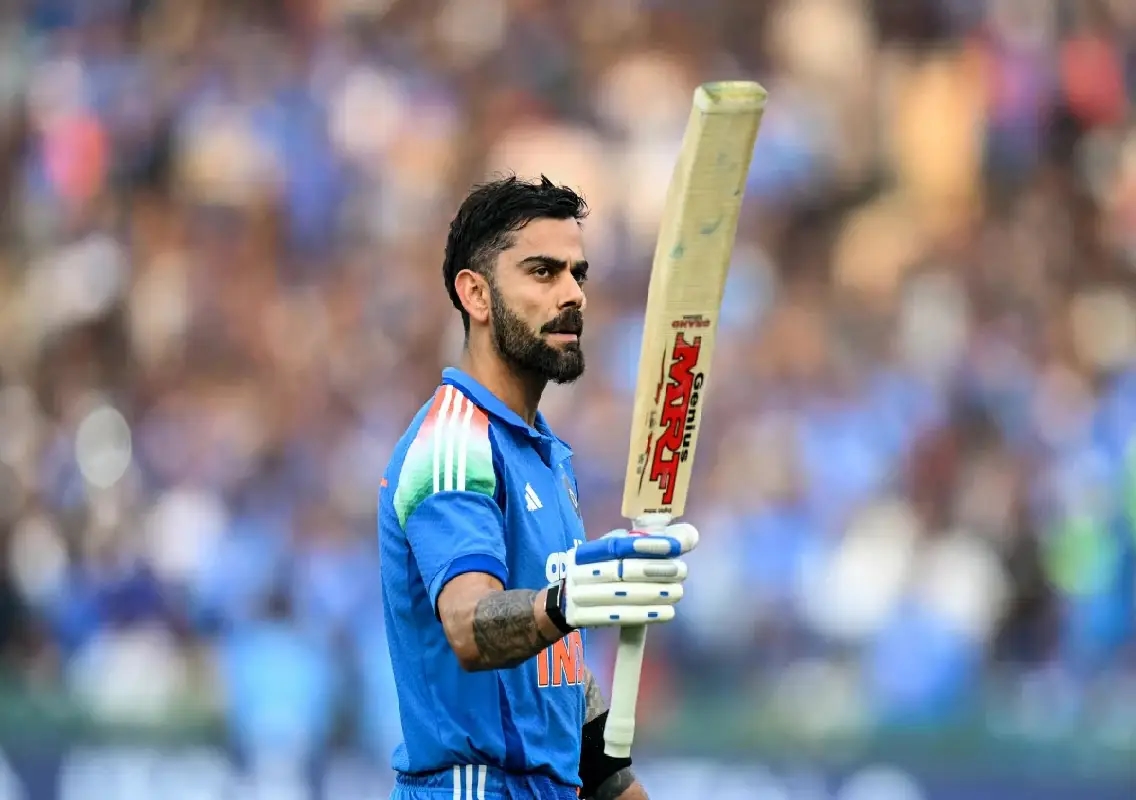


Kolkata: Former India batter Manoj Tiwary has stirred fresh debate around Virat Kohli’s Test retirement, claiming that the star cricketer was “forced” to step away from the longest format rather than choosing to do so voluntarily. Speaking in an interaction with InsideSport, Tiwary strongly disagreed with the narrative that Kohli retired from the toughest format to continue playing what some describe as the “easier” one, adding another layer to an already intense national conversation.
Kohli’s decision to retire from Test cricket has remained a widely discussed topic because of the scale of his influence on Indian red-ball cricket. Over more than a decade, Kohli shaped an era as a prolific run-scorer, an aggressive and successful captain, and a defining personality of modern Test cricket. Even months after his exit, discussions around his absence resurface whenever contemporary greats such as Joe Root and Steven Smith produce big Test hundreds, inevitably prompting comparisons and questions about the void Kohli has left behind.
Tiwary challenges ‘hardest vs easiest format’ narrative
In the interview, Manoj Tiwary was asked to respond to comments made by former India batter Sanjay Manjrekar, who had suggested that Kohli retired from the hardest format of the game while continuing to play what he described as the easiest. Tiwary rejected this framing outright and offered a sharply contrasting view.
“I don’t agree with him,” Tiwary said. “Usko majboor kiya gaya tha. Mere observation se, meri jo soch hai, he was forced. An atmosphere was created as such that he has to say goodbye to Test cricket.” He added that while the decision was officially announced by Kohli himself, there was a larger, unspoken context behind it that many within the cricketing ecosystem were aware of.
According to Tiwary, Kohli was not the kind of player who would walk away from Test cricket simply for personal comfort or to chase runs in other formats. “He is not the one jo khud se bolega ki main chhod dunga,” he said, stressing that Kohli’s competitive nature and deep attachment to Test cricket made such a voluntary exit unlikely in his view.
Behind-the-scenes factors fuel speculation
Tiwary’s remarks have added fuel to ongoing speculation about what may have transpired behind the scenes before Kohli’s Test retirement. While Kohli himself has not publicly elaborated beyond his initial statements, the lack of detailed explanation has meant that every comment from a former cricketer or analyst quickly gains traction.
“Sabko pata hai kya hua hai,” Tiwary remarked, implying that there were known developments that influenced the decision. He questioned how, in light of those circumstances, Kohli could be accused of leaving the hardest format merely to protect his record or accumulate runs elsewhere.
These comments have resonated with a section of fans who believe Kohli’s Test career ended sooner than expected, especially considering his fitness levels and his continued involvement in international cricket in other formats.
Kohli’s Test legacy still looms large
Virat Kohli’s Test career remains one of the most significant chapters in Indian cricket history. As a batter, he scored over 8,000 runs in the format, including 29 centuries, and was especially dominant during his peak years between 2016 and 2019. As captain, he led India to historic overseas successes, including a memorable series win in Australia, and built a fast-bowling-driven Test side that could compete anywhere in the world.
Kohli also played a major role in elevating the stature of Test cricket among Indian audiences at a time when T20 leagues and shorter formats were rapidly growing in popularity. His aggressive leadership style, visible intensity and outspoken defence of Test cricket made him a central figure in the format’s modern narrative.
Transition phase keeps debate alive
The debate around Kohli’s retirement has stayed relevant partly because Indian Test cricket is currently in a transition phase. With several senior players moving on and younger batters still finding consistency, comparisons with the previous core of the team have become inevitable. Each Test series brings renewed discussion about experience, leadership and the absence of figures who once defined India’s batting spine.
Former players have offered varying perspectives on Kohli’s exit. Some have framed it as a personal decision aligned with workload management and long-term priorities, while others, like Tiwary, have hinted at deeper factors influencing the outcome.
Social media amplifies reactions
Clips of Tiwary’s interview have circulated widely across social media platforms, adding momentum to the ongoing discourse. Fans, analysts and former cricketers have continued to weigh in, often splitting opinions between on-field performance arguments and off-field dynamics.
With Kohli choosing to remain largely silent on the subject, each new comment tends to take on outsized significance. The discussion has repeatedly resurfaced whenever Test cricket returns to the spotlight, reinforcing how deeply Kohli’s presence — and absence — is felt in the format.
Conclusion
Manoj Tiwary’s claim that Virat Kohli was forced into Test retirement has added another dimension to a debate that shows no signs of fading. Whether driven by performance considerations, selection dynamics or broader structural issues, Kohli’s exit continues to invite scrutiny. As India’s Test team charts its future, the conversation around one of its most influential figures remains firmly in the present, underscoring the enduring impact of Virat Kohli’s red-ball legacy.