







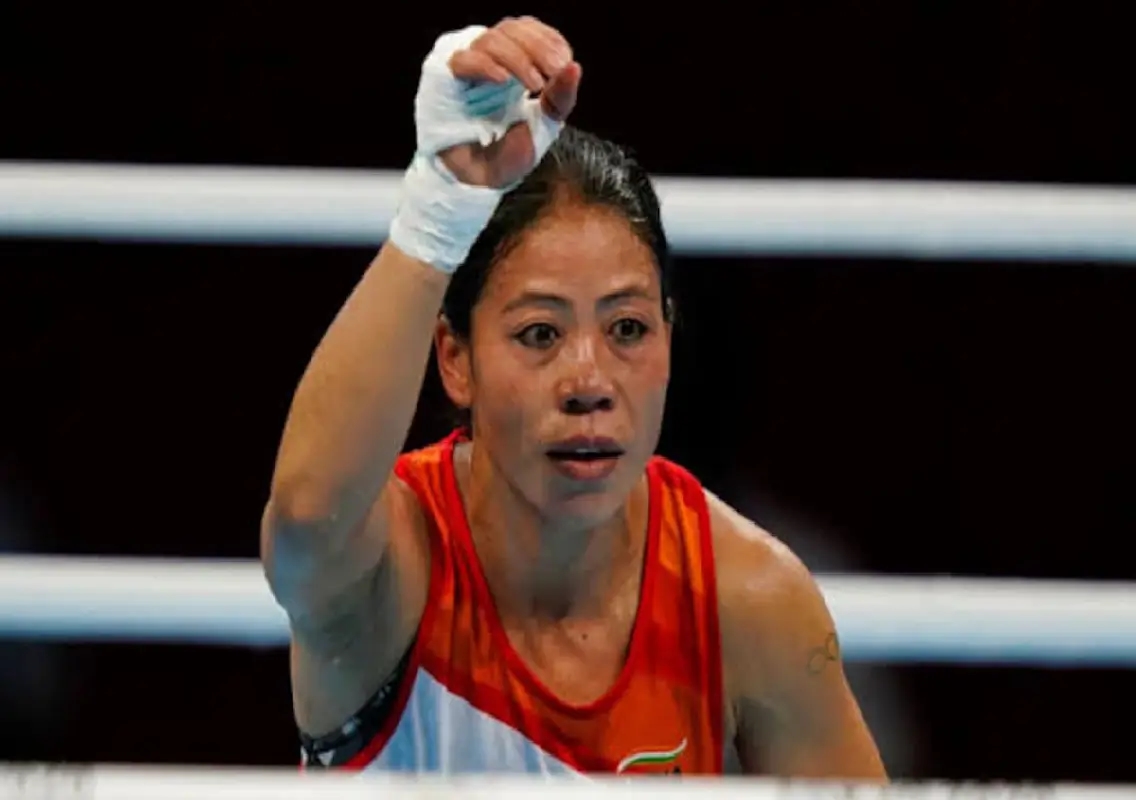


New Delhi: Olympic bronze medallist Mary Kom has revealed that she is considering a transition into professional boxing as she looks to extend her illustrious career beyond amateur competition.
The 43-year-old boxing icon, who made history at the 2012 London Olympics by becoming the first Indian woman boxer to win an Olympic medal, said she is currently evaluating her options after age restrictions curtailed her participation in amateur boxing.
Shift prompted by age restrictions
Speaking on the sidelines of a public event, Mary Kom reflected on her journey and the challenges posed by eligibility norms in amateur boxing. She acknowledged that while she has achieved significant milestones, including six World Championship titles, age limitations have forced her to consider alternative paths.
She described the possibility of entering professional boxing as a “new opportunity” and said she is taking time to make a considered decision.
Legendary amateur career
Widely regarded as one of India’s greatest boxers, Mary Kom has had an extraordinary run in international amateur boxing. She won six gold medals at the World Championships (2002, 2005, 2006, 2008, 2010, and 2018), along with a silver and a bronze medal in later editions.
Her achievements also include a gold medal at the 2014 Asian Games, a bronze in 2010, and a gold at the 2018 Commonwealth Games. In addition, she secured multiple medals at the Asian Championships, further cementing her dominance in the sport.
Her Olympic bronze in London remains a landmark moment in Indian boxing history.
Focus on fitness and comeback
Despite being in the later stages of her career, Mary Kom emphasised her commitment to staying fit and competitive. She expressed her desire to make a comeback and demonstrate her capabilities, regardless of age.
Her remarks underline a strong determination to remain active in the sport and continue contributing at a high level.
Commitment to grassroots development
Apart from her personal ambitions, Mary Kom highlighted her involvement in nurturing young talent through her boxing academy in Manipur.
She acknowledged the challenges posed by the prevailing situation in the region but reiterated her dedication to the academy. Even when she is unable to be physically present, she said she actively manages its functioning through regular communication.
Views on India’s sporting future
Mary Kom also spoke about the broader role of sports in enhancing India’s global standing. With the country preparing to host major international events such as the 2030 Commonwealth Games and potentially the 2036 Olympics, she stressed the importance of investing in sports development.
She noted that such events provide an opportunity to showcase India’s capabilities and inspire the next generation of athletes.
Conclusion
Mary Kom’s potential transition to professional boxing marks a significant moment in her career. As she weighs her options, her legacy in amateur boxing remains unmatched, and her continued involvement—both as an athlete and mentor—promises to shape the future of Indian boxing.