







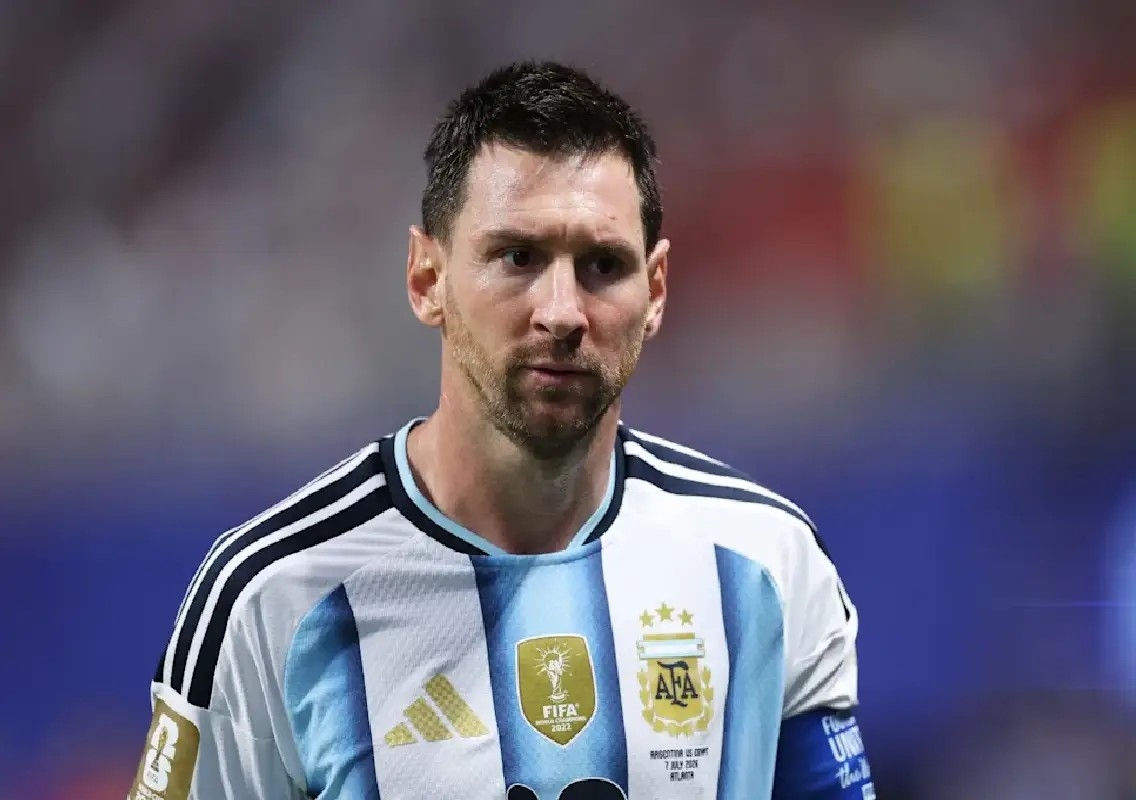


New Delhi: Lionel Messi was reportedly among the biggest security concerns during the 2026 FIFA World Cup, with a leaked police dossier detailing multiple threats against the Argentina captain, including alleged bomb threats and a reported plot to kill him. The dossier, as reported by Spanish media and subsequently by several international outlets, also documented stalking incidents, online abuse and threats against other players, referees and officials.
The revelations have shed fresh light on the extensive security operation carried out during the tournament, with authorities monitoring threats against high-profile footballers and other participants.
Bomb threat reported before Argentina match
One of the most serious incidents reportedly occurred ahead of Argentina’s match against Jordan.
According to the leaked dossier, a man contacted Dallas airport and allegedly claimed that he and two others were travelling towards the stadium carrying homemade bombs and an AR-15-style firearm.
The caller reportedly threatened police officers and players from both teams and specifically mentioned Messi.
The threat triggered security concerns around the match and was among the incidents reportedly monitored by the international security coordination system established for the tournament.
The allegations have emerged through reports based on a leaked police document and have not been independently confirmed in full by authorities.
Another threat emerged in Atlanta
Messi was reportedly the target of another disturbing threat during Argentina’s July 7 match against Egypt.
According to reports citing the dossier, a user on X threatened to enter the Atlanta stadium with explosives strapped to their body and target Messi.
Separately, another person reportedly contacted police claiming that three bombs had been left in different rubbish bins at the stadium.
The reported claims prompted security personnel, explosives specialists and canine teams to conduct searches during and after the match.
No confirmed bombing took place, but the incidents highlighted the security challenges surrounding matches involving some of the world’s most recognisable footballers.
FBI involved in tournament security
The leaked dossier reportedly indicated that the Federal Bureau of Investigation (FBI) worked with the International Police Cooperation Center (IPCC), a joint security coordination hub involving US federal agencies and law enforcement bodies from participating countries.
The centre reportedly monitored terrorism-related alerts, threats against players, unruly supporters and other incidents considered potential risks to the tournament.
The security operation covered not only threats against footballers but also incidents involving referees, team officials and spectators.
The reports suggest that the sheer scale of the 2026 tournament required extensive coordination among agencies across the host countries.
Ronaldo also faced security concerns
Cristiano Ronaldo was reportedly among the footballers who faced repeated harassment and security concerns during the tournament.
According to the reported police dossier, a FIFA employee raised an alert on June 14 after a suspicious man allegedly sought information about Ronaldo’s accommodation.
The man was reportedly arrested by Houston police two days later at the hotel where Ronaldo was staying with the Portugal team.
Another incident was reported in Canada, where a fan allegedly attempted to enter an elevator with Ronaldo. The individual reportedly claimed that he only wanted to take a selfie with the Portugal star.
Ronaldo was also reportedly approached by another person in Miami, while a spectator wearing his shirt entered the pitch during the Portugal-Croatia match.
Mbappe among players facing abuse
Other prominent footballers were also reportedly subjected to threats and harassment.
France forward Kylian Mbappe was targeted following a tense incident involving Paraguay’s goalkeeper. He subsequently faced insults described in reports as xenophobic in nature.
A doll bearing Mbappe’s image was reportedly burned and the incident was circulated on social media in Paraguay on July 5 and 6.
The incidents demonstrated how players could become targets of online abuse and hostile reactions following contentious moments or mistakes during matches.
Players received death threats
The reported threats were not limited to the biggest names in world football.
Norwegian striker Alexander Sorloth and his wife reportedly received death threats after the player missed a scoring opportunity.
Colombian player Jaminton Campaz was also reportedly threatened after missing a penalty. Reports said he was subsequently not allowed to return to Colombia with his teammates.
French defender Lucas Digne was another player reportedly targeted after conceding a penalty during the France-Spain match.
The incidents demonstrated how mistakes on the field could quickly result in serious threats away from the stadium.
Referee received thousands of threats
Match officials were also reportedly targeted during the tournament.
French referee François Letexier reportedly received more than 6,000 threatening messages on his personal WhatsApp account following his controversial performance during the Argentina-Egypt match.
According to reports, many of the messages were from Egyptian nationals who were unhappy with his decisions during the game.
The incident highlighted the increasing security concerns faced by referees, who can become targets of intense online abuse following controversial decisions.
Security concerns extended beyond players
The reported incidents show that security challenges during the 2026 World Cup extended well beyond traditional crowd-control measures.
Players faced threats linked to match results and individual performances, while high-profile stars such as Messi and Ronaldo reportedly faced more direct security concerns involving attempts to obtain information about their whereabouts and accommodation.
Officials and referees were also exposed to online threats and harassment.
For organisers and law enforcement agencies, identifying credible threats among the large volume of online messages and reports would have been an important part of maintaining security throughout the competition.
Leaked dossier raises fresh questions
The reported contents of the leaked police dossier have provided a glimpse into the security challenges surrounding one of the world’s largest sporting events.
The reports do not indicate that Messi or other targeted footballers were physically attacked as a result of the threats described. Instead, the incidents reportedly prompted security agencies to investigate and take preventive measures.
The emergence of the dossier also underscores the importance of coordination between domestic and international law enforcement agencies when major sporting events bring together millions of spectators, players and officials.
While the reported threats varied from online abuse and stalking to alleged bomb threats, authorities were required to assess each incident and determine whether it represented a genuine security risk.
The revelations have added a troubling dimension to the 2026 World Cup, showing how global football’s biggest stars continued to face serious threats away from the pitch even as they competed on football’s biggest stage.