


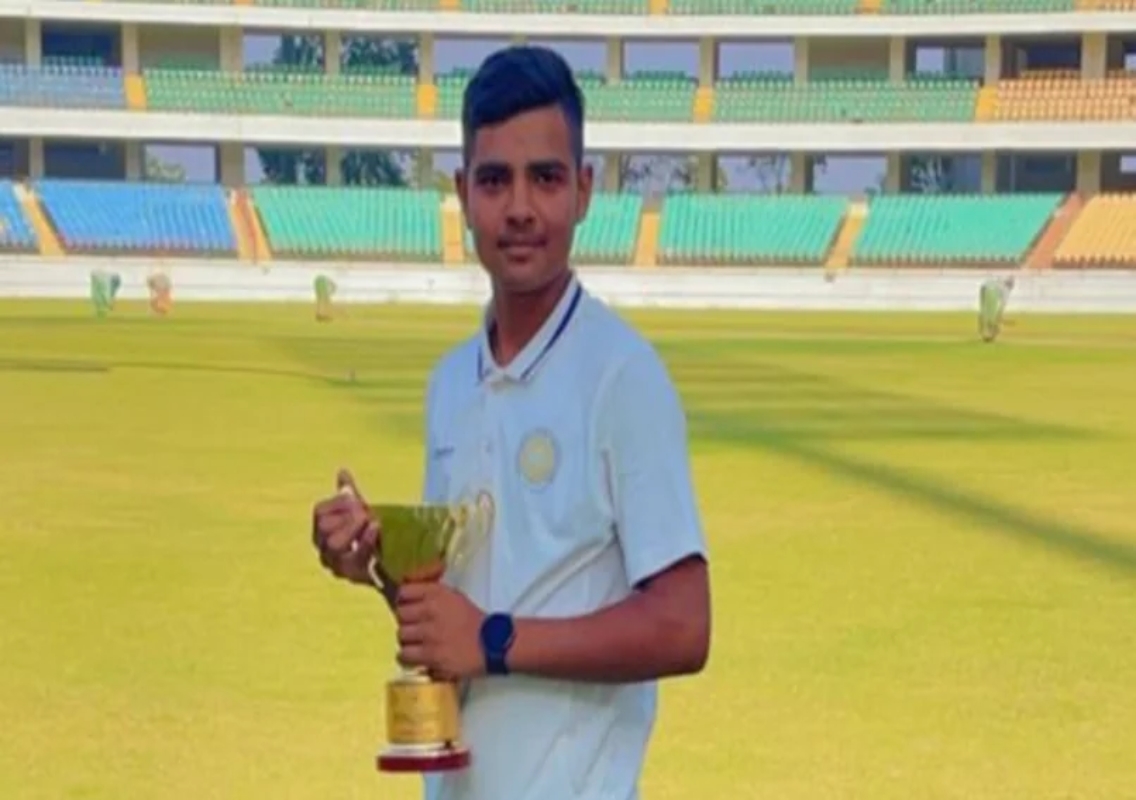


Surendranagar: For India Under-19 cricketer Mohit Ulva, the journey to international recognition has been built on much more than talent and hard work. Behind his breakthrough performance against Pakistan in the Under-19 Asia Cup final lies a family’s determination to protect a young boy’s cricketing dream, even when meeting everyday expenses was difficult.
The 18-year-old fast-bowling all-rounder recently became the centre of attention after producing an unbeaten 49 off just 26 deliveries to guide India to a dramatic one-wicket victory over Pakistan in the final. His winning boundary came off the final delivery, completing a remarkable chase and securing the title for India.
But while the cricketing world celebrated his composure under pressure, the story of the sacrifices made by his family offered another perspective on his achievement. There were times when the family cut down on its own expenses and survived on simple meals of buttermilk and roti to ensure that Mohit could continue his training.
A family that refused to give up on his dream
Mohit’s father, Maheshbhai, works with the Railway Protection Force (RPF). Despite his demanding work schedule and limited income, he made his son’s cricketing development a priority.
After completing his nine-hour duty, he would return home and attend to the arrangements required for Mohit’s training, accommodation and other cricket-related expenses. Managing household responsibilities while meeting the growing cost of professional coaching was a constant challenge.
The family responded by reducing its everyday spending. At times, even basic food choices were influenced by the need to save money for cricket. The family reportedly managed with buttermilk and roti so that Mohit’s training would not be interrupted.
Their commitment also meant missing family functions and social gatherings. Relatives and acquaintances sometimes misunderstood their absence, assuming that the family was distancing itself from others. In reality, the decision was driven by the practical demands of supporting Mohit’s cricket career.
His father’s role went beyond paying for coaching. He remained closely involved in the youngster’s development, encouraged him through difficult periods and helped him prepare for opportunities at different levels of the game.
His sister’s sacrifices also played a part
Mohit’s younger sister also contributed to the family’s effort. Understanding the financial pressure at home, she reduced her own expenses and set aside several personal wishes so that her brother’s cricket training could continue.
Her contribution may not have been visible on the field, but it formed part of the support system that allowed Mohit to pursue his ambitions.
While his father worked to arrange the resources needed for cricket, his sister accepted that the family’s priorities had to change. His mother, meanwhile, managed the household and supported the family through the demanding years.
Mohit’s achievement is therefore the result of collective effort. His success reflects not only his own commitment but also the sacrifices made by those who stood behind him before he became a familiar name among cricket followers.
From village tennis-ball cricket to a formal academy
Mohit’s cricketing journey began in the lanes of his village, where he played tennis-ball cricket. His father, who was interested in the sport himself, recognised his son’s enthusiasm and potential at an early age.
In 2015, when Mohit was around seven years old, his father took him to the cricket academy run by Mahendrasinh Chauhan in Jamnagar. What initially began as an activity that helped him avoid studies gradually became a serious pursuit.
Chauhan is also known for coaching India all-rounder Ravindra Jadeja during his early development. Training at the academy introduced Mohit to the discipline and fitness requirements of competitive cricket.
The youngster’s development was not limited to bowling. His father also helped him work on his batting, arranging throwdowns and opportunities to practise against a bowling machine. That additional work would later prove important when he was called upon to bat under pressure in the Asia Cup final.
Jaydev Unadkat’s advice shaped his bowling
Another important influence on Mohit’s development was experienced Saurashtra fast bowler Jaydev Unadkat.
Mohit had an opportunity to play alongside Unadkat in the Saurashtra Premier League. During practice sessions, he observed the senior bowler using a slower bouncer and began trying the delivery himself.
Unadkat encouraged him to continue working on it, advising him not to abandon the variation if he could execute it effectively. Mohit took the advice seriously and worked on developing the slower bouncer as part of his bowling repertoire.
The guidance helped him add another option to his bowling, while his progression through Saurashtra’s age-group cricket system gave him opportunities to test himself against stronger opposition.
The innings that made him an Under-19 Asia Cup hero
Mohit’s defining moment arrived in the 2026 Under-19 Asia Cup final against Pakistan in Oman.
India were chasing a target of 338 and appeared to be in serious trouble after losing eight wickets for 252. Mohit came in at number 10 when the team needed a substantial contribution from its lower order.
He joined Manal Chauhan, who scored 47 off 32 deliveries. The pair added 57 runs for the ninth wicket, bringing India back into the contest. After Manal’s dismissal, Mohit continued the chase with support from Chigurupati Venkata.
The equation came down to three runs from the final delivery. Mohit struck the ball towards long-off and found the boundary, taking India to 339 for nine and completing a thrilling one-wicket victory.
He finished unbeaten on 49 from 26 balls and was named Player of the Match. The innings was particularly significant because batting opportunities had been limited for him during the tournament. He had entered the final primarily as a bowling all-rounder, but delivered when India needed him most.
A breakthrough that brought recognition in Saurashtra
Mohit’s performance earned him recognition beyond the Under-19 team. The Saurashtra Cricket Association decided to include him in its Syed Mushtaq Ali Trophy squad following his match-winning contribution against Pakistan.
The decision offered the youngster an opportunity to move into senior domestic cricket and gain experience alongside established players.
His rise also highlights the role of regional cricket structures, coaches and senior players in helping young talent progress. From tennis-ball cricket in his village to training in Jamnagar and representing Saurashtra, Mohit’s development has involved several stages of support and guidance.
For the family, the victory against Pakistan represents the reward for years of effort that often went unnoticed. The simple meals, reduced household spending and personal sacrifices were part of a long journey towards an opportunity that Mohit eventually seized on a major stage.
His unbeaten innings may have brought him into the spotlight, but the foundation of that success was laid long before the final. Mohit Ulva’s story is a reminder that a sporting achievement can carry the hopes and sacrifices of an entire family.