







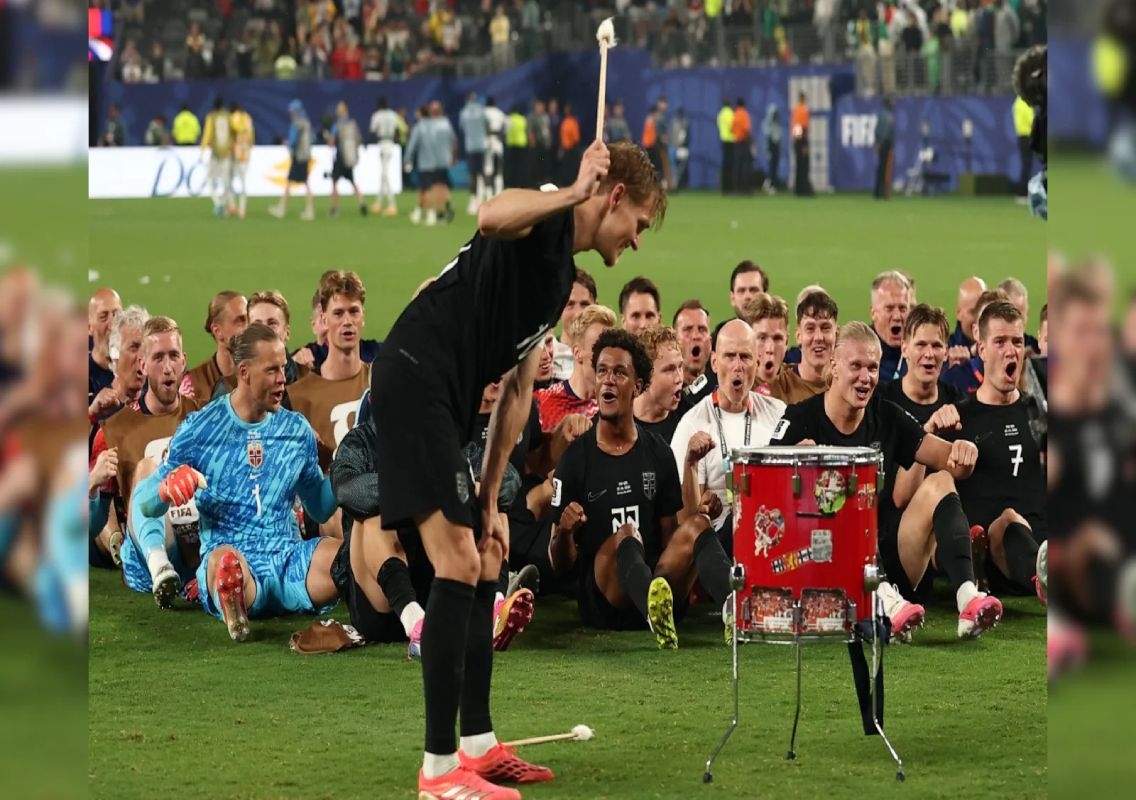


Oslo: Norway have emerged as one of the most exciting teams in the FIFA World Cup 2026, but beyond their performances on the pitch, it is their unique “Viking row” celebration that has captured global attention and gone viral across social media platforms.
The Scandinavian nation secured a thrilling 3-2 victory over Senegal to book their place in the knockout stage, marking their first appearance in the World Cup finals since 1998. However, it was the post-match celebration that truly stood out, as players and fans united in performing the now-iconic rowing gesture.
What is the Viking row?
The Viking row is a coordinated celebration where players sit in rows, mimicking the rowing motion of a traditional Viking longboat. The act symbolises Norway’s rich historical connection to the Viking Age, when seafarers from Scandinavia travelled across Europe and beyond in longboats for trade and exploration.
Dating back to around AD 700 to 1100, the Viking era is a significant part of Norwegian heritage. The rowing motion pays tribute to these voyages and represents unity, strength, and shared purpose — values that resonate strongly with both the players and supporters.
During the World Cup, Norwegian fans dressed in red have been seen performing the Viking row in stadiums, on escalators, and even in New York’s Times Square, turning it into a global phenomenon.
Players lead the celebration
Following the dramatic win over Senegal, captain Martin Odegaard and star striker Erling Haaland led the team in recreating the Viking row on the pitch. The players formed lines resembling a Viking ship, with Odegaard beating an imaginary drum to set the rhythm.
Coach Stale Solbakken added a personal touch to the celebration, sprinting into the stands at the final whistle to embrace his wife before joining the team’s rowing formation. The emotional moment highlighted the deep connection between the players, staff, and fans.
The celebration has become a defining image of Norway’s campaign, reflecting both their unity and their pride in national identity.
Fans and players embrace the trend
The Viking row has not only energised the team but has also united Norwegian supporters worldwide. Television visuals showed fans in Trondheim and Oslo joining in, while clips from international locations demonstrated its global reach.
Midfielder Patrick Berg admitted that there were initial doubts about whether the celebration would gain popularity. However, he acknowledged that it has become a significant part of the team’s journey in the tournament.
“At the start, people were unsure if it would last, but now it has become a massive part of our World Cup,” Berg said, adding that performing it in cities like New York has been a special experience for the squad.
Forward Alexander Sorloth echoed similar sentiments, describing the celebration as “incredibly fun” and highlighting the magical atmosphere it creates when fans join in.
Norway’s strong World Cup run
Norway currently sit second in their group with six points, trailing France on goal difference. Their final group-stage clash against France will determine their position heading into the knockout rounds.
With players like Haaland and Odegaard in top form, Norway have shown they can compete at the highest level. Their performances, combined with the viral Viking row celebration, have made them one of the standout teams of the tournament.
Conclusion
The Viking row has transcended football to become a cultural symbol during the FIFA World Cup 2026. It reflects Norway’s heritage, unity, and passion, bringing together players and fans in a shared expression of identity.
As the tournament progresses, the celebration is likely to remain a defining feature of Norway’s campaign, inspiring supporters worldwide and adding a unique flavour to this year’s World Cup.