







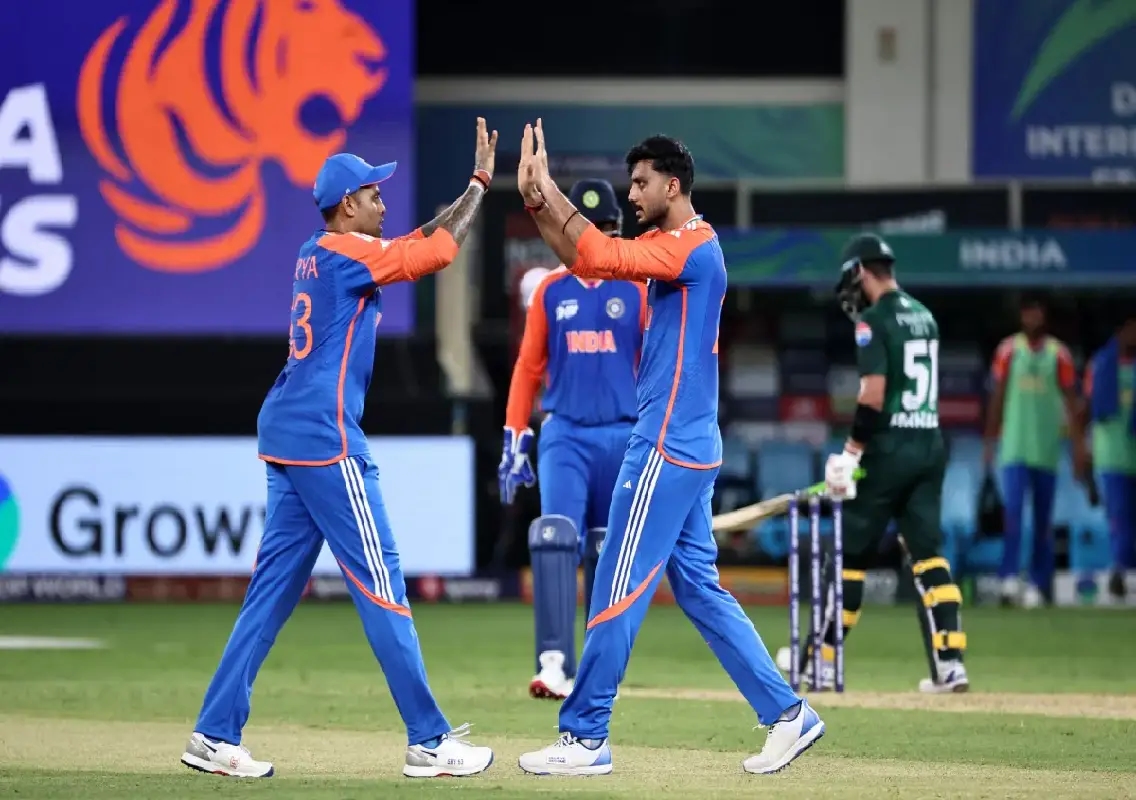


New Delhi: Pakistan may attempt to invoke the “force majeure” clause to avoid heavy sanctions from the International Cricket Council (ICC) if it goes ahead with a reported boycott of its T20 World Cup 2026 match against India, according to a media report. The high-profile India–Pakistan clash is scheduled for February 15 at a neutral venue in Sri Lanka as part of the ICC tournament schedule.
As per the report, the Pakistan Cricket Board (PCB) could argue that extraordinary and government-driven circumstances prevented it from fulfilling its match obligation, thereby seeking protection under force majeure provisions that apply in cases of unforeseeable and unavoidable events.
If Pakistan do not play the match, India are likely to be awarded two points, and the PCB could face financial and regulatory consequences under ICC event participation rules.
What the force majeure clause means
In sports contracts and tournament participation agreements, a force majeure clause generally applies when events beyond the control of a party — such as war, natural disasters, government orders or other extraordinary disruptions — prevent contractual obligations from being met.
According to the report, PCB sources indicated that the board may rely on a public social media post and stated position by the Pakistan government calling for a boycott, and argue that it was instructed at a sovereign level not to participate in the match.
Officials quoted in the report described this as a potential “last resort” defence if the boycott is formally implemented and disciplinary proceedings follow.
However, whether such a justification would be accepted depends on ICC’s legal and regulatory interpretation and the specific wording of participation agreements signed by member boards.
Risk of points loss and financial penalties
Under ICC playing conditions, if a team refuses to play a scheduled match without an accepted reason, the opposing side is typically awarded points. In tournament league formats, this can directly affect qualification scenarios.
Apart from match points, the ICC can also impose financial penalties or other sanctions on a board that fails to honour fixtures without valid grounds. These can include fines, revenue deductions or other disciplinary measures.
The India–Pakistan fixture is one of the most commercially valuable matches in any ICC event, drawing massive global viewership and sponsorship interest. Any disruption could therefore also have broadcast and commercial implications.
BCCI sources call argument weak
According to the same report, sources within the Board of Control for Cricket in India (BCCI) believe the force majeure argument would be difficult for PCB to sustain.
One source argued that Pakistan had recently played India in another ICC event at age-group level despite political tensions and public messaging, suggesting inconsistency in the boycott reasoning.
The source also pointed to the structural relationship between the Pakistan government and PCB leadership, noting that top government functionaries hold formal influence in the board’s hierarchy — a factor that could weaken claims of separation between state direction and board decision-making.
No official on-record statement has yet been issued by the BCCI on the reported force majeure angle.
Pakistan PM reiterates boycott stand
Pakistan Prime Minister Shehbaz Sharif has publicly reiterated that the country has taken a “clear stand” not to play the T20 World Cup match against India scheduled for February 15.
While addressing a federal cabinet meeting in Islamabad, he stated that Pakistan would not participate in the fixture. The statement has intensified uncertainty around the match and triggered discussions within cricket administration circles about possible next steps.
So far, there has been no formal ICC announcement regarding any schedule change, forfeiture ruling or disciplinary action.
Neutral venue arrangement already in place
ICC tournaments involving India and Pakistan are typically scheduled at neutral venues when required, based on prior administrative understandings aimed at ensuring participation despite bilateral political tensions.
The February 15 match is already slated to be held in Sri Lanka rather than in India or Pakistan, reflecting this neutral venue model. Cricket officials note that such arrangements are designed precisely to prevent fixture boycotts and ensure tournament continuity.
Conclusion
With the match date approaching, the situation remains fluid. If Pakistan proceed with a boycott, the matter is likely to move quickly into ICC’s regulatory and legal domain. The reported plan to invoke force majeure signals that PCB may prepare a contractual defence, but its acceptance is far from certain.
A final decision — by the board and by the ICC — will determine whether one of cricket’s biggest rivalries takes the field or turns into a legal and administrative battle instead.