







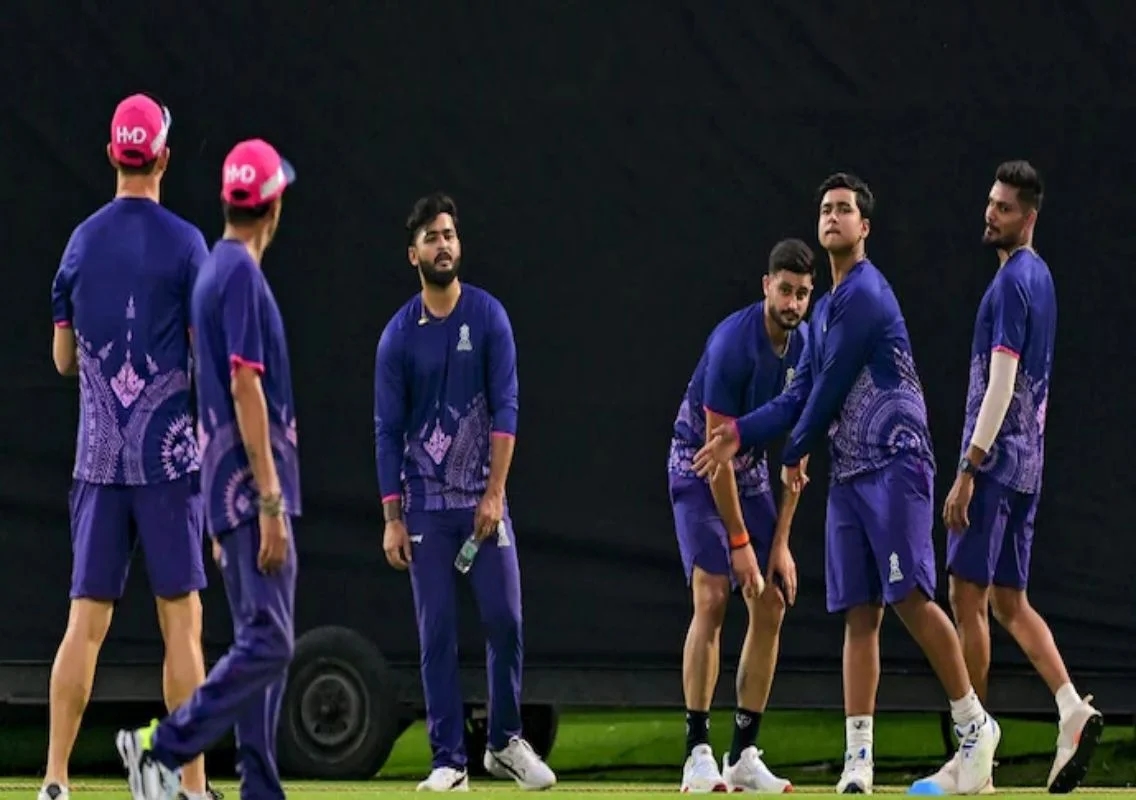


Jaipur: What began as the least glamorous investment in the inaugural Indian Premier League (IPL) has transformed into one of the most extraordinary financial success stories in world sport. Rajasthan Royals, once acquired for just $67 million in 2008, is now valued at a staggering $1.63 billion, reflecting the meteoric rise of franchise cricket.
The journey of the Jaipur-based franchise is not just about numbers—it is a tale of bold bets, controversies, resilience and eventual redemption.
Humble and controversial beginnings
When the IPL franchises were auctioned in 2008, teams like Mumbai, Chennai and Kolkata commanded premium bids. In contrast, Rajasthan Royals were picked up at the base price, with little initial interest.
The winning bid came through Emerging Media, led by entrepreneur Manoj Badale. However, the ownership structure soon became a subject of scrutiny, involving multiple offshore entities and complex shareholding patterns.
Allegations of conflict of interest also surfaced, with links drawn to Lalit Modi’s extended family, casting a shadow over the franchise from its very inception.
Fairytale triumph under Warne
Despite the off-field uncertainty, the team delivered a stunning performance on the field in the very first season. Led by Australian legend Shane Warne, Rajasthan Royals defied all expectations to win the inaugural IPL title in 2008.
With a squad filled with relatively lesser-known players like Shane Watson, Sohail Tanvir and Yusuf Pathan, the Royals became the league’s ultimate underdog story.
The triumph cemented their place in IPL folklore and established a loyal fan base despite limited resources.
Years of controversy and suspension
However, success was soon overshadowed by scandals. In 2013, players including S Sreesanth were arrested in a spot-fixing case, shaking the credibility of the franchise.
Further trouble followed in 2015, when investigations into illegal betting implicated co-owner Raj Kundra. The fallout was severe, leading to a two-year suspension of Rajasthan Royals from the IPL in 2016 and 2017.
These controversies, coupled with earlier scrutiny over ownership structures, made the Royals one of the most scrutinised franchises in the league.
Rebuilding and fresh direction
The franchise returned in 2018 with a cleaner ownership structure and a renewed focus on nurturing young Indian talent. Players like Sanju Samson and Yashasvi Jaiswal became central to the team’s rebuild.
While the team did not replicate its early title-winning success, it regained stability and credibility, gradually repositioning itself as a competitive unit.
The billion-dollar deal
The latest chapter in the Royals’ journey came with a massive valuation leap. A consortium led by US-based entrepreneur Kal Somani agreed to acquire the franchise at a valuation of $1.63 billion.
The group is backed by prominent global investors, including Rob Walton and Sheila Ford Hamp, signalling the IPL’s growing global appeal.
The transition in ownership is expected after IPL 2026, marking the end of an era for existing stakeholders led by Manoj Badale.
IPL’s financial revolution
The exponential growth in Rajasthan Royals’ valuation reflects the broader financial boom of the IPL. From modest beginnings to multi-billion-dollar valuations, the league has redefined sports economics.
A return of over 2,300 per cent on the initial investment highlights the IPL’s commercial success, even as franchises navigated controversies and operational challenges.
A legacy beyond numbers
The story of Rajasthan Royals is one of contrasts—on-field brilliance and off-field turbulence, early success and later setbacks, scepticism and eventual triumph.
From being the least-valued team to becoming a billion-dollar entity, the Royals symbolise the unpredictable yet rewarding nature of franchise cricket.
Conclusion
The rise of Rajasthan Royals from a $67 million investment to a $1.63 billion powerhouse encapsulates the evolution of the IPL itself. Despite controversies and challenges, the franchise has emerged stronger, proving that in modern sport, brand value and resilience often outweigh early doubts.
As IPL 2026 approaches, the Royals stand not just as a cricket team but as a case study in sports business success.