







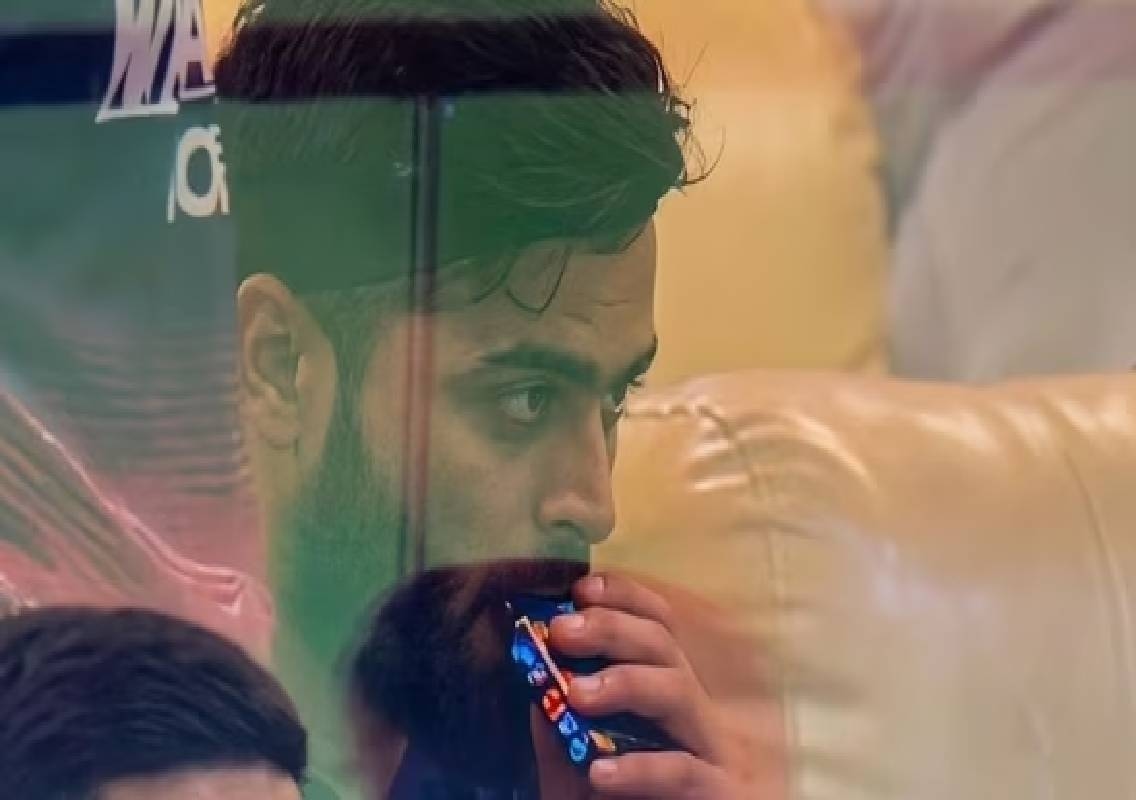


Jaipur: Riyan Parag, captain of Rajasthan Royals, has come under scrutiny after he was allegedly caught vaping inside the team dressing room during an Indian Premier League (IPL) match, triggering a major controversy on social media and raising legal questions under India’s strict e-cigarette laws.
Viral footage overshadows match win
The incident occurred during Rajasthan Royals’ chase against Punjab Kings, when live broadcast cameras briefly showed Parag appearing to use a vape device in the dressing room during the 16th over.
The footage quickly went viral, shifting attention away from Rajasthan Royals’ win and instead igniting debate over player conduct and compliance with regulations.
While the team secured a crucial victory, the post-match narrative was dominated by Parag’s off-field behaviour, with fans and experts questioning the appropriateness of such actions during a live match.
Legal implications under e-cigarette ban
The controversy has taken a serious turn due to India’s stringent laws governing e-cigarettes. Under the Prohibition of Electronic Cigarettes Act, 2019, the production, sale, purchase, import, export, and advertisement of e-cigarettes are banned across the country.
Any violation of the law can attract penalties, including imprisonment and heavy fines. The Act, which came into force on September 18, 2019, was introduced to curb the growing use of e-cigarettes, particularly among youth.
The law does not cover products regulated under the Drugs and Cosmetics Act, 1940, but vaping devices fall outside this category and are therefore prohibited.
Stadium rules also prohibit smoking
Apart from legal concerns, stadium regulations also prohibit smoking inside dressing rooms and other enclosed areas, except in designated zones. If found guilty of violating these norms, players may face disciplinary action from tournament authorities.
The Board of Control for Cricket in India (BCCI), which governs the IPL, has strict codes of conduct and anti-corruption protocols that players and team staff are required to follow.
Previous controversy involving RR management
This is not the first time Rajasthan Royals have been in the spotlight this season for off-field issues. Earlier, team manager Romi Bhinder was penalised for breaching IPL protocols during a match against Royal Challengers Bengaluru.
Bhinder was found using a mobile phone in the dugout, a violation of anti-corruption guidelines. The BCCI’s Anti-Corruption Unit, led by Sharad Kumar, issued a notice and sought an explanation.
After reviewing his response, the unit imposed a fine of ₹1 lakh and issued a formal warning, stating that the explanation provided was not satisfactory.
Growing scrutiny on player behaviour
The vaping incident has once again highlighted the importance of discipline and adherence to regulations in high-profile tournaments like the IPL. With matches broadcast live to millions, even minor actions can attract widespread attention and scrutiny.
Experts note that players, especially team captains, are expected to set an example both on and off the field, given their influence on fans and young audiences.
Conclusion
While it remains to be seen whether formal action will be taken against Riyan Parag, the incident has sparked a broader conversation about compliance with laws and professional conduct in sports. As authorities review the matter, the episode serves as a reminder that off-field behaviour can have serious legal and reputational consequences, even in the midst of sporting success.