







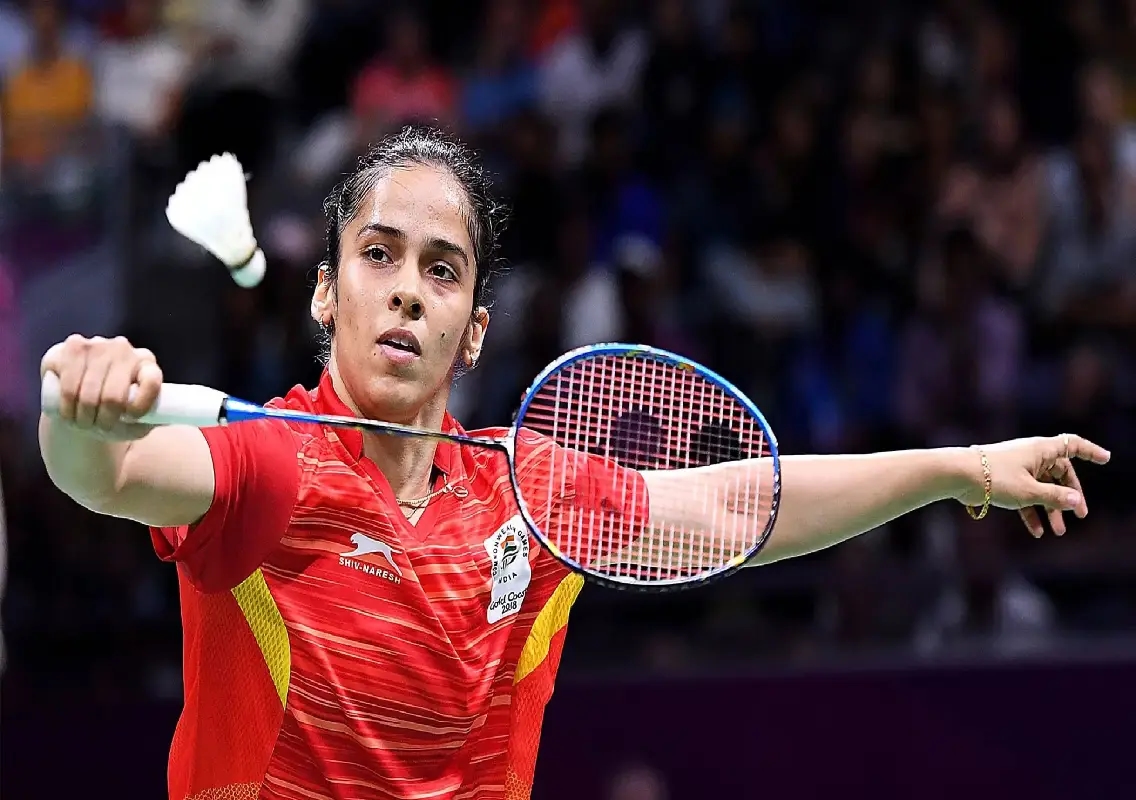


New Delhi: Indian badminton icon and former world No. 1 Saina Nehwal has officially announced her retirement from competitive badminton at the age of 35, bringing the curtain down on a trailblazing career that transformed the sport’s landscape in the country. After battling a chronic knee condition and remaining away from competitive action for more than two years, Saina quietly chose to step away, signing off as one of India’s greatest-ever sportspersons and a pioneer who inspired generations of young girls to take up badminton.
Her retirement marks the end of an era not just for badminton, but for Indian women’s sport as a whole. Alongside tennis legend Sania Mirza, Saina belongs to a rare group of athletes who broke barriers, redefined possibilities, and made racquet sports mainstream in India.
From promise to prominence
Saina Nehwal first came into national prominence in 2008 when she won the World Junior Championship gold medal. At the time, Indian women’s badminton had limited global visibility, and Saina’s achievement immediately signalled the arrival of a fearless new talent on the international stage.
The same year, she went on to create history at the Beijing Olympics by becoming the first Indian woman to reach the quarter-finals in badminton. That performance firmly established her as a serious contender at the highest level and laid the foundation for what would become a long list of firsts for Indian badminton.
London 2012 and the Olympic breakthrough
The defining moment of Saina’s career came at the London Olympics in 2012. With immense pressure and expectations on her shoulders, she delivered a historic bronze medal in women’s singles, becoming India’s first-ever Olympic medallist in badminton.
That achievement not only elevated her to superstardom but also changed how badminton was perceived in India. Enrolments in academies surged, television viewership increased, and young athletes across the country began seeing badminton as a viable professional sport. Saina’s Olympic success turned her into a household name and a role model far beyond the court.
A career of historic firsts
Saina’s career is studded with milestones that reshaped Indian badminton. In 2009, she became the first Indian to win a BWF Super Series title when she clinched the Indonesia Open. A year later, she added another feather to her cap by winning gold at the Commonwealth Games in Delhi.
Her consistency at the elite level was remarkable. She won medals at all major international events, including an Olympic bronze, a silver medal at the BWF World Championships, and two Commonwealth Games gold medals. Few Indian athletes can boast such an all-round record across formats and tournaments.
World No. 1 and global recognition
In 2015, Saina achieved one of the most prestigious milestones in world badminton by becoming the world No. 1 in women’s singles. She was the first Indian woman to achieve this ranking and only the second Indian overall, after Prakash Padukone.
The same year, she reached the final of the BWF World Championships, becoming the first Indian woman to do so. Although she finished runner-up to Spain’s Carolina Marin, her achievement further cemented her legacy as one of the sport’s global greats.
Injuries and resilience
Saina’s career, however, was not without setbacks. During the Rio Olympics in 2016, she suffered a major knee injury that would later prove to be a turning point. Despite recurring fitness issues, she demonstrated immense resilience, making a strong comeback to win a bronze medal at the 2017 World Championships and gold at the 2018 Commonwealth Games.
Her ability to return to the podium after injury highlighted her mental toughness and competitive spirit — qualities that defined her career as much as her attacking style of play.
The quiet farewell
Saina last played a competitive match at the Singapore Open in 2023. Speaking on a podcast, she revealed that she had effectively stopped playing two years ago but chose not to make a formal announcement at the time.
“I felt I entered the sport on my own terms and left on my own terms,” she said, explaining that a degenerative knee condition and arthritis made it impossible for her to continue at the highest level.
Legacy beyond medals
Beyond her medals and rankings, Saina Nehwal’s greatest contribution lies in her impact on Indian sport. She broke stereotypes, inspired millions, and opened doors for the next generation of women shuttlers, many of whom now compete confidently on the world stage.
Her journey, marked by grit, discipline and self-belief, will continue to influence Indian badminton long after her retirement.
Conclusion
Saina Nehwal’s retirement brings to a close a remarkable international career spanning nearly two decades. As India bids farewell to one of its finest athletes, her legacy as a trailblazer, champion and inspiration remains firmly intact — a golden chapter in the history of Indian sport.