







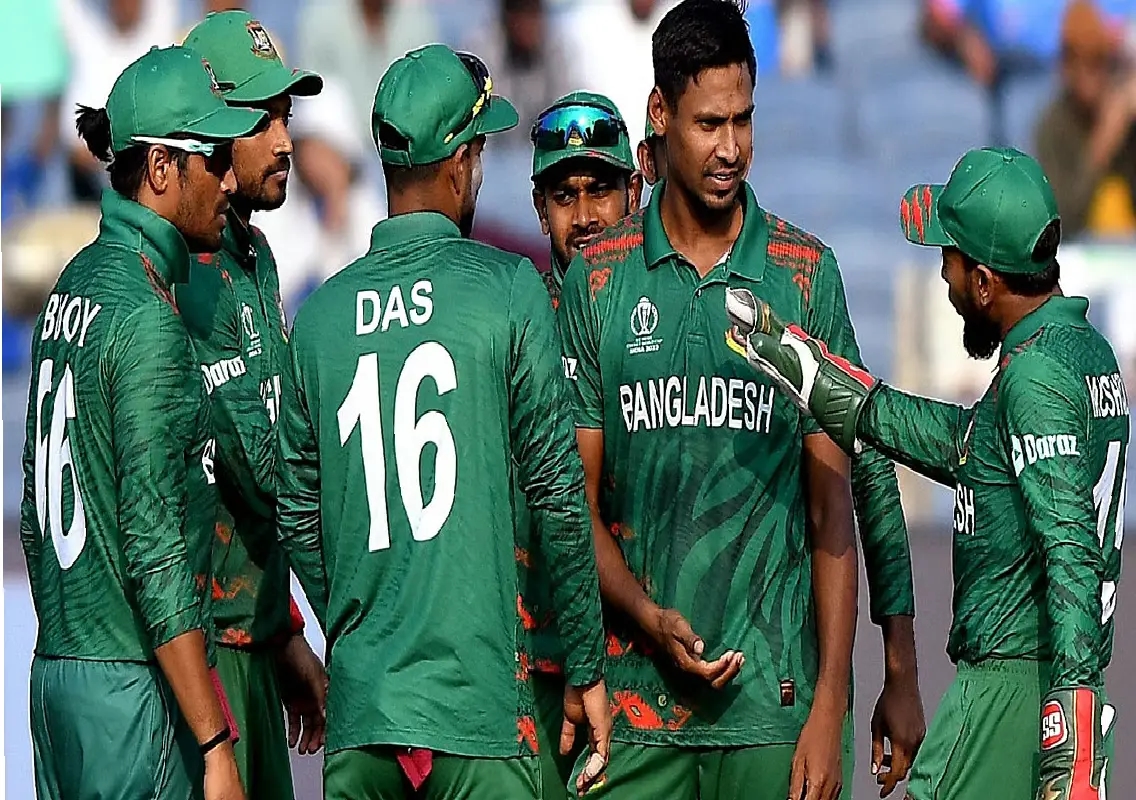


Dubai: The International Cricket Council (ICC) on Saturday officially confirmed Scotland’s participation in the ICC Men’s T20 World Cup 2026, to be hosted by India, after Bangladesh failed to meet the governing body’s deadline to confirm its participation in the tournament. The decision was taken at the ICC headquarters following prolonged uncertainty surrounding Bangladesh’s stance on travelling to India.
The announcement brings an end to weeks of speculation after the Bangladesh Cricket Board (BCB) repeatedly expressed reservations about sending its national men’s team to India, citing security concerns and requesting a change of venue. The ICC, however, rejected these claims after conducting its own assessment and ultimately decided to replace Bangladesh with Scotland, who had been kept on standby.
Deadline missed, ICC takes final call
According to sources familiar with the developments, the ICC had issued a 24-hour ultimatum to the BCB to formally communicate whether it would honour its qualification and participate in the marquee global event. When no official confirmation was received within the stipulated timeframe, the ICC proceeded with an alternate plan.
“An e-mail was sent last evening to the Bangladesh Cricket Board chairman intimating him that his board didn’t get back to ICC officially after the 24-hour deadline that was given to them to decide if they wanted to come to India, so a decision has been taken,” an ICC source told PTI on condition of anonymity.
ICC chairman Jay Shah was present at the headquarters in Dubai when the final decision regarding the tournament’s participating teams was made. Officials indicated that the governing body could not afford further delays, given the advanced stage of planning for the 2026 T20 World Cup, which is scheduled to be played across multiple venues in India.
Security concerns dismissed by ICC
The Bangladesh Cricket Board had written to the ICC on multiple occasions seeking either a neutral venue or a rescheduling of matches outside India, citing what it described as “security risks” for its players and staff. However, ICC officials maintained that these concerns were not backed by actionable intelligence or credible assessments.
Following an independent review, the ICC concluded that India was capable of hosting the tournament safely, as it has done successfully for several global events in the past. Officials also noted that accommodating a late venue change for one team would create significant logistical and commercial challenges.
A senior ICC official said the governing body was unwilling to set a precedent that could undermine the tournament’s integrity. “A late change in schedule or venue would have been a logistical nightmare, impacting broadcasters, sponsors, teams and host cities,” the official said.
Scotland step in as replacement
With Bangladesh effectively opting out, Scotland were formally inducted into the tournament. Cricket Scotland had been placed on standby weeks earlier, anticipating a possible withdrawal by Bangladesh as the situation dragged on.
Scotland’s inclusion ensures that the tournament structure remains intact and that all group-stage fixtures proceed as planned. The Scottish team will play four group league matches in the competition, marking a significant milestone for the Associate nation.
Scotland are scheduled to face the West Indies on February 7, Italy on February 9 and England on February 14, with all three matches set to be played in Kolkata. They will then take on Nepal in their final group fixture in Mumbai on February 17.
Cricket Scotland officials welcomed the ICC’s decision, calling it a major opportunity for the national side to compete on the world stage against top-tier teams and further grow the sport back home.
Bangladesh’s legal options remain
Despite being replaced, the Bangladesh Cricket Board is not entirely without recourse. A desperate BCB had earlier approached the ICC’s Dispute Resolution Committee (DRC), requesting it to overturn the decision to stage their T20 World Cup matches in India. However, the appeal was not entertained, as officials ruled that the matter fell outside the remit of the sub-committee.
While the ICC considers the matter closed, Bangladesh may still choose to challenge the decision at the Court of Arbitration for Sport (CAS) if it wishes to pursue the issue further. Legal experts, however, suggest that such a move would be time-consuming and unlikely to alter the immediate tournament arrangements.
Conclusion: End of a prolonged saga
The development effectively draws the curtain on a long-running saga that had cast a shadow over preparations for the ICC T20 World Cup 2026. For the ICC, the decision underscores its intent to prioritise certainty, planning and the smooth conduct of global events.
For Scotland, the confirmation represents a historic opportunity to compete in one of cricket’s biggest tournaments, while for Bangladesh, it serves as a reminder of the consequences of administrative indecision at the international level.
As preparations gather pace, the ICC is expected to focus fully on delivering a seamless and competitive T20 World Cup in India, with participating teams now finalised and schedules locked in.