







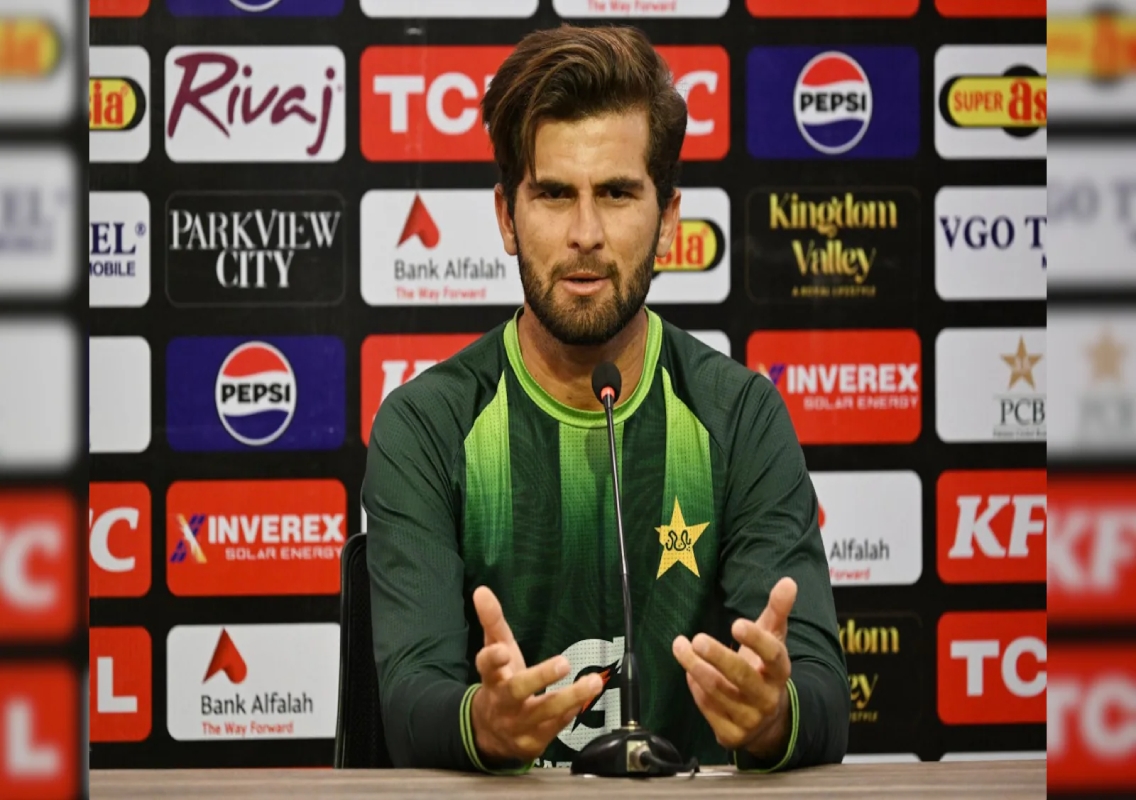


Islamabad: Pakistan fast bowler Shaheen Shah Afridi has made his intentions clear about his red-ball future, saying Test cricket remains his first priority as he attempts to work his way back into the national Test side. His comments come at a time when Pakistan cricket is undergoing major changes following a difficult Test campaign in England.
Afridi returned to competitive first-class cricket in the President’s Trophy on Saturday, making his first appearance in domestic red-ball cricket since 2019. The 26-year-old left-arm pacer is currently outside Pakistan’s Test plans after missing the squads for the tours of the West Indies and England.
With Pakistan searching for stability in the longest format, Afridi’s decision to return to domestic red-ball cricket could become an important step in his bid to regain his Test place.
Afridi puts red-ball cricket ahead of other formats
Speaking about his return to first-class cricket, Afridi stressed that Test cricket continues to hold a special place in his priorities.
“Red-ball cricket is always my first priority,” Afridi said, according to the ICC website.
The Pakistan pacer explained that his packed international schedule across formats had prevented him from playing enough domestic red-ball cricket. He also acknowledged that he had not played much cricket during the past couple of months, making the President’s Trophy an opportunity to regain his rhythm.
Afridi made his Test debut in 2018 and has taken 126 wickets in 34 Test matches. His return to first-class cricket therefore provides him with a chance to rebuild the workload, rhythm and consistency required for the longest format.
For a fast bowler, sustained spells and repeated bowling over several days can be particularly important. Afridi himself pointed towards the value of spending extended periods on the field, saying that longer spells help with confidence while allowing a bowler to fine-tune line and length.
Pakistan’s Test crisis adds significance to his comeback
Afridi’s red-ball return comes at a crucial time for Pakistan.
Pakistan recently endured a 3-0 defeat to England in the Test series, with the side struggling for consistency throughout the campaign. The first two Tests ended in heavy defeats at Headingley and Lord’s before Pakistan entered the final Test at Edgbaston looking to avoid a clean sweep.
The wider situation has also resulted in significant changes within Pakistan cricket. The Pakistan Cricket Board released seven players from the England Test squad after the heavy defeat at Lord’s and made changes to the coaching set-up ahead of the third Test.
The upheaval has extended beyond the playing group. Former Pakistan captain Misbah-ul-Haq resigned from the national selection committee following the PCB’s major changes to the Test squad and coaching staff.
Against that backdrop, Pakistan could benefit from the return of experienced players who have already proved themselves in Test cricket. Afridi is among the country’s most established fast bowlers and has extensive experience across international cricket.
Why first-class cricket matters for Afridi
Afridi has remained heavily involved in white-ball cricket, but he admitted that moving between formats can be challenging.
International cricket has kept him occupied across Tests, ODIs and T20s, leaving limited opportunities for domestic red-ball appearances. He said players should use periods when they are free from international commitments to play domestic cricket.
That approach is particularly relevant for a fast bowler.
Test cricket demands repeated spells, patience and the ability to maintain a consistent line and length over long periods. Unlike T20 cricket, where a bowler may deliver only four overs, a Test match can require a fast bowler to operate across multiple spells over several days.
Afridi indicated that he intends to approach first-class cricket in the same manner as he approaches Test cricket for Pakistan.
“I’ll try to bowl the same way in first-class cricket as I’ve bowled in Test cricket,” he said.
The President’s Trophy therefore represents more than simply a domestic appearance. It gives Afridi the opportunity to demonstrate that he is ready for the demands of Test cricket again.
Afridi still has a major role in Pakistan cricket
Although his Test position is currently uncertain, Afridi remains a significant part of Pakistan’s white-ball plans.
He is Pakistan’s ODI captain and recently enjoyed an impressive run in the Champions Cup. He finished as the tournament’s leading wicket-taker and played a major role in his team’s title triumph, producing figures of 7/36 in the final.
That form underlines the fact that Afridi has not disappeared from Pakistan’s international plans. Instead, his current focus is on strengthening his red-ball credentials while continuing his responsibilities in limited-overs cricket.
The ICC has also previously highlighted Afridi’s importance to Pakistan’s long-term plans. Earlier in 2026, Pakistan coach Mike Hesson said Afridi remained a high-quality player and part of the wider white-ball picture, while stressing the need to help him return stronger and improve areas of his game.
Afridi’s current domestic stint could therefore serve two purposes: restoring his Test credentials and maintaining the workload needed to remain effective across formats.
Pakistan’s Test future could benefit from Afridi’s return
Pakistan’s position in the current World Test Championship cycle makes the situation even more important. According to the latest figures cited by NDTV, Pakistan had won only two of their nine matches in the cycle and were ninth in the standings.
The team now needs to rebuild after a turbulent period. While bringing in younger players can help create a new core, experienced campaigners such as Afridi could provide the bowling attack with greater quality and leadership.
Afridi’s return to red-ball cricket also comes at a time when Pakistan need greater consistency from their pace department. During the England series, the team struggled to provide sustained support to experienced bowlers, prompting interim Test coach Mike Hesson to call for greater variety in the attack.
A fully fit and Test-ready Afridi could potentially address part of that problem.
A clear message from Pakistan’s pace spearhead
For now, Afridi’s message is straightforward. Despite the upheaval surrounding Pakistan cricket and his absence from the recent Test squads, he has not turned his back on the longest format.
His return to first-class cricket suggests that he wants to earn his way back rather than rely solely on his reputation. With 126 Test wickets already behind him, the left-armer has the experience to make a strong case if he can rediscover his red-ball rhythm.
Pakistan’s upcoming Test assignments will provide opportunities for players to stake their claims, and Afridi will be hoping his domestic performances put him firmly back in contention.
For Pakistan, his comeback could arrive at an important moment. The team is rebuilding after a difficult period, and having one of its premier fast bowlers hungry to return to Test cricket can only strengthen its options.