







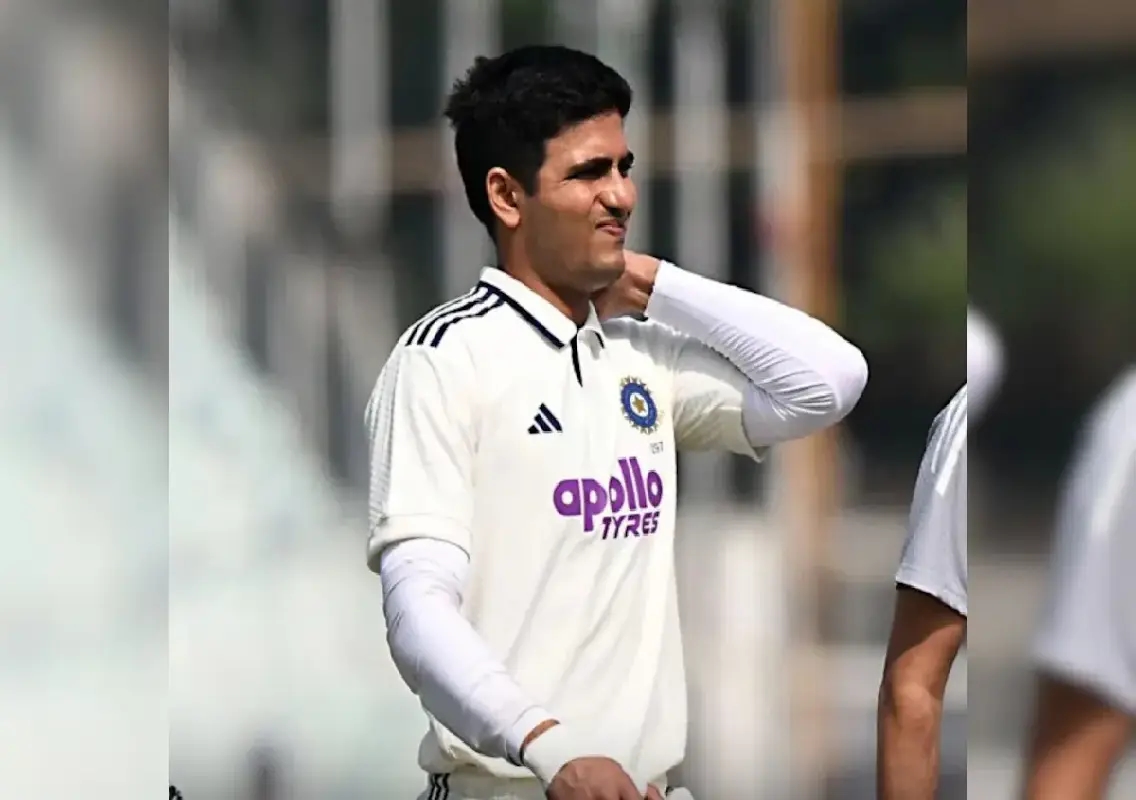


Shubman Gill’s neck injury during practice at Eden Gardens has once again brought India’s workload-management debate into sharp focus, especially for players who lead across formats. The 26-year-old, who has been in action continuously since the Asia Cup in September, has featured in four back-to-back series over the past month. While several senior players were rotated, Gill carried the dual responsibility of T20I vice-captain and ODI captain, raising concerns that the burden may be taking a toll on his fitness.
The injury ruled him out of the second and final Test against South Africa, a crucial match in India’s effort to level the series. His absence has renewed the discussion on whether young leaders like Gill should be shielded from excessive playing time.
Injury adds to concerns ahead of crucial fixtures
Gill sustained a neck spasm during a training session, prompting the medical team to pull him out of the Guwahati Test. While the BCCI has not issued an official update, early assessments indicate he may require around 10 days of rest.
India will now hope he recovers in time for the ODI series against South Africa starting 30 November, followed by a T20I series, both of which will demand heavy travel and leadership duties.
Gambhir rejects idea of mandatory rest
Despite growing calls to lighten Gill’s schedule, India head coach Gautam Gambhir remains firm in his stance against enforced rest. During a Media Day interaction ahead of the second Test, JioStar expert Aakash Chopra revealed Gambhir’s blunt assessment of the issue.
“I asked this question to Gautam before the Test match against the West Indies. His point was that if you need workload management, then skip the IPL. If you don’t want to lead because leading the IPL team puts too much pressure, then don’t lead. And while playing for India, if you are fit, you are not mentally fatigued,” Chopra said.
Chopra said he agreed with the coach’s view, noting that form often dictates playing time. “When you are going through a good form, you really want to maximise because you never know when the bad form hits you. If there is no fitness concern and no mental burnout, which is very individual-specific, you stay with them and you play as much as you can.”
Heavy schedule for India’s all-format players
India’s packed calendar since the Asia Cup has meant minimal recovery windows for multi-format cricketers. Gill, in particular, has been central to India’s campaigns across T20Is, ODIs and Tests. His elevation to leadership roles has increased his commitments both on and off the field.
Cricket analysts have repeatedly warned that players serving leadership duties in multiple formats face heightened physical and mental demands. Modern cricket’s relentless schedule, combined with franchise-league responsibilities, has widened the debate on how boards should balance player welfare with match readiness.
BCCI yet to announce timeline
While unofficial reports suggest Gill might be available for the South Africa ODIs if his recovery progresses smoothly, the BCCI has not confirmed his participation. The team management is expected to evaluate his fitness midway through the recovery window.
With India set to play continuously until the start of next year, the decision on Gill is likely to influence broader discussions on managing the workload of young captains and multi-format stars.
Balancing form and fitness
Experts note that Gill’s sustained good form has made it difficult for selectors to rest him. At the same time, his rising leadership responsibilities—coupled with the desire to cement his place across formats—make him more prone to burnout and injury.
As India prepares for an extended season across home and overseas tours, the larger question remains: how much cricket is too much for a young leader at the heart of India’s batting order?