







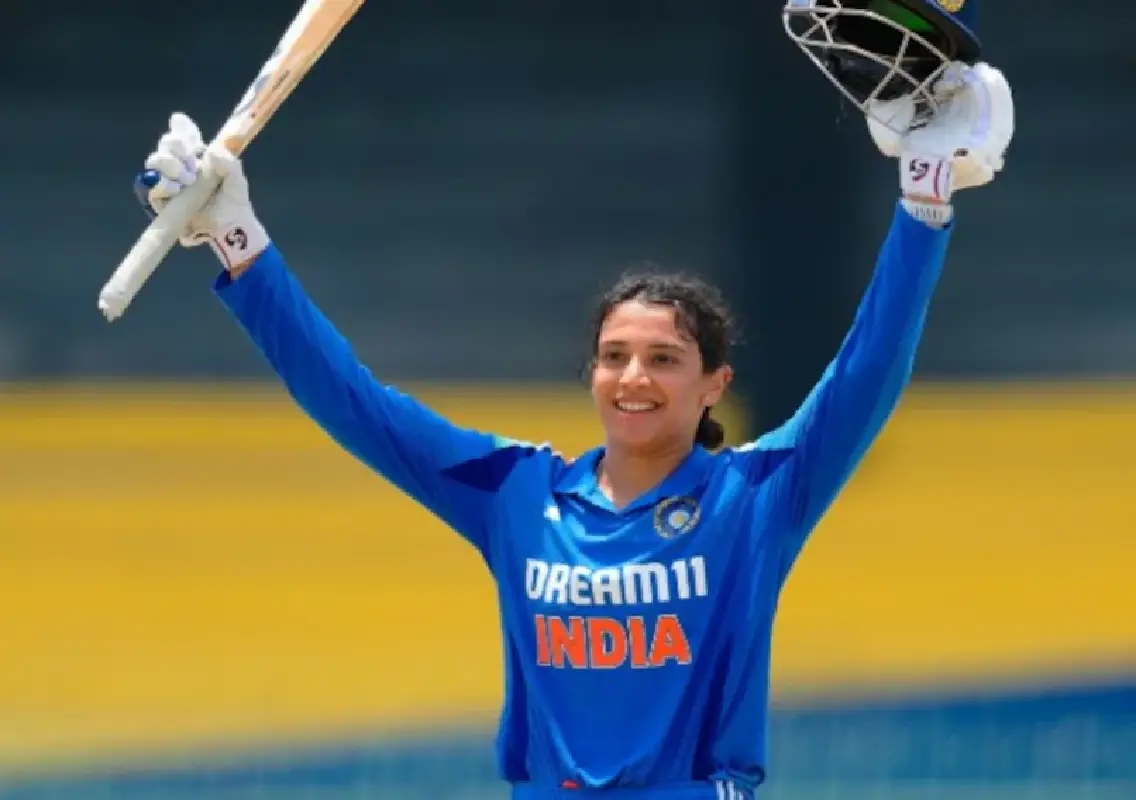


Indian star batter Smriti Mandhana created history during the first Women’s T20 International against Sri Lanka on Sunday by becoming the first Indian woman cricketer to score more than 4,000 runs in T20I cricket. The landmark moment came during India’s chase at the ACA–VDCA Stadium, marking yet another milestone in Mandhana’s illustrious international career and underlining her status as one of the finest batters in the women’s game.
Historic milestone for Indian cricket
Mandhana’s achievement places her in an elite global list in women’s T20I cricket. She is only the second woman cricketer in the world to cross the 4,000-run mark in the shortest international format. New Zealand veteran Suzie Bates remains the only other player to have achieved the feat, with 4,716 runs to her name.
What makes Mandhana’s record particularly remarkable is the speed at which she reached the milestone. The Indian opener took just 3,227 balls to surpass 4,000 runs, significantly quicker than Bates, who required 3,675 balls. This statistic reflects Mandhana’s aggressive yet consistent approach at the top of the order over the years.
A brief but significant innings
Mandhana reached the historic landmark during her knock of 25 runs off 25 balls against Sri Lanka. Opening the batting in India’s chase of 122 runs, she looked fluent before being dismissed in the ninth over. Although the innings itself was not a long one, it carried immense significance as it etched her name into the record books.
Her dismissal did little to dampen the moment, as the milestone had already been achieved, drawing applause from teammates, fans, and cricket experts alike. Mandhana’s consistency at the international level has made her one of India’s most dependable batters across formats.
Second woman globally to achieve feat
By crossing 4,000 T20I runs, Mandhana has joined New Zealand great Suzie Bates in an exclusive club. Bates, a former New Zealand captain and one of the most experienced players in women’s cricket, has long been a benchmark in the format.
Mandhana’s faster scoring rate highlights the evolution of modern women’s cricket, where batters are expected to combine consistency with attacking intent. Over the years, Mandhana has redefined opening batting for India, setting the tone in powerplays and maintaining pressure on opposition bowlers.
Return to international cricket after World Cup triumph
The match against Sri Lanka marked Mandhana’s first international appearance since India’s historic triumph in the Women’s ODI World Cup final last month. India defeated South Africa in the final to lift their maiden World Cup title, a moment that has been described as a defining chapter in Indian women’s cricket.
Coming into the T20I series after such a landmark achievement for the team, Mandhana’s personal milestone added further significance to the occasion and symbolised the continuity of India’s success across formats.
Indian bowlers set the platform
Earlier in the match, India’s bowlers produced a disciplined performance to restrict Sri Lanka to 121 runs for six wickets. Despite favourable batting conditions and the presence of dew later in the innings, the Indian attack maintained tight lines and lengths throughout.
Sri Lanka struggled to build momentum, failing to capitalise on loose deliveries and losing wickets at regular intervals. Opener Vishmi Gunaratne top-scored for Sri Lanka with 39 runs off 43 balls, anchoring the innings but lacking support at the other end.
Contributions from Sri Lankan batters
Hasini Perera and Harshitha Samarawickrama chipped in with 20 and 21 runs respectively, but none of the batters were able to convert their starts into a substantial score. Sri Lanka captain Chamari Athapaththu began aggressively, raising hopes of a strong total, but was dismissed early by young Indian pacer Kranti Gaud, giving India a crucial breakthrough.
The dismissal of Athapaththu tilted the momentum firmly in India’s favour, forcing Sri Lanka into a rebuilding phase that never fully materialised.
Controlled bowling despite challenging conditions
India’s bowlers showed composure in challenging conditions, particularly during the middle overs when dew made gripping the ball difficult. Deepti Sharma bowled economically, using her experience to stifle the run flow and build pressure.
Debutant Vaishnavi Sharma also impressed with a calm and controlled spell, conceding very few runs and showing maturity beyond her experience. Her performance added depth to India’s bowling attack and provided another positive takeaway from the match.
Conclusion
Smriti Mandhana’s historic achievement of becoming the first Indian woman to cross 4,000 T20I runs stands as a testament to her longevity, consistency, and attacking mindset. Achieved at a faster pace than any other woman cricketer, the milestone highlights her impact on the evolution of Indian women’s cricket. Combined with a strong team performance against Sri Lanka, the match served as a reminder of India’s growing dominance in the women’s game and Mandhana’s central role in that journey.