


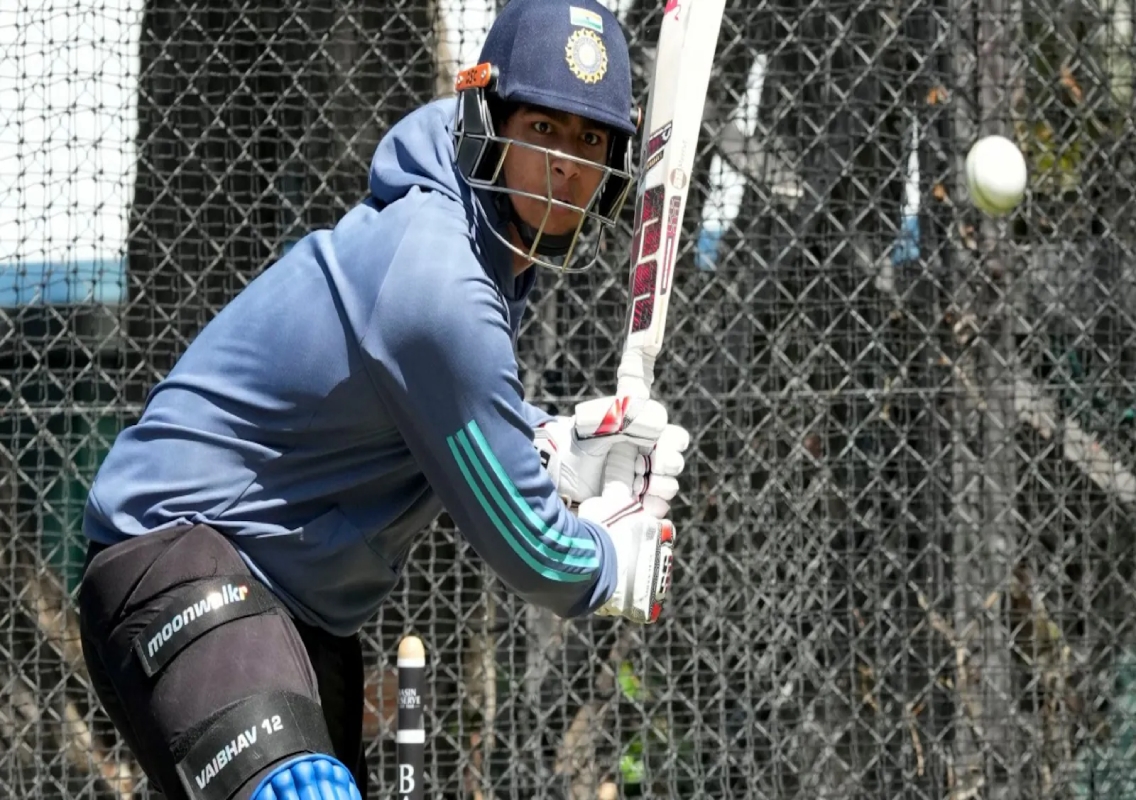


New Delhi: India’s decision to send teenage batter Vaibhav Sooryavanshi in at No. 3 during the second T20 International against New Zealand has sparked debate, with former cricketers questioning whether the team is making the best use of his attacking abilities.
The 15-year-old left-handed batter scored just four runs off eight deliveries after being promoted to the No. 3 position in Christchurch on October 24. India won the match by four wickets, but Sooryavanshi’s unfamiliar role has raised questions about the team’s batting combination ahead of the third T20I in Wellington on October 27.
The decision came after wicketkeeper-batter Ishan Kishan was ruled out of the second match because of a low-grade right adductor strain. With Kishan unavailable, India brought Sooryavanshi into the playing XI but chose to retain the established opening combination of Abhishek Sharma and Sanju Samson.
Why India moved Sooryavanshi to No. 3
India’s team management opted to preserve the opening partnership of Abhishek Sharma and Sanju Samson rather than make another change at the top of the order. Sooryavanshi, who is most familiar with opening the innings, was consequently assigned the No. 3 position.
The move had a tactical rationale. Abhishek and Samson had been trusted to open, and changing their roles could have required further adjustments to the batting order. Sending Sooryavanshi in at No. 3 allowed India to include the youngster without immediately breaking up the existing combination.
However, the decision also placed a young batter in a role that demands a different approach. An opener often has the opportunity to attack from the first over, particularly during the Powerplay, when fielding restrictions can create scoring opportunities. A batter coming in at No. 3 may have to respond to the score, wickets lost and the state of the innings.
Sooryavanshi’s four-run innings was not enough to establish whether he can succeed in the position. Nevertheless, it has renewed the debate over whether India should prioritise preserving its opening combination or give the teenager the role in which he is most comfortable.
Former cricketers question the decision
Former India spinner Murali Kartik questioned the decision to move Sooryavanshi away from the opening position. Speaking on Sony Sports Network, Kartik argued that the youngster’s strengths are best suited to opening and pointed out that he has limited experience batting in the middle order.
Kartik also suggested that experienced players can be asked to adjust their positions to accommodate a younger batter. Under that approach, Samson could move to No. 3 while Sooryavanshi opens alongside Abhishek.
Former India spinner Ravichandran Ashwin expressed similar reservations about the move. Ashwin felt Sooryavanshi appeared uncomfortable when he came to the crease during the second T20I and questioned whether the No. 3 role suited him.
Ashwin also referred to India’s previous combination in which Sooryavanshi opened with Abhishek, while Samson batted one position lower. That arrangement offers the team an alternative if the management decides that the teenager’s attacking approach would be more effective at the top of the order.
The comments from both former cricketers highlight a broader selection question: should India maintain a settled batting order, or should it make room for an emerging talent in his preferred role?
Sooryavanshi’s record as an attacking opener
Sooryavanshi has earned attention for his aggressive stroke play and ability to score quickly at the top of the order. His notable performances have included a 35-ball century in the Indian Premier League, described in the report as the fastest IPL century by an Indian, and a spectacular 175 off 80 deliveries in the 2026 Under-19 World Cup final.
Those innings demonstrated how effectively he can exploit fielding restrictions and put pressure on opposition bowlers early in an innings. As an opener, he can look to score boundaries from the outset without having to adjust to a match situation created by an earlier partnership.
At No. 3, however, he may need to adapt to a wider range of circumstances. If an opening wicket falls early, he could be required to rebuild the innings. If the openers provide a strong start, he might have fewer opportunities to make an impact during the Powerplay.
That does not mean Sooryavanshi cannot develop into a successful middle-order batter. Rather, the challenge is whether India should ask him to learn a new role while he is still establishing himself at international level.
India must balance stability with player development
There are arguments in favour of both approaches. Keeping Abhishek and Samson together provides continuity and avoids disrupting a partnership the management wants to maintain. It also gives Sooryavanshi an opportunity to gain experience in a different batting position.
On the other hand, moving Samson to No. 3 would allow Sooryavanshi to return to his familiar opening role. An experienced batter may be better placed to adjust to a new position, while the youngster could focus on the attacking style that has brought him success.
One short innings should not be treated as conclusive evidence that Sooryavanshi cannot bat at No. 3. Equally, his reputation as an aggressive opener does not guarantee that he will succeed in every match at the top of the order. The team management will need to assess his comfort, the requirements of the team and the balance of the playing XI.
Third T20I could offer another opportunity
With Kishan expected to miss the third T20I as well, India’s batting order remains an important talking point ahead of the Wellington match on October 27. Sooryavanshi could have another opportunity to demonstrate his ability, although his exact batting position will depend on the team’s selection and tactical decisions.
India entered the match with a 2–0 lead in the five-match series after winning both opening games by four wickets. The team will be keen to maintain its winning momentum, while New Zealand will look to prevent India from sealing the series early.
For Sooryavanshi, the immediate challenge is to make the most of his opportunity, regardless of where he bats. For India, the larger question is whether preserving an established opening pair outweighs the potential benefits of using an explosive young batter in his preferred position.
The No. 3 experiment may yet work, but the debate underlines the importance of matching a player’s role to his strengths while allowing room for development at the highest level.