







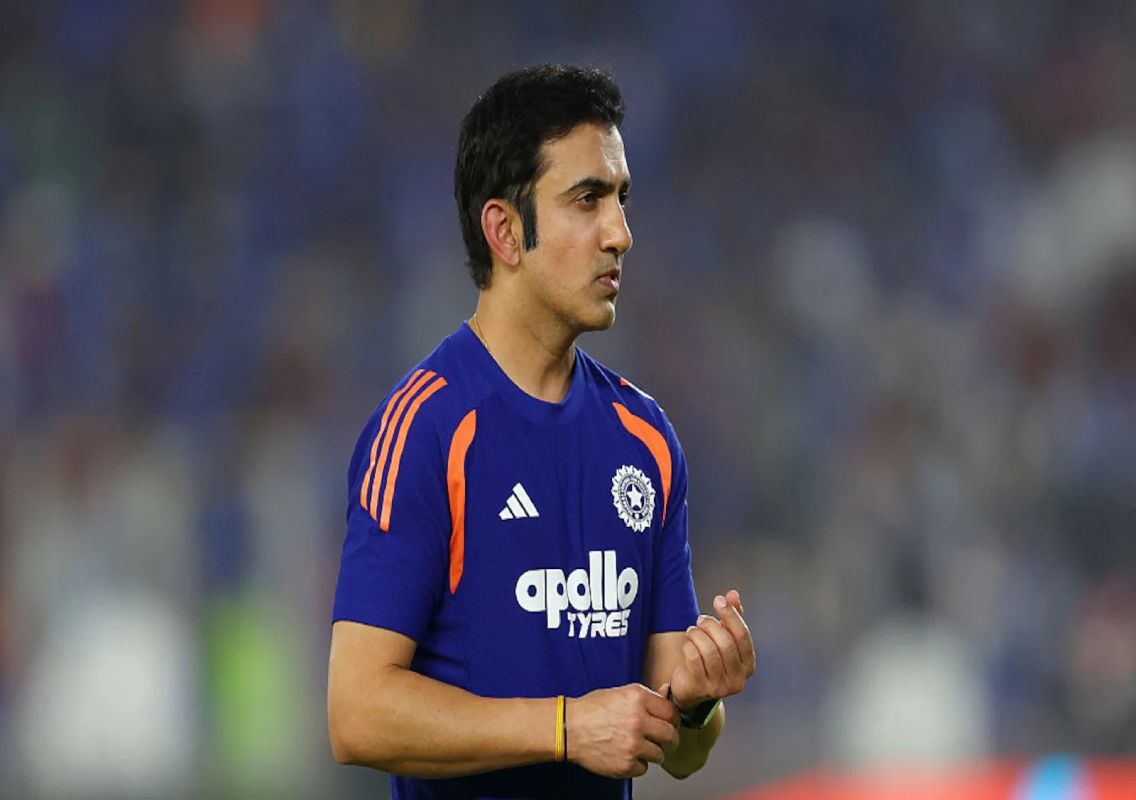


London: Former India cricketer Krishnamachari Srikkanth launched a scathing attack on head coach Gautam Gambhir and the team management after India’s 2-1 ODI series defeat to England, blaming questionable batting-order decisions for the loss in the final match at Lord’s.
India’s tour of England ended on a disappointing note as the visitors failed to chase down a daunting 388-run target, eventually losing by 27 runs. Despite a brilliant century from Rohit Sharma and solid contributions from Shubman Gill and Virat Kohli, the middle and lower order faltered under pressure, sparking criticism from former players.
Batting order decisions under fire
Srikkanth did not hold back while questioning the team management’s tactical calls, particularly the decision to send KL Rahul at No. 6 during a steep run chase.
Speaking on his YouTube channel, the 1983 World Cup winner argued that Rahul, known for his composure in high-pressure chases, should have been promoted up the order.
“Will anyone send KL Rahul at No. 6 when chasing such a huge total? That guy has won you so many games in tough situations. Is Rahul a No. 6 or No. 7 batter?” Srikkanth said.
Rahul walked in late during the 44th over, with India needing 84 runs off just 36 balls — a near-impossible equation. The wicketkeeper-batter managed only 12 runs from eight deliveries, unable to influence the outcome.
Srikkanth suggested that Rahul’s delayed entry effectively ruled India out of contention. He emphasised that a top-order promotion could have stabilised the innings and allowed better partnerships.
Comparisons with past decisions
In a sharp remark, Srikkanth accused the management of repeatedly mishandling players’ roles, drawing parallels with earlier cases involving Sanju Samson and young talent Vaibhav Sooryavanshi.
“Just like you messed up Sanju Samson and Vaibhav Sooryavanshi, now you are doing the same with KL Rahul. This is gross injustice,” he said.
He also pointed to Rahul’s body language during the match, suggesting that the uncertainty around his role may have affected his confidence.
The remarks underline a growing debate around India’s team combinations and role clarity under Gambhir’s tenure as head coach.
Missed opportunity in a high-scoring chase
Srikkanth further explained that India needed a stabilising presence in the middle overs — a role Rahul has excelled in previously, especially during the 2023 ODI World Cup campaign.
He argued that Rahul at No. 4 could have complemented Kohli effectively, as the duo had done in the past, building partnerships and pacing chases.
“India needed someone to play the Jos Buttler role in that chase,” Srikkanth said, referencing England’s aggressive middle-order template. “Instead, Rahul came in when the match was almost over. How could he win the game at 15 runs per over with Axar Patel?”
India’s middle-order collapse proved costly, with players like Ishan Kishan and Shreyas Iyer failing to capitalise on the strong platform laid by the top order.
Rahul’s shifting role under Gambhir
KL Rahul’s batting position has been a topic of discussion since Gambhir took over as head coach. While he batted at No. 5 during India’s successful 2023 ODI World Cup campaign — scoring 452 runs in 10 innings — he has since been pushed down the order.
Under the current setup, Rahul has often been deployed at No. 6, with all-rounders like Axar Patel occasionally promoted ahead of him. While this strategy yielded results during the 2025 Champions Trophy, critics argue that it may not suit every match situation.
The inconsistency in role allocation has raised concerns about the team’s adaptability, particularly in high-pressure chases where clarity of roles is crucial.
Conclusion
Srikkanth’s strong remarks reflect wider concerns about India’s tactical approach and team management decisions following the England series defeat. While experimentation remains a part of team evolution, critics believe that frequent changes in batting order could disrupt player confidence and impact performance.
As India looks ahead to future assignments, including major ICC tournaments, the focus will likely be on finding the right balance between flexibility and stability in the playing XI — a factor that could determine success on the global stage.