


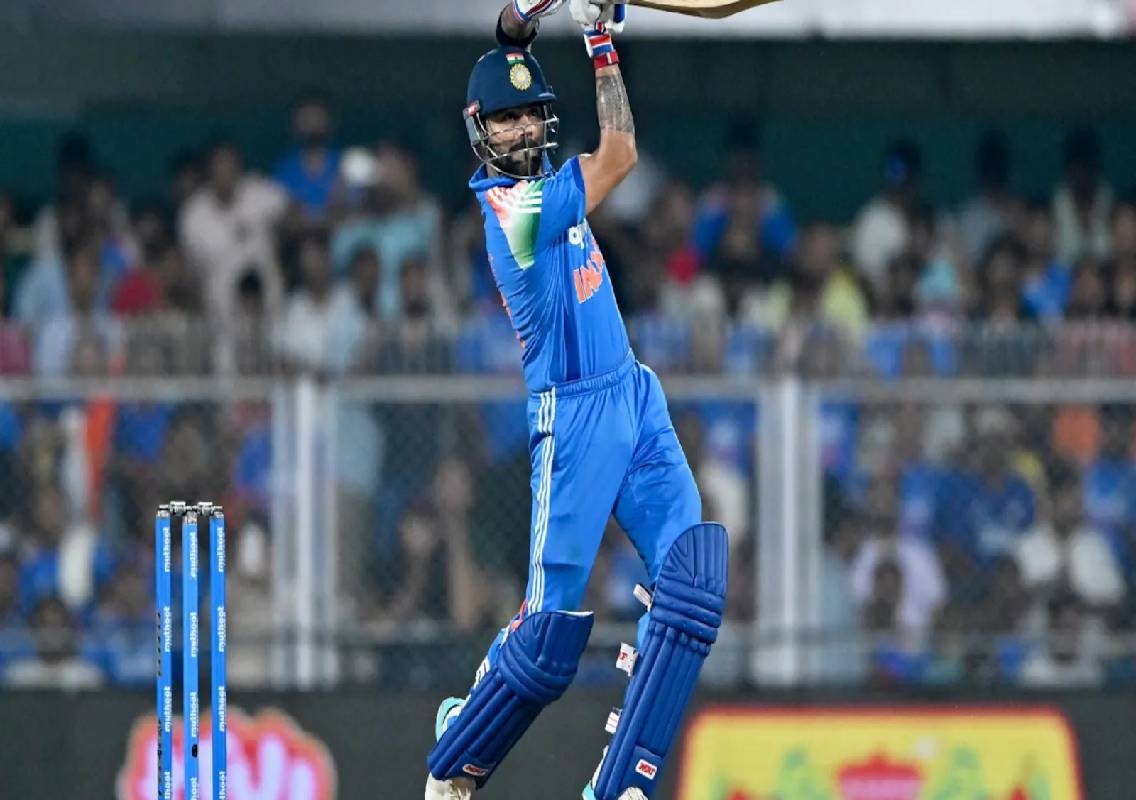


New Delhi: Former India opener Wasim Jaffer has backed Tilak Varma as a potential successor to Virat Kohli at No. 3 in India’s ODI batting order after the veteran batter’s international career eventually comes to an end.
Kohli has indicated that the 2027 ODI World Cup will be his final appearance in the tournament, putting the spotlight on the question of who could take over the crucial No. 3 position that he has occupied for much of his ODI career.
While several names, including Shubman Gill, Ishan Kishan and Ruturaj Gaikwad, could be considered for India’s future batting combination, Jaffer has identified left-handed batter Tilak Varma as his preferred option.
Jaffer backs Tilak Varma
Jaffer highlighted Tilak’s versatility as one of the main reasons why he believes the youngster could handle the responsibility at No. 3.
Tilak has already shown his ability to bat at different positions for India. Jaffer pointed to the batter’s experience at No. 3 as well as his ability to adapt to middle-order roles.
The former India opener believes this flexibility could make Tilak particularly useful when India eventually has to replace a batter as influential as Kohli.
Jaffer also noted that having a left-hander at No. 3 would give India’s batting order a different combination.
The former cricketer’s assessment comes at a time when India’s selectors are likely to gradually assess long-term options ahead of the 2027 World Cup.
Tilak’s versatility attracts attention
Tilak’s ability to change positions has become one of the notable aspects of his development as an international batter.
According to Jaffer, Tilak has previously scored a century while batting at No. 3 and has subsequently adapted to positions lower down the order.
The left-hander has also been used in different roles in T20 cricket, giving him experience of adjusting his approach according to the team’s requirements.
For a No. 3 batter in ODIs, the ability to play different situations is particularly important. The player may have to enter early if an opener is dismissed quickly or build an innings after a strong opening partnership.
Jaffer’s argument is that Tilak’s adaptability could allow him to handle these different match situations.
Kohli’s No. 3 role leaves a major gap
Kohli’s eventual departure from ODI cricket will leave a significant vacancy in India’s top order.
He has been one of India’s most consistent performers at No. 3 and has built a substantial part of his ODI career around the position.
The 2027 World Cup will be Kohli’s fifth appearance in the competition. With the tournament expected to be his final ODI World Cup, India will have to prepare for a transition in the top order.
The challenge will not simply be finding a batter capable of occupying the position. India’s selectors will also have to identify a player who can provide consistency over the long term.
Other candidates remain in contention
Tilak is not the only player who could be considered for the No. 3 position.
Shubman Gill has experience across the top and middle order and could potentially be moved depending on India’s combination. Ruturaj Gaikwad is another option who has been discussed as part of India’s future ODI plans.
Ishan Kishan could also remain in contention, particularly given his experience as a left-handed batter and wicketkeeper.
However, Jaffer’s comments specifically favour Tilak because of the combination of his left-handed batting and ability to adjust to different positions.
The eventual decision will depend on performances, consistency, fitness and India’s team combination as the 2027 World Cup approaches.
Tilak’s left-handed advantage
One factor Jaffer particularly appreciates is that Tilak would provide a left-handed option in the top order.
India’s batting combinations can benefit from having right- and left-handed batters together because it can force opposing bowlers and captains to adjust their plans.
A left-handed No. 3 would also create a different dynamic after India’s opening pair.
Jaffer’s view is therefore based not only on Tilak’s individual batting ability but also on the balance he could potentially provide to the team.
India begins planning for post-Kohli era
Although Kohli remains an important part of India’s ODI plans, the discussion around his successor has already begun because of his stated 2027 World Cup timeline.
The transition will likely be gradual rather than immediate. India can use the period leading up to the World Cup to assess different players and combinations before settling on a long-term No. 3.
The team management will also need to balance the experience of senior players with opportunities for younger batters.
For Tilak, regular opportunities at the international level could be important in determining whether he can eventually establish himself as a first-choice ODI batter.
Jaffer also praises Abhishek Sharma
Jaffer also spoke positively about another young Indian batter, Abhishek Sharma, highlighting the progress he has made in terms of his approach to batting.
According to Jaffer, Abhishek appears to have become more mature and composed, taking more time to assess situations rather than immediately attempting aggressive shots.
The former India opener believes this development could help Abhishek as he continues to adapt to international cricket.
While Abhishek’s primary role is different from that of Kohli, Jaffer’s comments reflect the wider pool of young batters India is developing ahead of the next ODI World Cup cycle.
2027 World Cup transition ahead
India still has more than a year to prepare for the 2027 ODI World Cup, giving the team management time to assess its options.
Kohli’s experience will be difficult to replace, but the team has several emerging batters who could eventually take on greater responsibility.
Tilak’s versatility, left-handed batting and experience in multiple positions make him one of the candidates worth monitoring.
However, Jaffer’s endorsement is not a selection announcement. The final decision will rest with India’s selectors and team management based on performances and team requirements closer to the tournament.
Conclusion
Former India opener Wasim Jaffer has named Tilak Varma as his preferred candidate to eventually replace Virat Kohli at No. 3 in India’s ODI batting order.
Jaffer believes Tilak’s versatility, left-handed batting and experience at different positions make him well suited to the role. Kohli has indicated that the 2027 ODI World Cup will be his final World Cup appearance, making the search for his long-term successor increasingly relevant.
While players such as Shubman Gill, Ruturaj Gaikwad and Ishan Kishan could also be considered, Jaffer’s backing puts Tilak among the names to watch as India prepares for the next phase of its ODI batting line-up.