







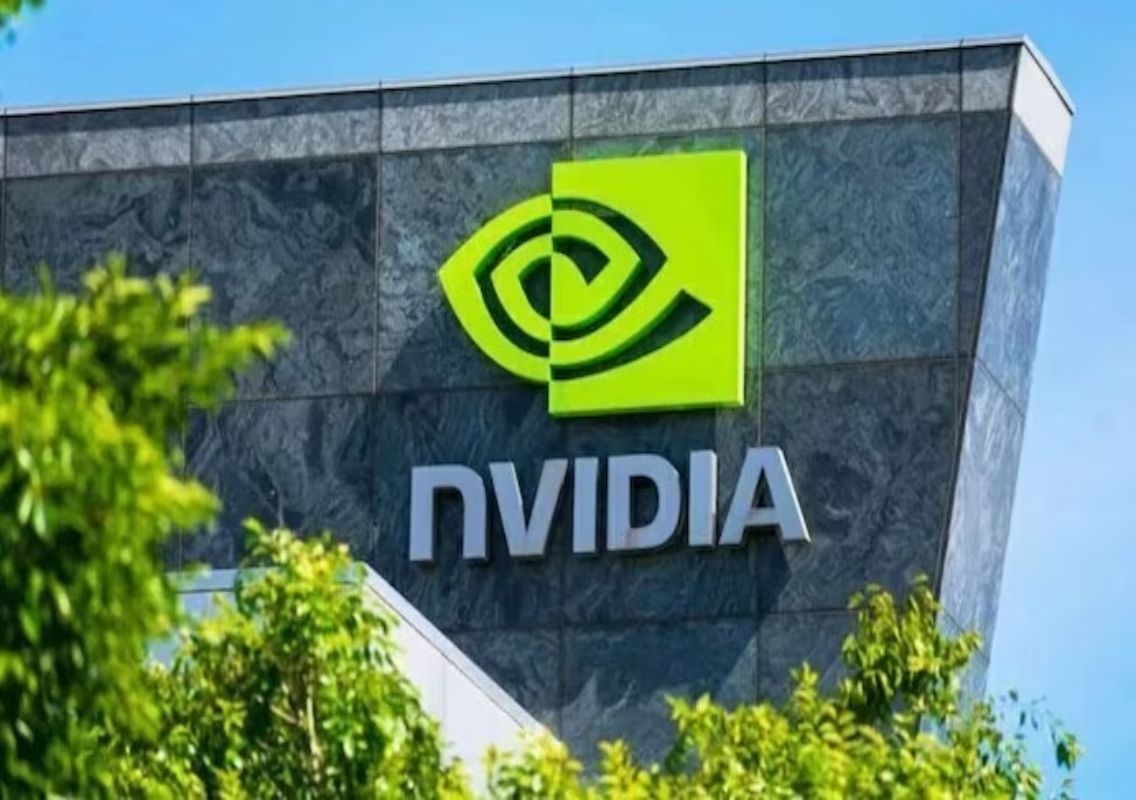


Hyderabad: Indian AI infrastructure company AM Intelligence has placed a binding order for around 9,000 Nvidia Vera Rubin systems to power its first artificial intelligence factory in Hyderabad, marking a major investment in India’s emerging AI computing infrastructure. The company, backed by the founders of renewable energy producer Greenko Group, plans to bring the facility online next year.
The order makes AM Intelligence one of the earliest adopters in Asia of Nvidia’s latest AI computing platform. The Hyderabad facility is expected to form the first part of a much larger compute-as-a-service network that the company plans to build across India, the US, Finland and Malaysia.
Hyderabad AI factory to begin with 200MW capacity
AM Intelligence plans to initially bring 200MW of AI computing capacity to the market through its Hyderabad facility.
The project is designed to support demanding AI workloads, including trillion-parameter models and next-generation agentic AI applications. The company intends to provide computing infrastructure to cloud-service providers, AI research laboratories and organisations developing Indian AI models.
The initial computing capacity has reportedly already been purchased by a US customer, although the identity of the customer has not been disclosed.
The Hyderabad facility is expected to become the first major component of AM Intelligence’s planned 1GW compute-as-a-service platform, which will eventually span multiple countries.
Nvidia Vera Rubin systems at the centre
The 9,000-system order will bring Nvidia’s latest Vera Rubin computing platform to the company’s planned Hyderabad AI factory.
The scale of the order highlights the amount of computing power required to train and operate increasingly sophisticated AI systems. Modern AI models require large clusters of specialised processors to handle training, inference and other computational workloads.
By securing thousands of Nvidia systems, AM Intelligence is positioning its Hyderabad facility to serve customers requiring substantial AI computing resources without having to build their own large-scale infrastructure.
The company is also among the early adopters of Nvidia’s latest platform in Asia, according to the report.
Project involves more than $8 billion in investment
The Hyderabad AI factory is part of an ambitious expansion plan involving more than $8 billion in capital expenditure.
AM Intelligence plans to establish a 1GW compute-as-a-service platform across India, the US, Finland and Malaysia. It intends to make AI computing capacity available to customers in these markets rather than limiting the infrastructure to a single location.
The company ultimately plans to expand its AI data-centre capacity to 5GW by 2030 across India, Europe and other markets.
The expansion is expected to be financed through a combination of debt and equity.
Greenko’s renewable energy could lower costs
One of the key advantages of AM Intelligence’s strategy is its access to Greenko’s renewable-energy infrastructure.
AI data centres consume significant amounts of electricity, making energy costs an important part of the economics of AI computing.
AM Intelligence believes access to renewable power can help it maintain competitive computing costs. Greenko founder and president Mahesh Kolli highlighted the importance of energy prices in the economics of AI token generation.
The company’s access to renewable energy could therefore become an important differentiator as AI infrastructure providers compete to offer affordable computing capacity.
US customers can access Indian AI computing
AM Intelligence also plans to use India’s undersea cable connectivity to serve customers outside the country.
The company says US companies could access AI computing capacity hosted in India with latency of around 300 milliseconds.
This model could allow international companies to access computing infrastructure without building dedicated AI data centres in every market.
For India, it could also create an opportunity to emerge as an important destination for global AI workloads, particularly as demand for computing capacity continues to rise.
India aims to become an AI infrastructure hub
The AM Intelligence investment comes as India attempts to build a stronger domestic AI ecosystem.
Indian technology companies and research organisations are increasingly looking to develop large AI models and applications locally. However, advanced AI systems require substantial computing infrastructure, which can be expensive and difficult for individual companies to build.
Large AI factories could help address this gap by providing computing resources as a service.
Instead of investing billions of dollars in their own data centres and accelerator clusters, AI companies could potentially rent computing capacity from specialised infrastructure providers.
This could be particularly important for startups and research organisations that need access to high-performance computing but cannot justify the cost of owning large GPU clusters.
Hyderabad emerges as a major technology location
Hyderabad’s role in the project also highlights the city’s growing importance as a technology and data-centre hub.
The city already has a significant presence in information technology, cloud services and large-scale digital infrastructure. The addition of an AI factory designed for next-generation workloads could further strengthen its position in India’s technology ecosystem.
The facility’s planned 200MW initial capacity represents a substantial infrastructure commitment.
As AI workloads grow, demand for dedicated data centres with specialised cooling, networking and power systems is expected to increase.
AI workloads are becoming more demanding
The type of workloads AM Intelligence plans to support reflects how quickly AI computing requirements are changing.
The company says its Hyderabad facility will be capable of handling trillion-parameter models and advanced agentic AI applications.
Agentic AI systems can perform multi-step tasks, interact with tools and make decisions based on changing inputs. Such systems can require considerable computing resources, particularly when deployed at scale.
As AI models become larger and applications become more sophisticated, cloud and infrastructure providers are racing to secure sufficient processing capacity.
The AM Intelligence investment is therefore part of a wider global trend in which companies are building dedicated AI factories rather than relying solely on conventional data centres.
Expansion to 5GW by 2030
The Hyderabad project is only the beginning of AM Intelligence’s long-term plans.
The company aims to increase its AI data-centre capacity to 5GW by 2030, with infrastructure spread across India, Europe and other markets.
That target is considerably larger than the initial 200MW planned for Hyderabad.
Achieving it will require substantial investment in computing hardware, power generation, data-centre construction, networking and cooling infrastructure.
The company plans to fund the expansion through a mix of debt and equity, allowing it to scale its infrastructure without relying solely on internal funding.
A boost for India’s AI ambitions
The Nvidia order could also strengthen India’s position in the global AI infrastructure race.
Countries around the world are investing heavily in AI data centres because access to computing power is increasingly viewed as strategically important.
India has a large technology workforce and a growing startup ecosystem, but access to high-end AI computing remains a key requirement for developing competitive AI models and applications.
A large domestic AI factory could help reduce some of the infrastructure constraints faced by Indian companies.
It could also attract international customers looking for additional AI computing capacity.
Competition in AI infrastructure
AM Intelligence will enter a market where global cloud companies and specialised data-centre operators are already investing heavily in AI infrastructure.
The company’s strategy differs in part because of its focus on renewable energy and compute-as-a-service.
Rather than simply operating infrastructure for its own AI products, AM Intelligence plans to sell computing capacity to external customers.
This business model could benefit from the growing number of companies that need access to advanced GPUs but do not want to purchase and maintain their own hardware.
Nvidia strengthens its position in India
The deal is also significant for Nvidia.
The company has become one of the most important suppliers of AI computing hardware as demand for advanced processors continues to increase.
A 9,000-system order from an Indian AI infrastructure company gives Nvidia another large customer in a market that is attempting to expand its AI capabilities.
The deployment of the Vera Rubin platform in Hyderabad could also help demonstrate the capabilities of Nvidia’s latest technology to Indian AI companies and research organisations.
What the Hyderabad project means
If AM Intelligence’s plans proceed as outlined, the Hyderabad facility could become an important part of India’s AI infrastructure landscape.
Its initial 200MW capacity, backed by thousands of Nvidia systems and access to renewable energy, is designed to serve both Indian and international customers.
The longer-term ambition is considerably larger, with the company targeting a 1GW platform and eventually 5GW of AI data-centre capacity by 2030.
The success of the project will depend on the company’s ability to build the infrastructure on schedule, secure sufficient power and financing, and attract customers for its computing services.
Conclusion
AM Intelligence has placed a binding order for around 9,000 Nvidia Vera Rubin systems for its first AI factory in Hyderabad, according to a Bloomberg report cited by India Today. The facility is expected to come online next year and will initially provide 200MW of AI computing capacity.
The project forms part of a planned 1GW compute-as-a-service platform spanning India, the US, Finland and Malaysia, with more than $8 billion in planned capital expenditure. The company eventually aims to expand its AI data-centre capacity to 5GW by 2030.
With access to Greenko’s renewable-energy infrastructure, AM Intelligence hopes to keep AI computing costs competitive while serving cloud providers, AI laboratories and developers of Indian AI models.
The Hyderabad project could become a significant step in India’s effort to build domestic AI infrastructure and attract international AI workloads. At the same time, the massive Nvidia order underlines just how much computing capacity will be needed as AI models, agentic systems and other advanced applications continue to expand.