







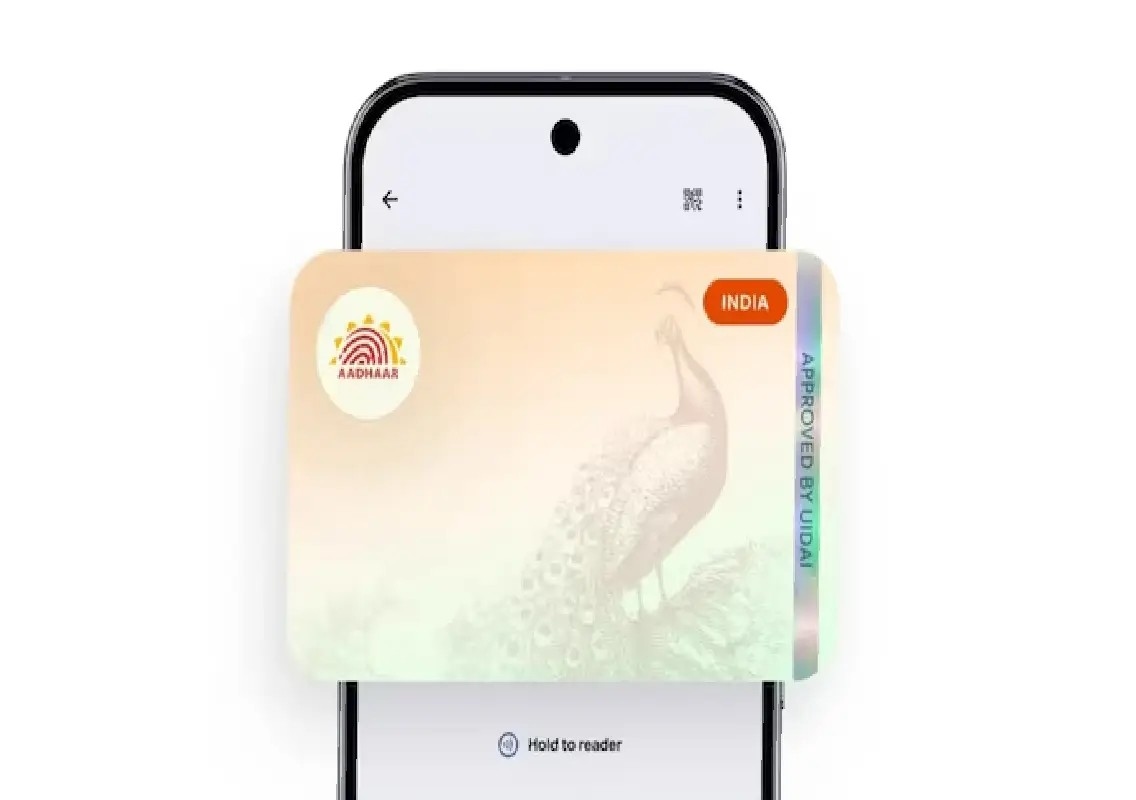


New Delhi: In a move aimed at simplifying digital identity verification, Google and the Unique Identification Authority of India have enabled Indian users to store Aadhaar details in Google Wallet.
The feature allows users to securely store Aadhaar-based credentials on their smartphones and use them for identity verification in select scenarios. However, officials clarified that this is not a full “linking” of Aadhaar with a Google account, but rather a convenience feature built on secure digital protocols.
How the feature works
The system uses Aadhaar Verifiable Credentials, an offline verification framework introduced by UIDAI. Once users add their Aadhaar credentials to Google Wallet, they can present them digitally when required for identity checks.
This can include situations such as age verification, identity confirmation on apps, or filling out forms where Aadhaar is accepted.
Importantly, the credentials are stored locally on the user’s device rather than on external servers, enhancing privacy and security.
Selective data sharing
A key feature of the system is “selective disclosure,” which ensures that users only share necessary information instead of revealing full Aadhaar details.
For instance, a platform may only require confirmation of age or name, and the system will share only that specific data rather than the entire Aadhaar record.
Google said this approach is designed to minimise data exposure while maintaining ease of verification.
Limited rollout with partners
At present, Aadhaar verification through Google Wallet is supported by select partners, including PVR INOX and BharatMatrimony.
The company indicated that more platforms are expected to adopt the feature soon, with services like MyGate and Snabbit likely to be added.
Focus on privacy and convenience
Google emphasised that the feature is built on global digital ID standards and prioritises user privacy. Since Aadhaar credentials remain on the device, users retain control over when and how their information is shared.
The system also aims to reduce dependency on physical documents and repeated manual verification processes.
Not a replacement for existing Aadhaar linking
Officials clarified that this feature is different from mandatory Aadhaar linking with services like PAN or bank accounts. Instead, it serves as an optional tool for easier identity verification in everyday use cases.
Similar functionality is also available through the official Aadhaar app launched earlier by UIDAI.
Conclusion
The integration of Aadhaar credentials into Google Wallet marks a step towards digital-first identity solutions in India. While still in early stages with limited partners, the feature is expected to expand, offering users a more secure and convenient way to verify their identity.