







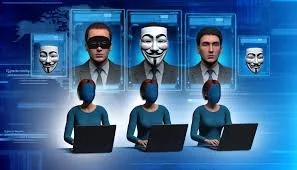


Artificial intelligence–generated deepfakes are fast emerging as a serious new threat in workplaces, with recent court rulings and federal guidance making it clear that such misuse can amount to unlawful harassment, discrimination and even criminal conduc
US court upholds $4 million verdict
In a landmark ruling, a California appellate court recently upheld a jury verdict awarding $4 million to a police captain who was subjected to a hostile work environment after a sexually explicit, AI-generated image resembling her was circulated among colleagues. The court held that the dissemination of fabricated sexual content constituted unlawful workplace harassment under California law.
In a separate high-profile case, a Washington State trooper has sued his employer after alleging that a supervisor used AI to create and circulate a deepfake video showing him kissing a coworker. The trooper has filed claims of discrimination, retaliation and invasion of privacy.
Legal experts say these cases highlight a growing trend in which AI-generated content is being weaponised to humiliate, intimidate or retaliate against employees.
Deepfake incidents rising sharply
The risk is escalating rapidly. Industry reports indicate that deepfake-related fraud and abuse attempts rose by more than 3,000 per cent in 2023. The number of deepfake files is estimated to have jumped from about 5 lakh in 2023 to nearly 80 lakh by 2025. In the first quarter of 2025 alone, 179 major deepfake incidents were recorded, already exceeding the total for all of 2024.
EEOC flags AI harassment risk
The Equal Employment Opportunity Commission (EEOC) has formally acknowledged the danger. In its enforcement guidance on harassment in the workplace, the agency explicitly includes the sharing of “pornography or sexually demeaning depictions of people, including AI-generated and deepfake images and videos,” as conduct that may violate US anti-discrimination laws.
The guidance makes clear that harassment under Title VII applies regardless of whether the conduct occurs in person or through digital means.
Beyond pornography: broader misuse
Experts warn that the misuse of AI in the workplace extends far beyond explicit content. Deepfakes can also be used to target protected characteristics such as race, religion, disability or national origin. For example, AI-generated images altering a person’s appearance to mock ethnicity or depict a false disability could constitute unlawful harassment under Title VII or the Americans with Disabilities Act.
Depending on the circumstances, such conduct may also trigger criminal charges related to cyber harassment or non-consensual intimate imagery, along with civil claims for privacy violations and emotional distress.
New laws and employer responsibility
New legislation, including the 2025 federal TAKE IT DOWN Act and Florida’s Brooke’s Law, requires rapid removal of non-consensual intimate deepfake content, signalling increasing regulatory focus.
Legal specialists say employers must now act proactively. Recommended measures include updating anti-harassment policies to explicitly ban AI-generated abusive content, investing in detection tools, conducting regular training on digital harassment, and treating deepfake evidence with the same seriousness as physical evidence during investigations.
As AI tools become more accessible, experts warn that organisations which fail to adapt risk legal liability, reputational damage and erosion of employee trust.