







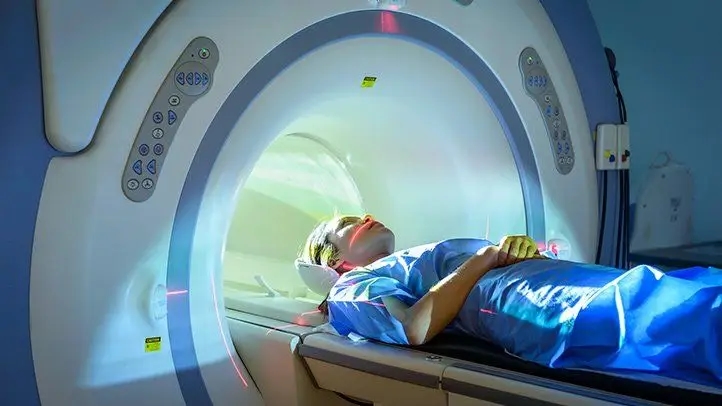


Artificial intelligence is fast transforming cancer diagnostics, surpassing human accuracy levels. In a groundbreaking development, researchers have introduced an AI model capable of identifying cancerous growths with near-perfect precision.
A global team, including experts from Australia’s Charles Darwin University (CDU), has unveiled ECgMLP, a cutting-edge AI system designed to analyze microscopic cell and tissue images. The model boasts a 99.26% accuracy rate in detecting endometrial cancer, a prevalent reproductive cancer. Its adaptability also shows promise for diagnosing colorectal, breast, and oral cancers.
Dr. Asif Karim of CDU explained that the model outperforms existing diagnostic tools while being computationally efficient. It leverages deep learning techniques, including self-attention mechanisms, to process histopathology images and enhance detection precision. In contrast, traditional human-led diagnostic methods typically achieve around 79-81% accuracy.
The AI’s ability to highlight specific problem areas invisible to the human eye allows for early-stage cancer detection, critical for effective treatment. Endometrial cancer, when caught early, has favorable patient outcomes; but delays in diagnosis can make treatment challenging.
Tests show ECgMLP’s adaptability:
- Colorectal cancer detection: 98.57% accuracy
- Breast cancer detection: 98.20% accuracy
- Oral cancer detection: 97.34% accuracy
Though not a replacement for medical professionals, this AI serves as a powerful decision-support tool, offering faster, accessible, and cost-effective diagnoses.
Researchers emphasize its potential to significantly improve patient survival rates worldwide.
- Sweet and fatty foods could secretly fuel lung cancer growth
- Elon Musk grants young cancer survivor’s wish with a Tesla Cybertruck
#AIDrivenHealthcare
#CancerDiagnosis
#MedicalInnovation
#FutureOfMedicine