







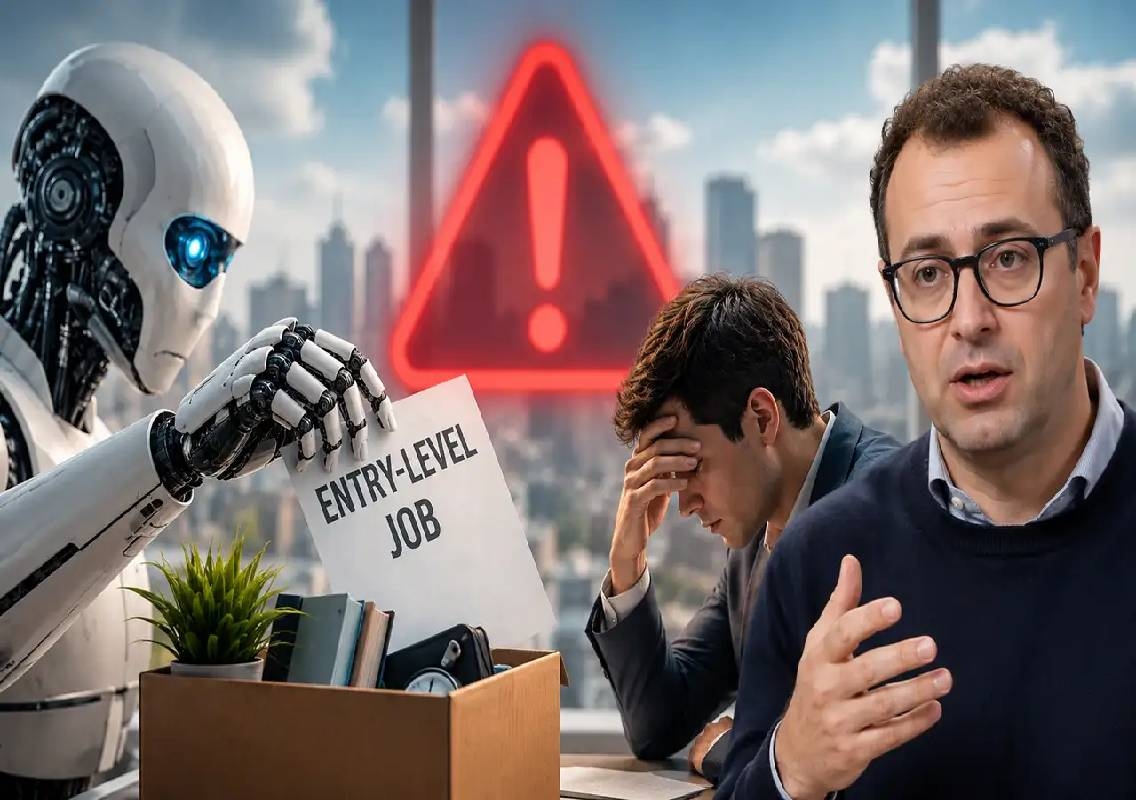


New Delhi: The rapid rise of artificial intelligence could significantly reshape the job market and hit entry-level white-collar roles the hardest, according to Anthropic CEO Dario Amodei.
In a recent interview, Amodei warned that AI systems are advancing fast enough to replace tasks traditionally handled by fresh graduates in sectors like consulting, finance and technology.
AI moving from “student level” to beyond
Amodei said AI capabilities have grown sharply in just a couple of years.
“Two years ago, it was at the level of a smart high school student; now it’s probably at the level of a smart college student and reaching beyond that,” he noted.
He cautioned that this rapid progress could disrupt how companies hire and train new employees.
Entry-level jobs most at risk
According to him, routine cognitive tasks such as summarising documents, drafting reports, brainstorming ideas and basic analysis are increasingly being handled by AI tools.
He warned that these tasks form the foundation of entry-level roles in industries such as consulting, finance, tech and administration.
While AI may initially assist workers, he believes it could eventually replace a large portion of early-career jobs.
Possible “employment pipeline disruption”
Amodei expressed concern that the traditional career ladder — where graduates start with internships and junior roles — could shrink significantly.
“If the pipeline of early-stage white-collar work starts to contract and dry up, we may have a serious employment crisis,” he said.
However, he also acknowledged that predicting the full impact of AI on jobs remains difficult.
AI’s dual impact: risk and opportunity
Despite the warning, Amodei also highlighted that AI could bring major benefits in sectors like healthcare, science and energy by improving productivity and accelerating innovation.
The debate over AI and employment continues globally, with some leaders arguing it will create new roles, while others warn of large-scale displacement in traditional job categories.
For now, the concern remains focused on how quickly AI is being integrated into workplaces without a clear transition plan for new graduates entering the job market.