







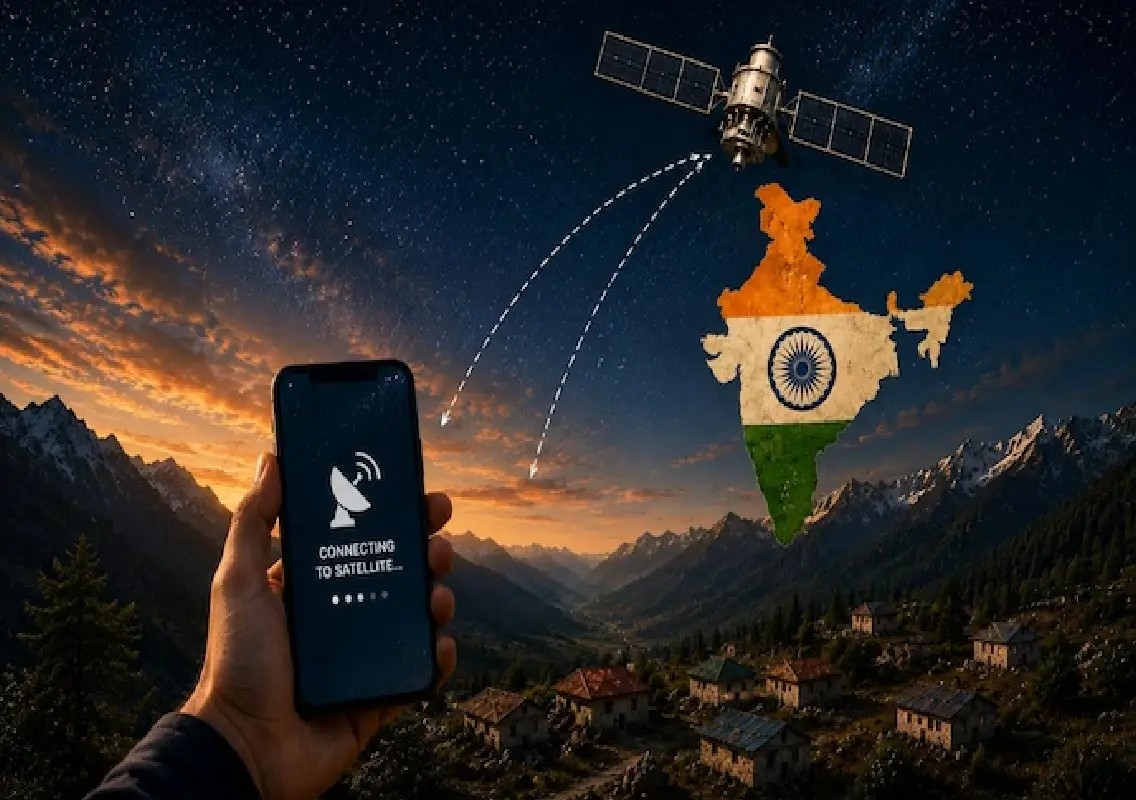


The government’s plans to introduce direct-to-device (D2D) satellite connectivity for smartphones have entered a crucial discussion phase, with technology companies Apple and Google reportedly seeking greater clarity on how such services would function within India’s telecom regulations. The emerging technology has the potential to transform communication access in remote regions by allowing smartphones to connect directly with satellites when traditional mobile networks are unavailable.
Discussions surrounding D2D satellite communication are currently taking place between industry stakeholders and the Department of Telecommunications (DoT), as policymakers attempt to understand the technical, regulatory and operational implications before introducing a formal framework.
D2D technology could improve connectivity in remote regions
Direct-to-device satellite technology is being viewed as a significant advancement in mobile communication systems. Unlike conventional networks that rely on cellular towers, D2D technology enables smartphones to directly communicate with satellites orbiting above Earth.
The technology is expected to be particularly useful in a country such as India, where network connectivity remains inconsistent across several regions including hilly terrains, forest zones and border districts.
In many remote areas, installing telecom towers is either technically difficult or economically unviable. Satellite connectivity could potentially address these gaps by allowing users to communicate during emergencies even in areas without mobile network coverage.
The feature could enable users to send emergency messages, share location details and contact rescue services during natural disasters or network failures.
Over recent years, premium smartphones in global markets have started introducing satellite-enabled emergency communication systems, primarily designed to function when standard mobile connectivity becomes unavailable.
Technology companies raise operational concerns
According to reports, Apple, Google and several other stakeholders have submitted feedback to authorities regarding the practical implementation of satellite-based smartphone communication.
The companies are reportedly seeking clarity on how satellite messaging services and emergency communication systems would operate within India’s telecom regulations.
Industry sources indicate that several technical concerns remain unresolved before large-scale deployment becomes feasible.
One of the key concerns highlighted relates to battery consumption. Smartphones communicating directly with low-earth-orbit satellites require significantly more power compared to conventional mobile network connections.
Another challenge involves hardware limitations. Modern smartphones are designed to remain compact and lightweight, leaving limited internal space for advanced antenna systems capable of maintaining stable satellite communication.
Companies have also reportedly raised concerns about maintaining reliable connectivity under India’s diverse geographical conditions, which include mountains, dense forests and varying environmental conditions.
Integration with existing networks remains complex
Industry experts have also pointed to the challenge of integrating satellite communication seamlessly with existing 4G and 5G networks.
Ensuring a smooth user experience without interruptions while transitioning between terrestrial and satellite networks remains a complex technical task.
Manufacturers are believed to be cautious because even minor engineering compromises can affect performance. Smartphone antennas communicating with satellites located hundreds of kilometres away require highly precise hardware and software coordination.
India-specific rules under discussion
Reports indicate that companies are also concerned about India-specific requirements that could require manufacturers to redesign smartphone systems already developed under global standards.
Apple has reportedly advised the Department of Telecommunications against imposing mandatory hardware modifications or repeated certification procedures specifically for enabling satellite communication.
Manufacturers are believed to prefer globally standardised systems rather than separate requirements for different countries.
Meanwhile, the government has continued informal consultations with technology companies and industry stakeholders to better understand the opportunities and limitations of D2D technology before finalising policy decisions.
The Telecom Regulatory Authority of India (TRAI) has also sought stakeholder views regarding spectrum allocation for satellite services, including whether such systems should use dedicated satellite spectrum or existing mobile network frequencies.
Future of satellite connectivity still evolving
Although D2D satellite communication offers significant promise for improving connectivity and emergency communication capabilities in India, several technical and regulatory issues remain under discussion.
The ongoing consultations indicate that while the technology could eventually play an important role in bridging connectivity gaps, further clarity is needed before widespread adoption becomes possible.
As discussions continue, industry stakeholders and policymakers are expected to focus on balancing innovation, technical feasibility and regulatory requirements before moving towards implementation.