







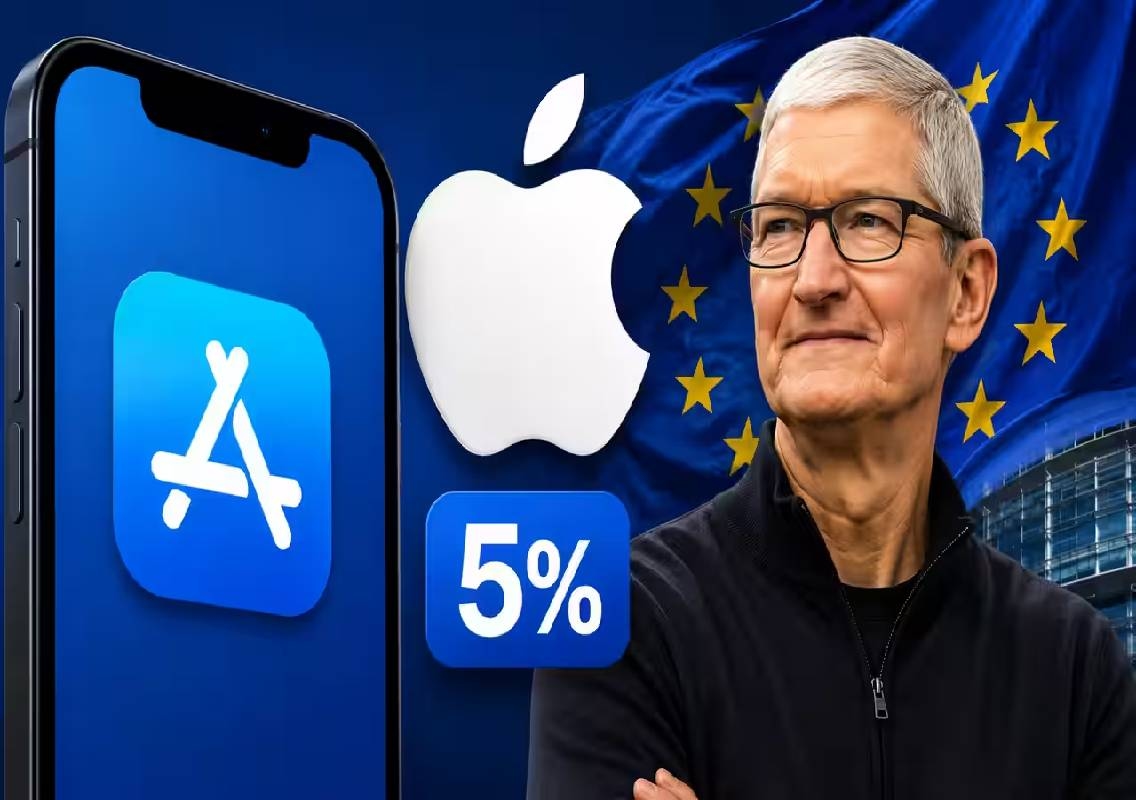


New Delhi: Apple has announced a major overhaul of its app distribution and payment rules in the European Union, reducing the fees charged on digital transactions for apps distributed through alternative app marketplaces or directly from developers’ websites. The changes come after Apple’s prolonged regulatory dispute with the European Commission over compliance with the EU’s Digital Markets Act (DMA).
Under the new terms, Apple will replace its existing and more complicated fee structure for alternative distribution with a 5% Core Technology Commission on digital transactions. The new rules are scheduled to take effect on October 1, 2026.
Apple introduces a 5% fee for alternative app distribution
The biggest change affects developers that distribute iPhone and iPad apps outside Apple’s App Store.
From October 1, apps distributed through alternative marketplaces or directly through eligible websites in the EU will be subject to a 5% commission on digital transactions under Apple’s new Core Technology Commission.
The new model replaces the previous system, which included several different charges, including the Core Technology Fee that could apply when an app exceeded 1 million first annual installs.
Apple said the new structure is designed to simplify its business terms and give developers a single set of rules across the EU.
Changes come after pressure from EU regulators
The move follows years of disagreement between Apple and European regulators over whether the company’s App Store rules give Apple an unfair advantage over competing app distribution and payment services.
The European Union’s Digital Markets Act requires designated “gatekeeper” companies to allow greater competition around their platforms.
Apple has faced particular scrutiny over its treatment of alternative app marketplaces, external payment systems and the ability of developers to inform users about cheaper purchasing options outside the App Store.
Apple said it worked closely with the European Commission while developing the revised terms.
Apple is removing the Core Technology Fee structure
Under the earlier alternative business terms, developers could face a €0.50 Core Technology Fee for each first annual install above 1 million for qualifying apps.
That structure had become one of the most controversial aspects of Apple’s EU rules because developers could potentially face fees even when distributing applications through channels outside Apple’s App Store. Apple’s new model replaces that approach with a transaction-based 5% commission for alternative distribution.
The change could make alternative distribution more predictable for developers, particularly businesses that generate significant numbers of downloads but comparatively lower revenue per user.
App Store commissions are also changing
Apple’s revised EU terms do not only affect apps distributed outside the App Store.
The company is also introducing a new commission structure for transactions involving apps distributed through its own App Store.
According to the revised framework, the standard commission for digital goods and services using Apple’s in-app purchase system will be 26%, while certain developers and qualifying programmes can receive reduced rates.
Apps using alternative payment systems within the App Store will face different rates depending on the distribution and payment arrangement.
The new system is intended to replace several separate fees with a simpler commission-based structure.
Developers will get more flexibility
One of the major objectives of the new rules is to give developers more options over how they distribute their applications.
In the EU, eligible developers can already distribute apps through alternative marketplaces or directly through their websites. Apple has also introduced mechanisms that allow users to install apps through these alternative channels.
The latest changes could make these alternatives more commercially attractive because developers will have a clearer understanding of what they owe Apple when users make digital purchases.
However, alternative distribution will still operate within Apple’s security and notarisation framework.
What does alternative app distribution mean?
Alternative app distribution allows iPhone and iPad users in eligible markets to obtain applications from sources other than Apple’s App Store.
These include:
- Alternative app marketplaces
- Developers’ websites
- Other approved distribution channels
Apple says apps distributed through these channels undergo a notarisation process designed to check baseline platform integrity, security and privacy requirements.
However, Apple does not review alternative-marketplace apps in exactly the same way as applications distributed through the App Store. Users therefore have to consider the policies and protections offered by the alternative distributor.
EU users get more choice
For iPhone and iPad users in the EU, the changes could eventually mean greater choice over where they obtain applications and how they pay for digital services.
Users can continue to use the App Store if they prefer Apple’s existing review and distribution system.
Apple says users who want applications that have gone through its full App Review Guidelines can continue to rely on the App Store.
The company has also retained safeguards intended to prevent alternative distribution from happening without a user’s permission.
Apple says the new rules simplify its business terms
Apple described the changes as an effort to reduce complexity by moving developers in the EU to one set of business terms.
The company said developers can sign up to the new terms immediately, while the changes themselves will become effective from October 1.
The revised framework is expected to make it easier for developers to understand the financial consequences of choosing different distribution and payment options.
Child safety measures are also being introduced
The new EU framework includes additional protections for younger users.
Apple is introducing restrictions around web-based transactions and alternative payment methods involving children. The measures include preventing users under 13 from completing certain web-based transactions through App Store apps and requiring parental consent for certain alternative payment transactions involving users under 18.
Apple has increasingly incorporated age-related safeguards into its response to regulatory demands around alternative app distribution.
What this means for developers
For developers, the biggest potential advantage is greater predictability.
Under the previous system, developers using alternative distribution could face several different charges depending on how their apps were acquired, distributed and monetised.
The new 5% commission gives businesses a simpler calculation for digital transactions generated through apps distributed outside the App Store.
However, the overall cost will still depend on how developers distribute their applications and which payment system they use.
Epic Games and other critics remain unhappy
Despite Apple’s changes, not everyone considers the revised terms sufficient.
Epic Games, which has been involved in a long-running dispute with Apple over App Store policies, criticised the new fee structure and argued that the changes do not go far enough to meet the objectives of the DMA.
The criticism highlights the wider debate surrounding Apple’s control over the iOS ecosystem.
While Apple has opened alternative distribution channels in response to regulation, developers and competing platforms continue to argue that the company retains too much control over how apps reach consumers.
European Commission will monitor implementation
The changes are intended to resolve Apple’s disagreements with the European Commission over its business terms and alternative distribution policies.
However, regulatory scrutiny is not necessarily ending.
The European Commission is expected to monitor how the revised rules work in practice and whether they provide the level of competition and choice required under the DMA.
This means Apple’s relationship with EU regulators is likely to remain closely watched even after the new terms come into force.
Will the changes affect iPhone users in India?
For Indian iPhone users, the immediate impact is limited.
The announced changes are specifically aimed at developers and users in the European Union. Apple’s alternative app distribution system is currently available in the EU, as well as Brazil and Japan under separate regulatory arrangements.
Therefore, the new EU fee structure does not mean that iPhone users in India will suddenly be able to install apps from alternative marketplaces.
For now, Apple’s standard App Store model continues to apply in India.
A major shift in Apple’s App Store strategy
Apple’s latest move represents a significant adjustment to a business model that has traditionally given the company substantial control over iOS app distribution and payments.
The company continues to defend the security and privacy benefits of its controlled ecosystem, but regulators in different markets are increasingly demanding greater openness.
The EU has been at the forefront of that push.
By reducing fees and simplifying alternative distribution terms, Apple is moving towards a model where developers have more choice while the company continues to collect revenue from transactions taking place within the iOS ecosystem.
Conclusion
Apple is changing its EU app business rules from October 1, 2026, introducing a 5% Core Technology Commission for digital transactions involving apps distributed through alternative marketplaces or eligible websites. The move replaces the previous, more complicated fee structure and comes after years of regulatory pressure under the European Union’s Digital Markets Act.
The company is also revising its App Store commissions, consolidating developers under a single set of business terms and introducing additional safeguards for younger users.
For developers, the changes could make alternative distribution more predictable and financially viable. For EU consumers, they could bring greater choice in how apps are downloaded and paid for. However, critics argue that Apple still retains significant control over the iOS ecosystem, meaning the debate over App Store competition is unlikely to end with these changes.