









AI is rapidly becoming part of modern software development. Many teams now describe themselves as “AI-driven” or “AI-first,” often by adopting tools such as coding assistants or AI chatbots. However, using AI tools alone does not necessarily transform how software is built. The real shift happens when AI is integrated across the development workflow. At PowerGate Software, engineering teams have adopted this broader approach, applying AI throughout the product lifecycle, from system design and development to testing and project management, to improve productivity, code quality, and collaboration.
Moving beyond AI coding assistants
The first wave of AI adoption in software development has largely focused on coding assistance. Tools such as AI-powered code generators help developers write functions faster, suggest improvements, or automate repetitive tasks. While these tools can be useful, they represent only a small part of the development process.
Software delivery involves far more than writing code. Teams must design system architectures, analyze requirements, coordinate across roles, test complex features, and monitor performance after release. If AI is applied only at the coding stage, much of its potential remains untapped.
Recognizing this, engineering teams at PowerGate Software began experimenting with ways to integrate AI support across the entire development workflow rather than treating it as a simple productivity tool.
AI across the product development lifecycle
One of the key ideas behind PowerGate’s approach is that AI should assist different roles within a development team, not just software developers. In practice, this means applying AI tools to support designers, business analysts, testers, and project managers alongside engineering teams.
AI-assisted system design
System architecture decisions play a critical role in the long-term scalability and maintainability of software products. During the early design phase, AI tools can help teams generate architecture options, suggest database structures, and accelerate early prototyping.
Instead of starting from a blank page, architects can quickly explore different design approaches and evaluate trade-offs. This allows teams to move faster during the planning stage while still maintaining thoughtful design decisions.
Smarter documentation and knowledge sharing
Documentation is another area where AI can make a noticeable difference. Creating clear and consistent documentation is often time-consuming, yet it remains essential for collaboration and long-term maintenance.
By using AI-powered assistance, teams can generate structured documentation for APIs, code modules, and development processes more efficiently. This helps maintain consistency across projects while reducing the manual effort typically required.
Accelerating front-end development
AI tools also help accelerate front-end development by translating UI and UX designs into code. Developers can convert design elements into functional components more quickly, allowing them to focus on customization, performance improvements, and user experience.
Rather than replacing developers, these tools act as assistants that reduce repetitive tasks and free up time for more complex problem-solving.
Improving code quality through AI-assisted development
During the coding stage, AI-powered assistants can suggest code improvements, detect potential errors, and support debugging processes. Tools such as GitHub Copilot and Cursor provide contextual code suggestions and help developers optimize implementation.
These capabilities not only speed up development but also improve consistency across large codebases.
AI in testing and QA
Traditional testing often requires teams to manually write large numbers of test cases and repeatedly verify system behavior after every update. AI-assisted testing tools can significantly improve this process. They help generate functional and regression test cases automatically while analyzing requirements to identify potential inconsistencies or gaps.
For QA teams, AI can also assist with impact analysis when requirements change. Instead of manually reviewing the entire system, testers can quickly identify which components are affected by new features or modifications.
In addition, AI-driven testing tools can help detect bugs and security vulnerabilities earlier in the development cycle, reducing the cost of fixing issues later in production.

Supporting project management and team coordination
AI-powered project management tools can analyze task progress, identify potential delays, and highlight risks early in the development cycle. They can also automate progress tracking, generate status reports, and assist with scheduling and meeting summaries.
These capabilities help project managers maintain visibility across projects while allowing teams to focus more on delivery rather than administrative tasks.
Measurable improvements in productivity and quality
The integration of AI across development workflows can produce measurable improvements when implemented thoughtfully. Internal implementation experiments within engineering teams at PowerGate Software indicate several potential benefits.
AI-assisted coding and testing tools can significantly reduce development time, in some cases by 20–30% based on internal evaluations, allowing teams to deliver features faster. Automated code review and analysis can also contribute to fewer software defects, improving overall code reliability.
Debugging processes become more efficient as AI tools help identify potential issues earlier. At the same time, automated documentation and testing workflows reduce manual effort, enabling developers and testers to focus on higher-value tasks.
Perhaps most importantly, these improvements are not limited to individual developers. By supporting multiple roles across the development lifecycle, AI integration can increase overall team productivity by roughly 20-25% while improving collaboration between engineering, design, and product teams.
AI as an engineering amplifier
Despite the rapid rise of AI in the technology sector, one misconception remains common: the idea that AI will replace software developers. In reality, most successful implementations show the opposite. AI works best when it acts as an amplifier of human expertise, not a substitute for it. By automating repetitive tasks and providing intelligent insights, AI allows development teams to spend more time on architecture decisions, product innovation, and user experience improvements. For organizations building complex digital products, this combination of human expertise and AI assistance can significantly accelerate the path from concept to market.
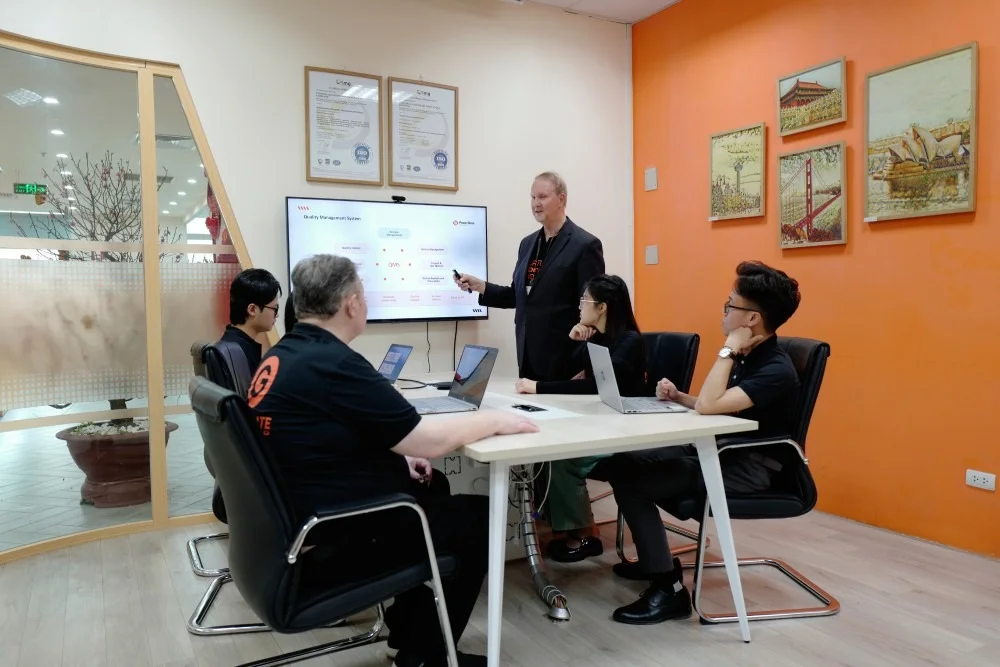
The experience of engineering teams at PowerGate Software highlights this broader shift. By embedding AI capabilities across design, development, testing, and project management processes, they demonstrate how AI can support a more efficient and collaborative approach to building software. For businesses looking to develop digital products faster while maintaining high-quality standards, AI-enabled development workflows may soon become not just an advantage but a necessity.
About PowerGate Software – AI-powered software product studio
- Website: https://powergatesoftware.com/
- Services: https://powergatesoftware.com/services/
- Email: [email protected]