







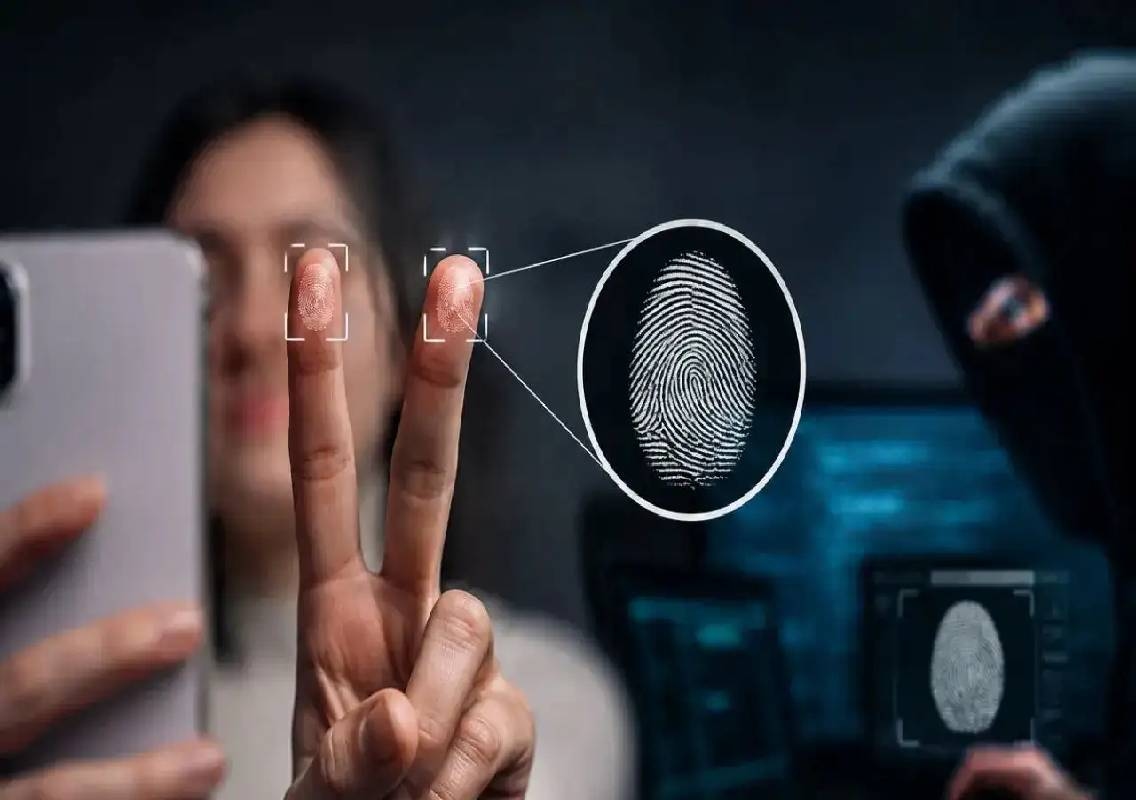


New York: Social media users have been expressing concern over claims that hackers can steal fingerprints from peace sign selfies posted online. The fears gained traction after viral posts suggested that advances in artificial intelligence and image enhancement technology could allow cybercriminals to extract fingerprint details from photographs shared on social media platforms.
The concern stems from reports highlighting a demonstration in which fingerprint patterns visible in close-up photographs were digitally enhanced and analysed. While the idea has sparked widespread discussion online, cybersecurity experts say the actual risk to most people remains extremely low compared to more common online threats such as phishing scams, identity theft and data breaches.
How the concern started
The discussion gained momentum after clips from a television programme in China resurfaced online. In the segment, an expert demonstrated how fingerprints visible in a high-resolution photograph, particularly one featuring a peace sign close to the camera, could theoretically be extracted and digitally enhanced.
The demonstration led to social media warnings suggesting that hackers could potentially use such images to replicate fingerprints. The rapid spread of these claims triggered anxiety among users who frequently share selfies and personal photographs on platforms such as Instagram, Facebook and X.
As artificial intelligence tools become more sophisticated, some online commentators suggested that the technology could make fingerprint extraction easier in the future. However, cybersecurity professionals have urged people to view such claims in context.
Is fingerprint theft from selfies really possible?
Experts acknowledge that extracting fingerprint patterns from high-quality images is theoretically possible under specific circumstances. However, they emphasise that several technical barriers make it highly impractical for most cybercriminals.
For a fingerprint to be usable, the image typically needs to be extremely high resolution, captured from a favourable angle and contain clear details of the fingerprint ridges. Most social media platforms compress uploaded images, reducing the amount of detail available.
Even if someone managed to obtain a fingerprint image, they would still face significant challenges in using it for malicious purposes. Modern biometric security systems often incorporate additional safeguards that make simple fingerprint replication difficult.
Cybersecurity experts note that the process is far more complex than portrayed in many social media posts and requires specialised equipment, expertise and favourable conditions.
Experts downplay the risk
Several cybersecurity specialists have described the threat as largely theoretical for ordinary users.
According to experts quoted in international media reports, the likelihood of someone becoming a victim of fingerprint theft through a social media selfie is extremely small. They argue that cybercriminals generally focus on easier and more profitable attack methods.
Common cyber threats such as phishing emails, fake websites, malware infections and large-scale data breaches continue to pose a much greater danger to consumers. These methods allow attackers to obtain passwords, banking details and personal information with far less effort.
Security professionals recommend that users prioritise protection against these more prevalent threats rather than becoming overly concerned about fingerprint extraction from photographs.
Why phishing remains a bigger concern
Cybersecurity agencies worldwide continue to warn that phishing attacks are among the most effective tools used by criminals. Fraudsters often trick victims into revealing passwords, one-time passwords (OTPs), financial information or other sensitive details through deceptive messages and websites.
Data breaches also remain a significant threat, exposing millions of personal records every year. In many cases, compromised passwords and leaked personal information present a much greater risk than biometric data extracted from photographs.
Experts suggest that users can significantly improve their online security by enabling multi-factor authentication, using strong and unique passwords, regularly updating software and remaining cautious when opening links or attachments from unknown sources.
Should users stop posting selfies?
Most experts say there is no need for people to stop sharing selfies or photographs online. However, practising general digital awareness remains advisable.
Individuals working in highly sensitive fields, including government agencies, defence organisations or critical infrastructure sectors, may choose to exercise additional caution when sharing high-resolution images publicly. For the average social media user, however, the threat level remains minimal.
The broader takeaway is that users should remain mindful of the information they share online while focusing primarily on protecting themselves from more immediate cybersecurity risks.
Conclusion
Although extracting fingerprints from peace sign selfies is technically possible under ideal conditions, cybersecurity experts agree that it is not a major threat for most people. Compared with phishing attacks, identity theft and data breaches, the risk remains relatively small. Maintaining good cyber hygiene and staying alert to common online scams continues to be the most effective way to protect personal information.