


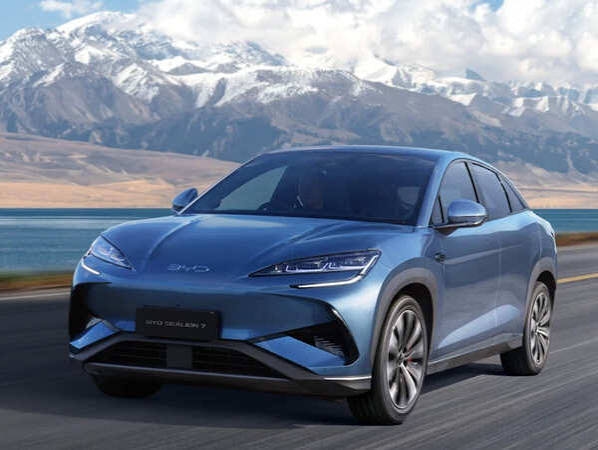


SEOUL/TOKYO: Chinese electric vehicle (EV) manufacturers are making progress in South Korea but are finding it harder to win over consumers in Japan, where domestic automakers, hybrid technology and concerns about Chinese products continue to shape buying decisions.
Companies such as BYD, Geely and Xpeng are expanding their presence in both markets as they look beyond China’s increasingly competitive domestic automobile industry for new customers. While affordable models and expanding dealership networks are helping Chinese brands attract buyers in South Korea, their progress in Japan has been considerably slower.
The difference is reflected in EV adoption rates. Around a quarter of new cars sold in South Korea this year were electric vehicles, compared with just 3% in Japan, according to industry data cited.

Chinese manufacturers are attempting to use competitive pricing, advanced technology and locally tailored products to enter these markets. However, their experiences demonstrate that success in one Asian market does not necessarily guarantee acceptance in another.
BYD attracts South Korean buyers with affordable EVs
South Korea has emerged as an increasingly promising market for Chinese electric vehicle manufacturers, particularly as consumers look for affordable alternatives to domestic models.
One example is Seoul resident Kim Min-seon, 48, who purchased a BYD Dolphin compact electric car for approximately $18,500.
Her decision initially attracted criticism from people around her, reflecting the longstanding negative perception of Chinese automobiles in South Korea.
“Everyone reacted like, ‘Why did you buy a Chinese car? Are you trying to get yourself killed?'” Kim told.
However, affordability and availability influenced her decision. Kim had initially considered purchasing Hyundai’s Casper EV but was informed that the waiting period for delivery could exceed two years.
The BYD Dolphin offered a comparatively affordable option with a range of features and was available without the lengthy wait.
Her experience highlights an opportunity that Chinese manufacturers are attempting to exploit: consumers who want electric vehicles but are unwilling to pay premium prices or wait extended periods for delivery.
According to market research firm Carisyou, BYD sold more than 20,000 vehicles in South Korea during the first nine months of 2026. Its sales exceeded the combined figures recorded by Toyota and its luxury brand Lexus over the same period.
Lee Jae-il, a senior analyst at Eugene Investment & Securities, said BYD had benefited from increasing demand for affordable electric vehicles.
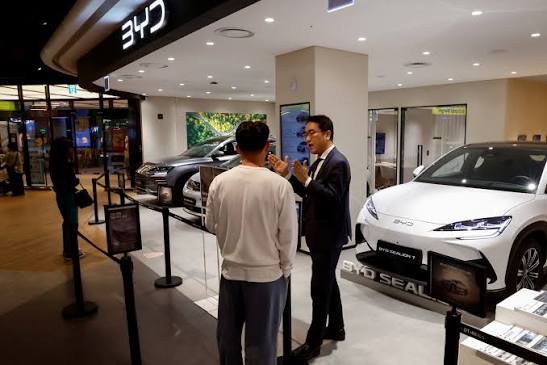
Petrol prices have also risen by almost 10% since the US-Israeli war on Iran began, adding to the appeal of electric mobility.
South Korean manufacturers Hyundai and Kia, meanwhile, have concentrated heavily on premium electric vehicles, with relatively few models priced below $30,000.
This has created an opening for Chinese brands offering comparatively inexpensive alternatives.
Geely, Xpeng and Chery expand their South Korean ambitions
BYD is not the only Chinese manufacturer looking to establish a stronger position in South Korea.
Geely’s premium electric vehicle brand Zeekr began accepting orders for its 7X SUV in June. The company plans to establish as many as 14 showrooms in the country by the end of 2026.
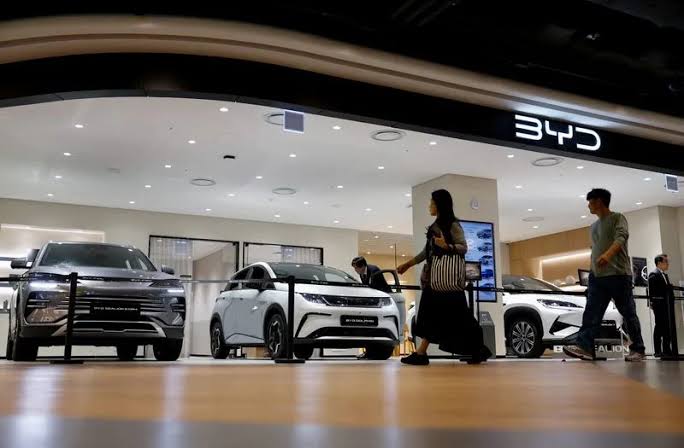
The expansion of its retail network indicates that Chinese manufacturers are looking beyond initial vehicle launches and are preparing to establish a longer-term presence.
Xpeng, which established a local subsidiary in South Korea last year, is also working towards expanding its distribution operations. A LinkedIn job advertisement indicated that the company was looking to recruit an employee to develop its retail network.
Chery is expected to enter the South Korean market in 2027, according to an industry presentation. The company declined to comment on the reported plans.
The strategy involves gradually building dealership networks, understanding consumer preferences and adapting vehicles to local requirements.
Liao Jingnan, founder of Tokyo-based consultancy MobyInfo, said Chinese manufacturers often entered foreign markets first, observed consumer responses and subsequently adjusted their strategies.
This approach reflects the competitive conditions in China, where numerous automobile brands are competing for customers in an increasingly crowded market.
Chinese manufacturers have developed vehicles featuring advanced technology and competitive pricing. Expanding internationally has therefore become important for companies seeking additional sales and profitability.
South Korean automakers raise concerns over Chinese competition
The growing presence of Chinese electric vehicles has also raised concerns among South Korean automobile manufacturers.
Domestic companies face the challenge of competing against brands that can offer electric vehicles at relatively lower prices.
Jeong Dae-jin, chairman of the Korea Automobile & Mobility Association, has called for tax incentives for electric vehicles manufactured in South Korea.
He described the situation facing domestic automakers as particularly difficult, saying companies were “very desperate”.
The debate centres on whether government incentives should be designed to support domestic manufacturers as competition from Chinese brands intensifies.
South Korea has an established automobile manufacturing industry, led by companies such as Hyundai and Kia. However, the growing availability of inexpensive Chinese EVs could increase pressure on domestic manufacturers to introduce more affordable models.
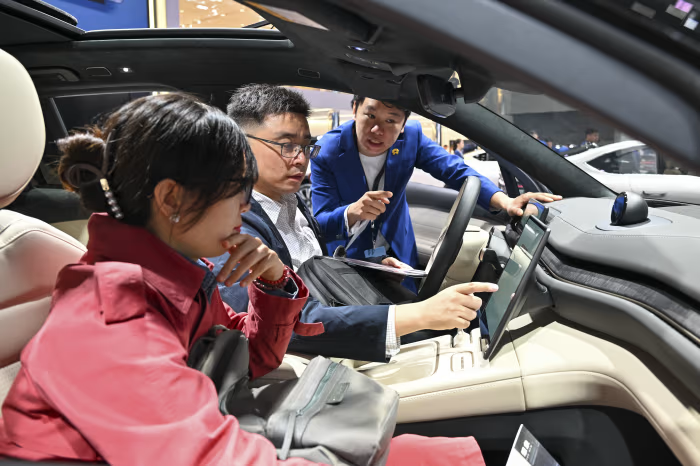
The developments also show how consumer demand, government policy and vehicle pricing are becoming important factors in determining competition in the electric mobility sector.
Why Japan is proving difficult for Chinese EV makers
Japan presents a substantially different challenge for Chinese automobile manufacturers.
Foreign brands account for only around 6% of passenger vehicle sales in the country, while Japanese consumers have traditionally shown a strong preference for domestic manufacturers.
Another major difference is the popularity of hybrid vehicles.
Toyota has played a central role in developing and promoting hybrid technology, which combines conventional engines with electric power. Japanese consumers have continued to favour this technology rather than switching rapidly to fully electric vehicles.
According to industry data cited , electric vehicles account for only around 3% of new car sales in Japan this year.
This relatively small market limits the immediate opportunities available to Chinese EV manufacturers.
Consumer perceptions also remain an obstacle. A Pew Research Center survey published in July 2026 found that 88% of Japanese respondents and 71% of South Korean respondents had unfavourable views of China.
However, BYD Auto Japan said diplomatic tensions between Tokyo and Beijing had not had any particular impact on its vehicle sales, showroom visits or customer enquiries.
The company has continued expanding its Japanese dealership network despite the challenges.
BYD expands its dealership network in Japan
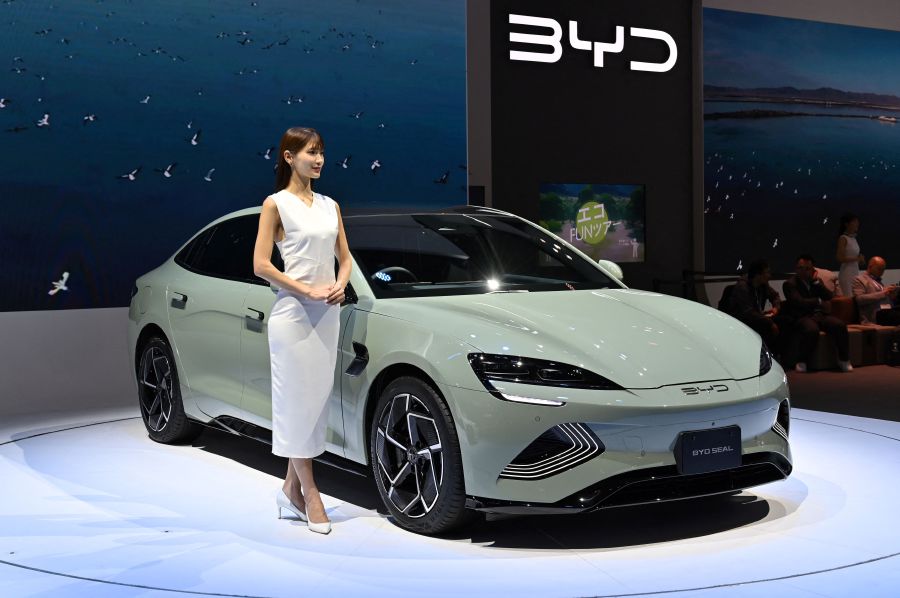
BYD entered the Japanese passenger vehicle market in 2023 and has since established more than 75 dealerships.
The company plans to increase the number to 100 as it attempts to build brand awareness and improve access to its vehicles.
However, its sales figures remain relatively modest compared with its performance in South Korea.
BYD sold fewer than 4,000 vehicles in Japan during the first nine months of 2026, representing approximately 0.1% of the country’s automobile market.
Despite the limited market share, the company has continued introducing new products tailored to Japanese consumers.
In July 2026, BYD launched a compact, box-shaped electric vehicle designed for Japan’s kei car segment.
Kei cars are small vehicles that meet specific Japanese regulations relating to dimensions and engine capacity. They are particularly popular because of their affordability and suitability for urban driving.
The segment is dominated by Japanese manufacturers, making it a challenging market for foreign companies.
By September, BYD had sold approximately 650 units of its new kei-style electric vehicle.

Marc Yamada of consulting firm Alvarez & Marsal said the significance of BYD’s Japanese business should not be judged solely by its current market share.
“It’s not the market share,” he said. “It’s the growth.”
Although sales remain limited, the company’s gradual expansion suggests that it is seeking to establish a foundation for future business rather than relying on immediate large-scale market penetration.
Chinese manufacturers explore Japan’s kei car segment
Other Chinese-linked manufacturers are also preparing products specifically for the Japanese market.
EMT, a startup backed by Chery, plans to introduce a kei car during the first half of 2027. The company intends to launch three additional models by 2029.
Its longer-term ambition is to begin manufacturing vehicles locally in Japan during the 2030s.
Koji Yamamoto, the company’s chief technology officer, told about its product and manufacturing plans.
Zeekr is pursuing a different strategy by targeting the premium vehicle segment.
The company plans to introduce a luxury van in Japan, initially focusing on taxi operators and chauffeur services.
Hiroyasu Koma, chief executive of Zeekr distributor folofly, said the vehicle would be positioned for customers seeking premium transportation options.
These plans indicate that Chinese manufacturers are not relying on a single strategy to enter Japan. Instead, they are exploring smaller vehicles, premium transport and locally adapted products.
Reliability and security concerns remain obstacles
Despite the gradual expansion of Chinese brands, some Japanese consumers remain sceptical about their vehicles.
Fumio Kuwabara, an early adopter who has driven Japanese electric vehicles since 2010, said he was unwilling to purchase a Chinese car because of concerns about reliability.
“I feel like they’ve cut corners in places you can’t see,” he told.
Such perceptions can be difficult for new automobile brands to overcome, particularly in a market where consumers have established relationships with domestic manufacturers.
Security concerns have also entered the debate.
Daishiro Yamagiwa, a lawmaker from Japan’s ruling party, told that the country needed to consider potential security risks associated with Chinese vehicles that could allegedly be controlled remotely from outside the vehicle.
Modern connected vehicles rely on software, internet connectivity and digital systems for several functions. This has raised wider international discussions about data protection, cybersecurity and the security implications of connected automobile technology.
For Chinese manufacturers, addressing these concerns will be important in building consumer confidence.
Can Chinese EV makers replicate their South Korean success?
The contrasting experiences in South Korea and Japan highlight the importance of local market conditions in the global electric vehicle industry.
In South Korea, growing EV adoption, demand for affordable models and long waiting periods for some domestic vehicles have created opportunities for Chinese manufacturers.
Japan, on the other hand, has a smaller electric vehicle market, a strong preference for domestic brands and an established hybrid vehicle ecosystem.
Nevertheless, Chinese companies are continuing to invest in dealerships, product development and market-specific strategies in both countries.
The experience of South Korean buyers such as Kim Min-seon and Lee Seong-dong also suggests that direct exposure to Chinese vehicles could influence perceptions.
Lee, a Seoul-based content creator who purchased a BYD Dolphin, said his initial impression of Chinese cars had changed after seeing and driving one.
“Honestly, I didn’t have a good image of Chinese cars, either,” he said.
“Seeing the car in person and driving it changed my thinking a lot.”
Whether similar changes in consumer attitudes will occur in Japan remains uncertain. For now, Chinese manufacturers are pursuing a gradual expansion strategy, with their long-term success depending on affordability, product reliability, customer confidence and their ability to adapt to local preferences.