







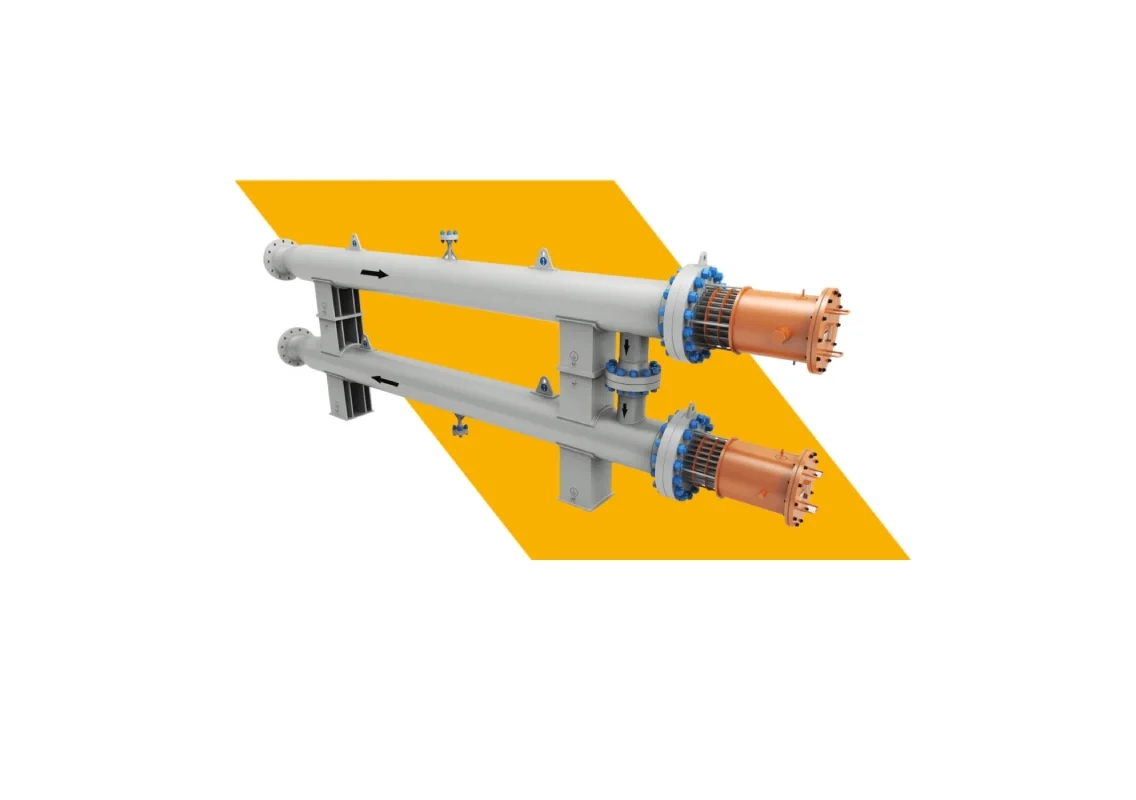


Across manufacturing plants, food processing units, and chemical facilities, heat is part of the job every single day. It drives drying, curing, sterilization, and material transformation at nearly every stage of production. But here’s what doesn’t get talked about enough: the same heating systems that keep operations running are also one of the biggest sources of operational headaches. Inefficiencies build up quietly. Safety risks grow. Production slows down. And before long, the costs start showing up in places that are hard to ignore.
That’s where modern process air heater technology is changing things. Today’s systems aren’t just better at heating air. They’re built to give teams more control, waste less energy, and hold up across very different process conditions. For plant managers and operations engineers, this isn’t just a performance upgrade. It’s about running a facility that’s consistent, safe, and built to last.
Industrial Heating Challenges and How Process Air Heaters Solve Them
Industrial heating sits at the center of countless manufacturing processes. Still, inefficiency, inconsistency, and safety risks keep eating into time and budgets across industries. A process air heater tackles these problems directly, putting precise, reliable, energy-efficient heat exactly where it’s needed.
1. Inconsistent Temperature Control
Small temperature swings can cause big problems. In pharmaceuticals, semiconductors, and food manufacturing, even a minor fluctuation can compromise an entire production batch. That’s a real cost, not just a technical inconvenience. That’s not a minor inconvenience. It’s a costly, frustrating problem that traditional heating systems aren’t really built to handle well.
A modern process air heater is built for precision. Sensors and control systems work together to hold temperatures within tight ranges, often within ±1°C or better. Every stage of a heat-sensitive process gets exactly the thermal energy it needs. The result? Fewer rejects, tighter quality, and a lot less second-guessing on the production floor.
2. High Energy Consumption and Rising Utility Costs
Energy costs are one of the biggest line items in any industrial facility’s budget. Older heating systems, especially those running on steam or open-flame burners, are notoriously wasteful. Thermal losses, poor efficiency ratings, and high fuel consumption. It adds up fast, and for many operators, the heating bill just feels like something you can’t escape.
Electric and gas-fired process air heaters are designed with efficiency as a priority, not an afterthought. Unlike steam systems that bleed energy through pipe condensation and heat loss, direct air heating puts thermal energy exactly where it belongs.
3. Safety Risks in Hazardous Environments
Some industries don’t get the luxury of working in clean, controlled spaces. Oil and gas, chemical processing, mining. These environments come with flammable gases, combustible dust, and volatile chemicals baked into the daily routine. Open-flame heating in these settings isn’t just a bad idea. It’s genuinely dangerous.
Good process air heaters for these areas follow strict safety standards like ATEX and NEC. Surface temperatures stay under control, and the whole unit is designed so that even if something goes wrong inside, it doesn’t turn into a bigger issue for the entire facility. For safety teams, this isn’t something extra. It’s just the basic expectation.
4. Downtime Caused by Equipment Failure
Unplanned downtime is painful. In high-volume production, every hour offline has a price tag. Traditional heating systems with burners, heat exchangers, and steam traps have a lot of parts that can fail. More complexity usually means more maintenance, and more maintenance means more chances for something to go sideways at the worst possible time.
Modern electric process air heater units keep things simpler. Fewer moving parts means fewer mechanical failure points. Many models are built so that a single faulty heating element can be swapped out without taking the whole system offline. Smart controllers with predictive diagnostics go a step further, flagging potential issues before they turn into actual shutdowns. Your team gets ahead of problems instead of reacting to them.
5. Adapting to Diverse Industrial Processes
Not every industry heats air for the same reason. A textile manufacturer needs steady drying heat. A plastics plant needs fast, high-temperature airflow. A lab might need ultra-clean, low-velocity air for controlled conditions. What works in one facility won’t necessarily work in another.
That’s honestly one of the strongest points of the process air heater: it’s not locked into one configuration. Inline duct heaters, circulation heaters, and radiant panel heaters—the options cover a wide range of temperatures and airflow needs. Custom engineering options let manufacturers match the heater to the exact process, not the other way around.
Conclusion
Industrial heating challenges are real, they’re costly, and they don’t fix themselves. But they’re also very much solvable. The process air heater from Tempsens Instrument Pvt. Ltd. isn’t just a piece of equipment. It’s a flexible, dependable platform that adapts to what modern industry actually needs. Getting the heating right isn’t just a technical call. It’s a smart business decision that pays off in safety, productivity, energy savings, and product quality over the long run.