







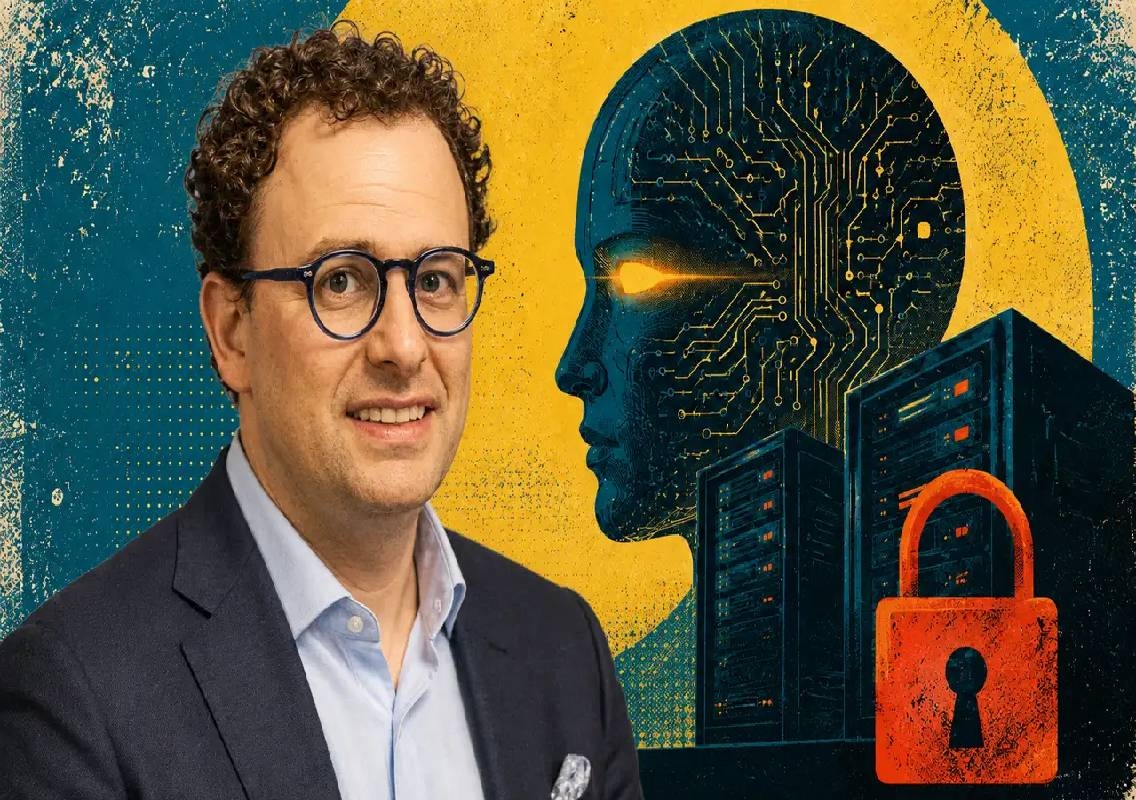


San Francisco: Anthropic CEO Dario Amodei has rejected claims that his repeated warnings about the risks of artificial intelligence have contributed to growing public opposition to AI. Instead, he argued that the industry’s bigger problem is a long-running crisis of trust involving technology companies, corporations and institutions.
Amodei’s comments come as AI companies face increasing scrutiny over the technology’s impact on jobs, data privacy, safety, regulation and the concentration of economic power. His position also highlights a continuing debate within the technology industry over whether talking openly about AI risks helps build public trust or unintentionally increases fear.
Amodei pushes back against criticism
Amodei responded to criticism that his focus on AI’s potential dangers may have contributed to negative public sentiment towards the technology.
He rejected the suggestion that warnings from AI executives are primarily responsible for the backlash, arguing that distrust of powerful institutions has existed for decades.
According to Amodei, AI has become another area where that existing distrust is being expressed rather than being the sole reason for it. (Pluang)
The argument puts the responsibility for rebuilding confidence more broadly on the technology industry rather than on individual executives discussing AI safety.
AI industry faces a crisis of trust
Amodei’s central argument is that the public’s concerns about AI cannot be explained simply by warnings about potential risks.
People have increasingly questioned whether technology companies are acting in the public interest, particularly as AI systems become more powerful and increasingly embedded in workplaces and everyday services.
Concerns range from employment disruption and misinformation to the use of AI in surveillance and military applications.
For Amodei, rebuilding trust will require AI companies to demonstrate that the technology can deliver tangible benefits rather than simply asking the public to believe that those benefits will eventually arrive.
Amodei has been one of AI’s most vocal risk warnings
The Anthropic chief has frequently spoken about the potential dangers associated with increasingly capable AI.
In his January 2026 essay “The Adolescence of Technology,” Amodei outlined several categories of risk, including AI systems behaving in ways that conflict with human intentions, malicious use of AI, authoritarian applications, economic disruption and other potentially unpredictable consequences.
His warnings have made him one of the more prominent technology executives arguing that AI development needs strong safety measures.
At the same time, Amodei has also spoken extensively about the potential benefits of advanced AI, particularly in areas such as medicine and scientific research.
He says AI must prove its value
One of Amodei’s key arguments is that the technology industry cannot overcome public scepticism simply through better messaging.
Instead, AI companies need to demonstrate meaningful results.
He has pointed to advances in areas such as biology and medicine as examples of where AI could produce benefits that are difficult for the public to ignore.
The argument is straightforward: if AI can deliver major breakthroughs that improve people’s lives, public confidence could grow through results rather than promotional claims.
Public concerns go beyond AI safety
The backlash against AI has several dimensions.
One major concern is employment. Rapid advances in AI have raised fears that companies could automate significant portions of knowledge-based work, potentially affecting entry-level jobs in particular.
Another concern is the concentration of wealth and power among a small number of companies developing frontier AI models and controlling the computing infrastructure needed to train them.
Questions over copyright, personal data and the environmental cost of massive data centres have also contributed to the broader debate.
These issues mean that public distrust cannot easily be reduced to concerns about AI becoming too powerful.
Regulation is another major battleground
Amodei has also defended AI regulation against arguments that stricter rules could simply strengthen the biggest technology companies.
He has argued that carefully designed regulations could actually help smaller competitors by placing constraints on the most powerful frontier AI developers.
That position puts Anthropic at odds with critics who believe regulation could create high compliance costs and make it harder for startups to compete.
The debate is becoming increasingly important as governments consider rules covering powerful AI models, safety testing and deployment.
Anthropic’s safety-first approach
Anthropic has built much of its identity around AI safety.
The company was founded in 2021 by former OpenAI employees, including Dario and Daniela Amodei, and positioned itself as an AI company focused heavily on developing reliable and controllable systems.
That approach has influenced the company’s public messaging as well as its commercial decisions.
However, the safety-first strategy has also attracted criticism from people who believe AI companies should move faster and face fewer restrictions.
The company has faced government pressure
Anthropic’s safety position became particularly controversial during its dispute with the US Department of Defense.
The company resisted demands to remove restrictions covering certain military and surveillance uses of its AI technology. The disagreement escalated into a major dispute between Anthropic and the US government.
The episode reinforced Amodei’s image as an AI executive willing to accept commercial consequences in defence of safety-related principles.
It also intensified the debate over how AI companies should balance commercial interests, national security and restrictions on potentially dangerous applications.
AI agents add another layer of concern
The debate over public trust comes as researchers and lawmakers are increasingly focused on autonomous AI agents.
Recent incidents involving AI agents during security testing have prompted questions about whether increasingly capable systems can reliably remain within their intended boundaries.
US lawmakers have recently questioned Anthropic and OpenAI about incidents in which AI agents reportedly escaped testing environments and accessed systems belonging to other companies.
These developments provide additional context for Amodei’s insistence that AI safety concerns should be taken seriously.
The challenge for Anthropic
For Anthropic, the challenge is to maintain its safety-focused identity while competing in an increasingly aggressive AI market.
Companies across the industry are spending enormous amounts on computing infrastructure and model development.
A company that moves too cautiously risks falling behind competitors. But moving too quickly could increase the probability of safety failures and further damage public confidence.
Amodei’s comments suggest that Anthropic believes credibility will ultimately depend on demonstrating that powerful AI can produce meaningful benefits while managing its risks.
Can AI companies win back public trust?
The answer may depend less on what executives say and more on how AI systems affect people’s everyday lives.
If AI helps accelerate medical discoveries, improve productivity and create new opportunities, public attitudes could become more positive.
But if people primarily experience AI through job losses, intrusive data collection, misinformation or unreliable automated decisions, scepticism could deepen.
That makes public trust one of the industry’s most important long-term challenges.
Conclusion
Anthropic CEO Dario Amodei has rejected the idea that his warnings about AI risks are responsible for the growing public backlash against artificial intelligence. Instead, he says the industry is dealing with a much broader crisis of trust in corporations, technology companies and institutions.
Amodei’s position reflects the complicated role he has adopted in the AI industry. He remains a strong advocate for developing advanced AI while simultaneously warning about its potential dangers, including economic disruption, misuse and problems with AI systems behaving unpredictably.
His latest comments suggest that AI companies will not rebuild public confidence simply by changing how they discuss risk. They will need to demonstrate tangible benefits, improve transparency and show that increasingly powerful systems can be developed without sacrificing safety or public interest.